
Today’s world is the space of an advancing Dreaming, where delusion and false reality increasingly envelop the mind.


Other Magic
Пишите мне
Enmerkar's Blog contains over 1200 original articles of an esoteric nature.
Enter your search query and you will find the material you need
Today’s world is the space of an advancing Dreaming, where delusion and false reality increasingly envelop the mind.
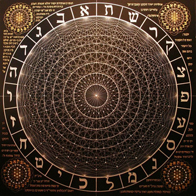
The letters of an evolved language become carriers of energies, manifestations of the Logos, shaping supporting vortices or vectors for those Logos.



The false light of Yaldabaoth is at present an even greater danger than the darkness sown by demons
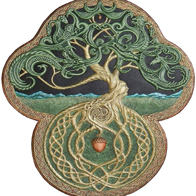
Runes are the instrument of the Gods of mind (the Aesir and the Alfar), while Ogham embodies and channels the creative energies of the Gods of life.


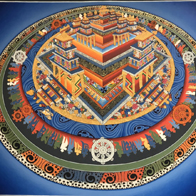
Both the art of constructing mandalas and the proper engagement with them can bestow invaluable support upon the developing mind.


The Myth under consideration portrays the “forced” development of the mind as a “hunt for Power.
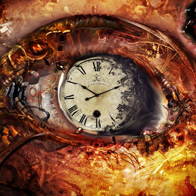
Understanding the relativity of time allows one to rid oneself of the false sense of “objective reality” without falling into nihilism
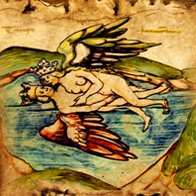
If sex masquerades as “Magic” or “Tantra,” a defilement arises — not from sex itself, but from the lie.

The accumulation of dignitas should not be regarded as a “secondary task”; it has not merely individual but universal prospects, and therefore it must be given attention.

There is no “separate” mind outside these activities, no “mind in itself”; there are only its manifestations, activities that serve as an instrument of realization.


Just as the theory of “grand unification” summarizes possible modes of interaction in physics, in Magic the Great Arcanum describes the most general scheme of any process.


Although the essence of every delusion is separateness, it may manifest as any of the “ordinary” impediments to development — sloth, envy, anger, and so forth.
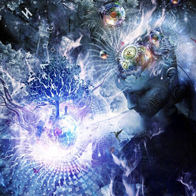
The path to consciousness liberation demands total engagement with the psycho-energy-physical complex.