
“Real Men” — in the Thrall of Gaap
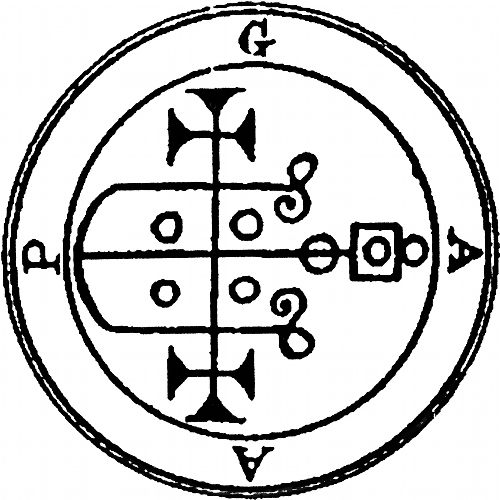
Among the destructors that limit the development of human awareness, a prominent place is occupied by behavioral patterns imposed on individuals by the collective consciousness.
The magical myth, with its characteristic sequence, portrays them as powerful streams of destructive energy, manifesting equally in the macrocosm and psychocosm and embodied in the ominous figures of demons.
At the same time, the idea of “demonic nature” includes not only the notion of their corruption but also their predatory nature. In other words, the constraints imposed by Demons on the human mind are aimed at dissipating energy and diverting it into the dark worlds.
One of the most important Demons, in terms of his influence on the human world, is Gaap.

Although formally this spirit is merely a particular manifestation of the ancient gloomy deity Maimon (ruler of the power of possession), he also has a distinct manifestation, which the Lemegeton describes:
“He makes people impervious and unaware…”
Put differently, a blinkered mind that makes it half-asleep yet extremely aggressive is the manifestation of Gaap in the psychocosm.
Gaap is a great lover of sacrifice — he demands that people renounce what is most valuable to them — love, freedom — and in return gives a dull sense of self-importance, often not even clearly formed in the mind.
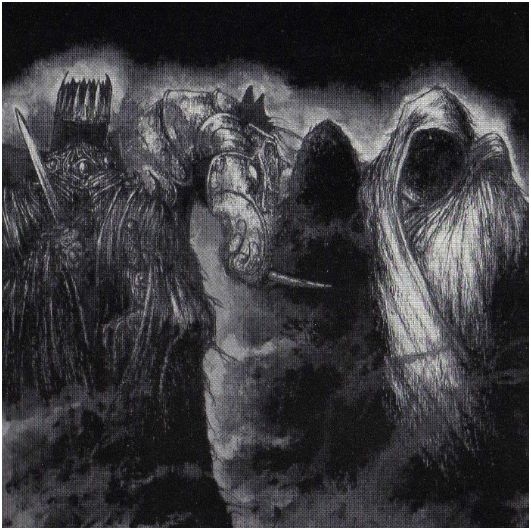
This manifestation is often observed among people: a dull, narrow-minded, aggressive person bent on suppressing others — that is the typical image of a mind possessed by Gaap. Such people are marked by coarse temperament, intellectual narrowness, and blind, furious outbursts. The mind sacrifices its flexibility to Gaap, and the resulting mindset is more or less straightforward. This straightforwardness is opposed to reflection and doubt.
The straightforwardness of such a person’s mind is also seen in his difficulty understanding that people who think differently may also be right in their own way. For example, he likes to eat in silence and demands that everyone at the table remain silent; he dislikes tomatoes and is convinced that only people with poor or perverse taste love them.
Gaap robs the mind of ambiguity and, therefore, of a sense of humor; the thinking that forms is sluggish and overly detailed, slow to shift from one subject to another, and not inclined to sensible compromises.
Such a person rarely doubts that he is correct; any other attitude toward an event or object he considers wrong or even harmful. Trying to persuade him otherwise is only a waste of time and can even enrage him; he is remarkably unable to understand or absorb arguments that contradict his judgments: ignoring contradictions, he notices only what confirms his flawed reasoning.

Gaap often endows the mind with a love of power — so that people derive a tyrannical, sadistic pleasure from it
(“Gaap can provide ministering spirits (familiers) in the service of other Magi…!).
Perhaps this is connected with their frequent interest in history, in books on history — “who seized power when and how they ruled.”
Despite all this, someone possessed by Gaap often successfully conceals his antisocial traits behind a mask of respectability. In some cases, this mask is marked by sanctimonious, deceitful refinement, steeped in flattery, cunning, sweetness, and obsequiousness. In other, cruder cases, the obsession expresses itself in moralizing lectures that the person delivers to subordinates or household members, praising himself. For example, he tediously tells his son he will get a C given the comfortable life the father provided: “When I was a child I ate oilcake instead of bread, soup from herbs and I did excellently in school, and you gobble huge cutlets and still get C’s!” While reproaching others, such a possessed person is sometimes sexually unfaithful in private life.
Such a possessed person usually leads not so much a spiritual life as a life driven by appetites — gastronomic pleasure, sexual indulgence, the sweetness of power. His stamp collecting often rests not only on a tendency to arrange them neatly on shelves but also on a desire to possess stamps that no one else has, “so others will envy them.”

Nevertheless, such a possessed person can and should keep themselves within the bounds of decent behavior. Therefore, pitying the possessed as if they were sick and unable to control themselves is harmful both to them and to those around them, just as it is in cases of chronic alcoholism.
As in other cases of possession, the Demon cannot withstand a direct beam of focused attention and departs when clearly illuminated by the White Light.
At the same time, possession by Gaap usually resists direct exorcism because of the demon’s antiquity and subtlety, so all the exorcists should focus on increasing the person’s awareness if for some reason the expulsion of the Demon is deemed appropriate.







En, how do you interact with such people? Especially if it’s your father?
Great article! It’s especially pleasing that more practical elements are emerging!
The article from November 6, 2009. The struggle with the close ones clearly regulates the order of interaction with such people. (response from the father’s lawyer) 🙂
To me, it’s not about Gaapa, but about the immaturity of the human soul. Demons and others are always present among people, fulfilling their duties, but where there is no balance and harmony, where emotions overwhelm, they are much more numerous. Yes, I agree that it can push people toward such behavior, but that is their job, showing a person a path to increase awareness, to perfection.
Why do some people initially fall under the influence of demons while others do not? Or is it expressed to varying degrees at least?
Of course, no demon can do anything to us without our permission. And as correctly noted in the previous comment, the issue is primarily about the refusal of the individual being to develop. This refusal occurs for various reasons – out of laziness, fear – but always leads to an accumulation of all sorts of substitutes and surrogates. And where one’s own soul is too small, underdeveloped, it is gladly supplemented by a predator – a demon that parasitizes on it.
But for honing the warrior’s perfection and for eliminating the Ego, communication with such characters is necessary, right…
Say, are there any practical tips on how to save a loved one who shows clear signs of such demonism?
Co-acting, participation, companionship. Based on sympathy and friendliness.
Special thanks to the one who designs your site. The pictures separating paragraphs in the articles are simply stunningly chosen. They provide a moment to switch, enjoy the aesthetics, embed the image into the subconscious as a representation, and give a moment to digest the information read above, etc. Thank you.