
Archons, Clip Thinking, and the Modern World
As we have already noted more than once, over the last two decades there has been a significant shift in the dissipation of human psychic energy: if until recently the main cause of such dissipation was an ineffective or improper fulfillment of desires, then now dissipation occurs during the formation, the emergence and awareness of the motivational flow itself. In other words, if in the past a person’s main problem was “how to fulfill a desire,” now the problem is “to find one’s desire.”
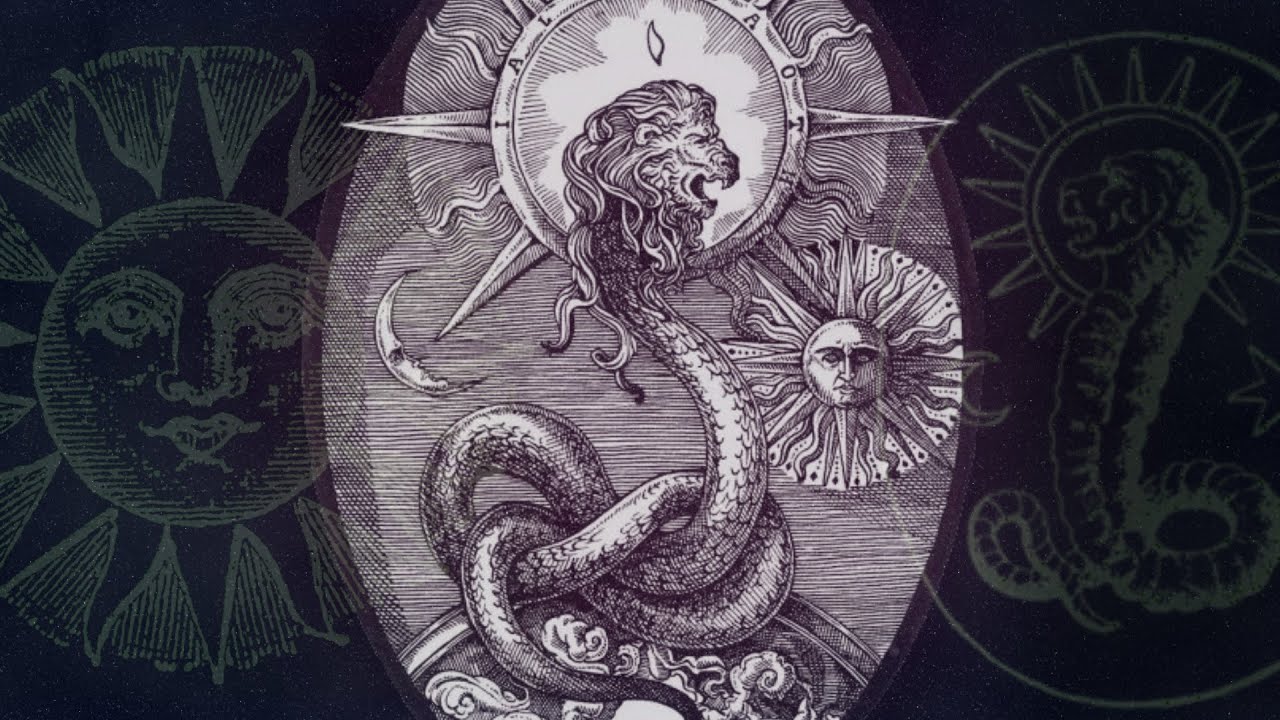
We have already said that such an “weakening of the will” the Hermetic tradition calls “the influence of the Archons.” And although within the Tradition no single consensus has formed about the origin and nature of these forces, their influence is clearly evident.

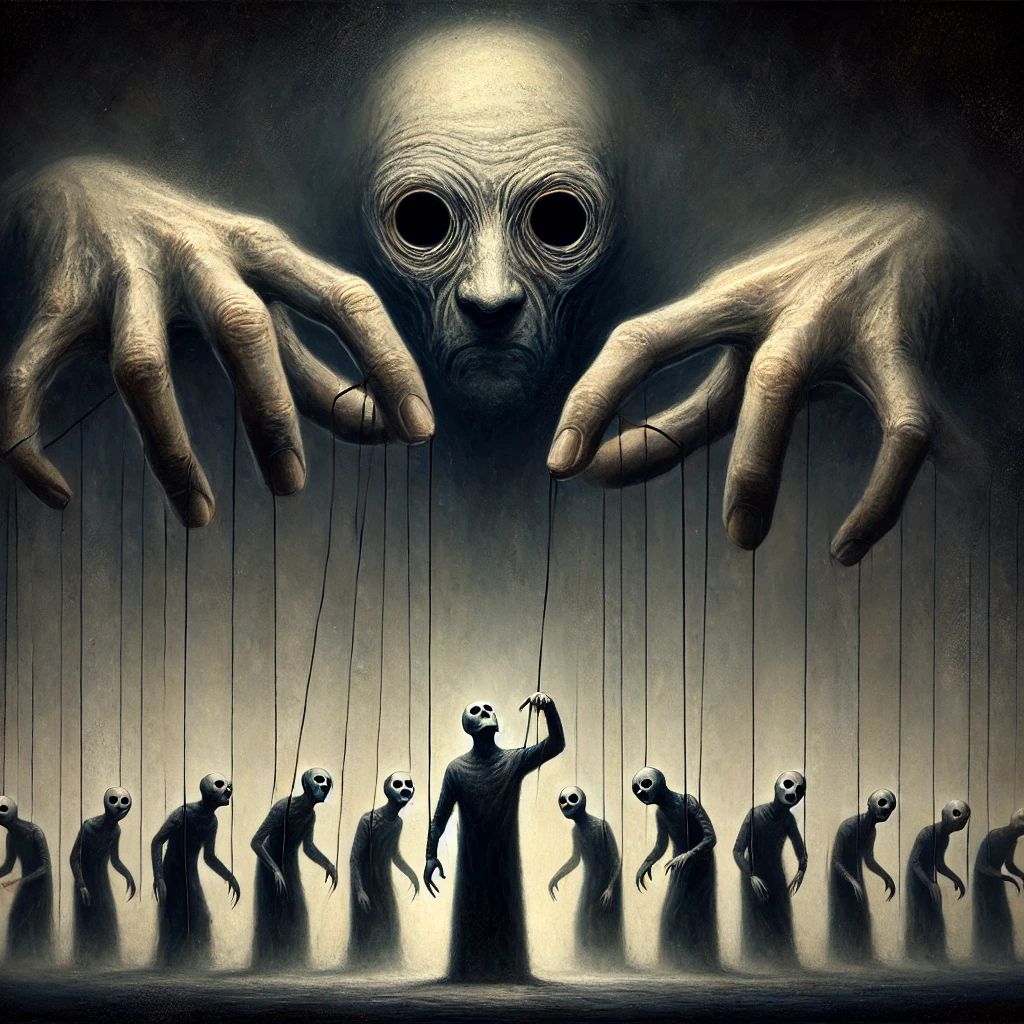
Being inhabitants (or offspring) of the virtual environment of the Interworld, the Archons are forces and agents that maintain the balance between manifest and virtual realms, and they perceive “real” worlds only as a raw material, a source of energy for powering the Interworld.
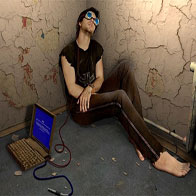
It is precisely from this point of view that it becomes clear why a characteristic feature of modern society has become the so-called “clip thinking” — a rapid, superficial perception of information, which is characterized by significant loss of psychic energy. In the era of the spread of digital technologies, when information flows continuously and intensely affect people through social networks, video clips, and short texts, this new mode of mental functioning has emerged, characterized by a tendency toward rapid switching of attention and difficulty maintaining concentration on lengthy, complex tasks.

Thus, the first form of human dependence, as beings that generate psychic energy, on an inorganic digital environment is emerging — one that in the long run leads to the merging of biological and electrical sources to form tonic pneuma — the energy of a functioning mind.
Let us note once again this extremely important fact: for the first time in human history, the source of energy for the functioning of the psyche has become externally generated energy. If in the past virtually all impressions, emotions, affects arose mainly at the expense of the brain’s own energy or were generated by other (also biological) beings, now an increasing source of tonic pneuma is the electricity-based digital environment.
Widely implemented and ubiquitous technologies and media formats have substantially changed the very informational environment in which the biological carriers of mind exist. Social networks, video clips, and advertising provide information in the form of short, vivid, and emotionally charged stimuli. This leads to the brain becoming accustomed to rapid, superficial processing. Repeated exposure to such stimuli forms new cognitive habits and substantially restructures how information is perceived and processed.
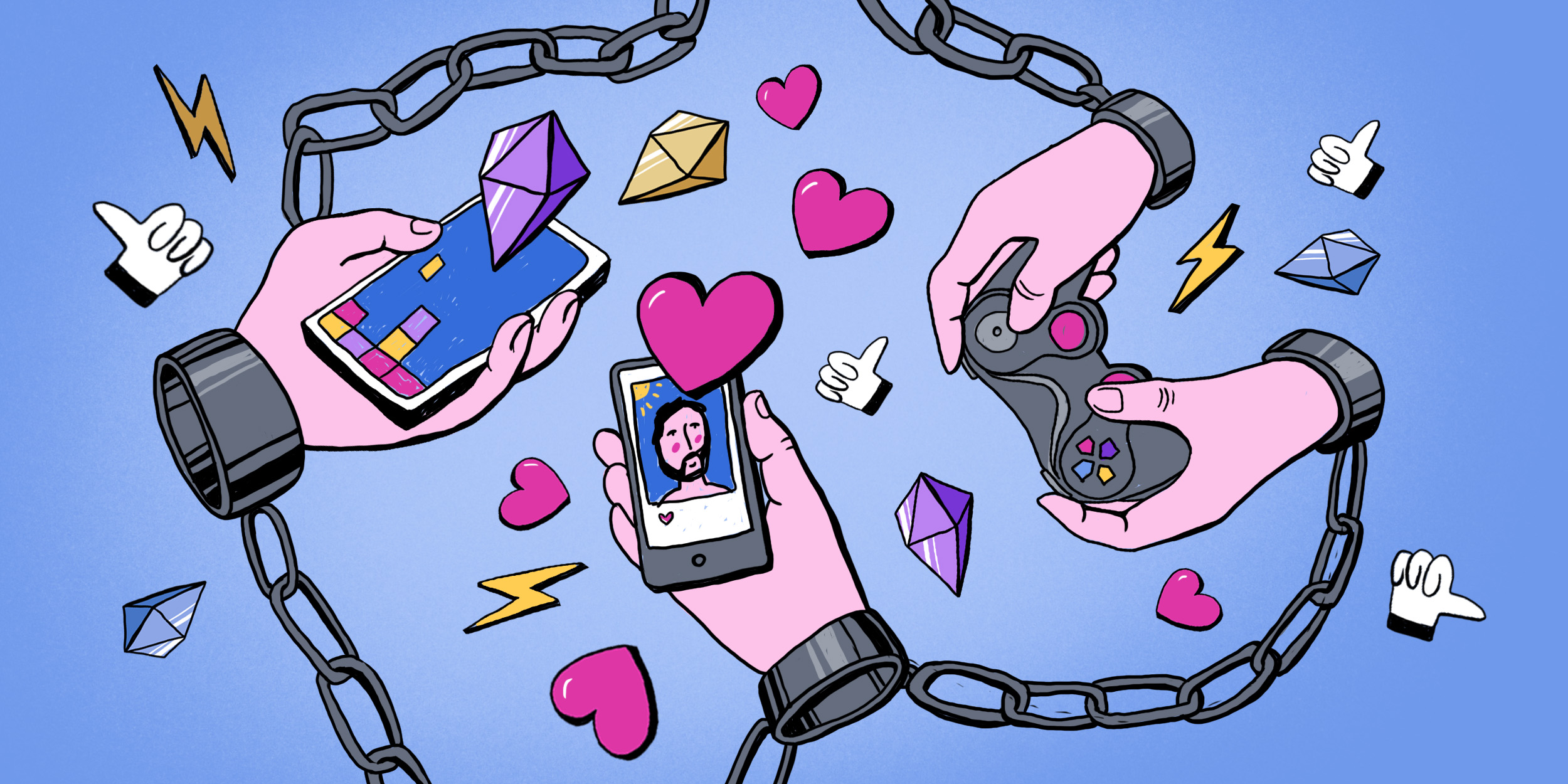
Thus, two types of “dopamine addiction” are formed, in which the source of stimulation of the nervous system becomes the digital environment with its external energy sources: addiction to social networks (leading to clip thinking) and addiction to computer games and simulations. It is clear that the mechanisms of these addictions are very similar, and they exploit the same adaptive vulnerabilities of the brain. The result is that a person turns from a system that processes food and biological stimuli — into libido — into a new and unique transformational system that produces “red light” using both biological and electric energy. The result may be a “biological-digital hybrid,” which, of course, will produce an “industrial revolution” in supplying energy to the Interworld, and therefore is a very promising direction of the Archons’ “selective-breeding program.”
Let us consider in more detail the features of the changes that are taking place. As we already mentioned, the first such feature — clip thinking — is associated with difficulty concentrating on long or complex tasks. People with clip thinking tend to pay less attention to the depth and details of information. They quickly “scroll through” data, remembering only the brightest and simplest moments. This leads to the fact that they get tired faster and switch to another activity without finishing what they started, and the generated psychic energy dissipates (and to a significant extent flows off into the Interworld). Preference is given to information that instantly brings pleasure or satisfaction — for example, vivid images, short videos, memes, and news headlines. It is precisely these that cause rapid activation of pneuma with its subsequent loss. Such people perceive and assimilate information only in the form of separate, unconnected fragments. Therefore, clip thinking reduces the ability for analytical thinking, deep understanding, and critical evaluation of information, and hence also the ability to manage one’s energy. People lose the skill of building complex cause-and-effect relationships and comprehending information on a deep level. This cognitive style can reduce learning efficiency and devalue complex intellectual tasks, creating prerequisites for a constant search for new stimuli that instantly activate the reward system. In addition, constant exposure to new and diverse stimuli leads to emotional instability and difficulties in regulating mood and stress, which, of course, is also a factor contributing to the dissipation of energy.
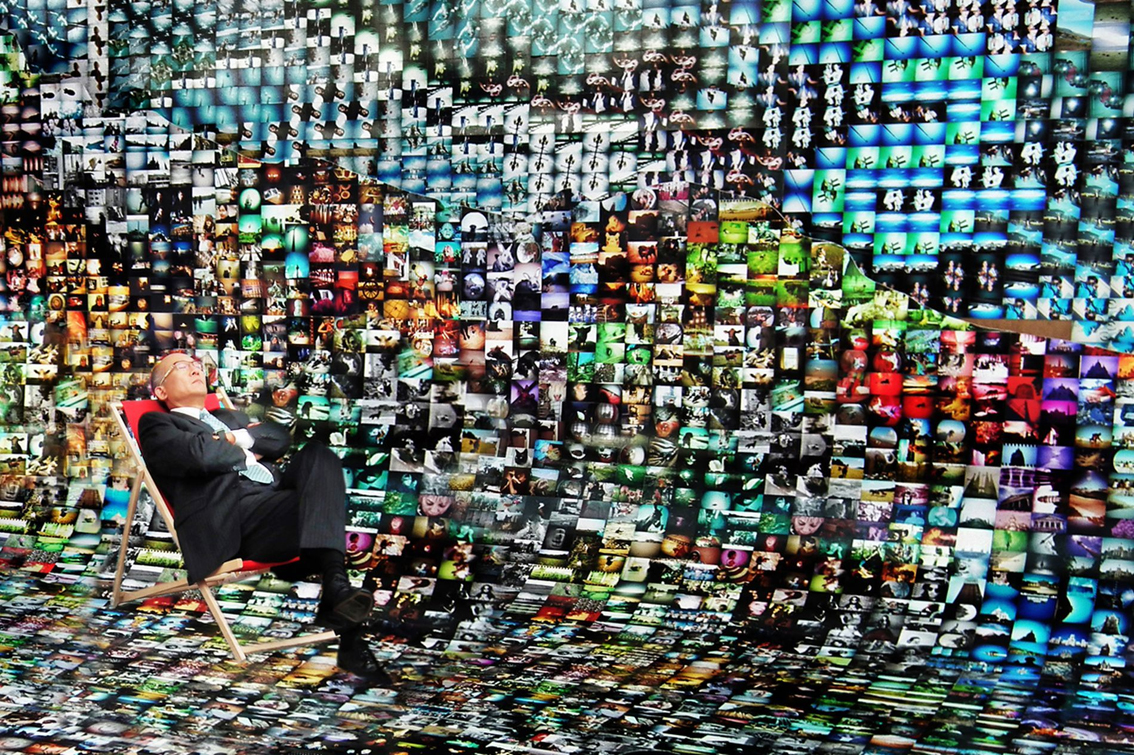
Clip thinking contributes to excessive consumption of digital content and dependence on technologies. It is accompanied by the need to frequently receive new and exciting stimuli which, nevertheless, “pass in transit” through the mind without imprinting in it. The digital environment, with its rapid pace of updates, instant notifications, and constant stream of content, satisfies this craving. People with clip thinking seek in the digital environment a source of constant and varied stimulation, which contributes to increasing the time spent on social networks, games, and other digital activities.
They get used to short but frequent bursts of pleasure and reward, which makes them less satisfied by less frequent but more significant rewards, such as achievements in real life. This leads to a further increase in dependence on digital stimuli to maintain a level of pleasure and satisfaction.
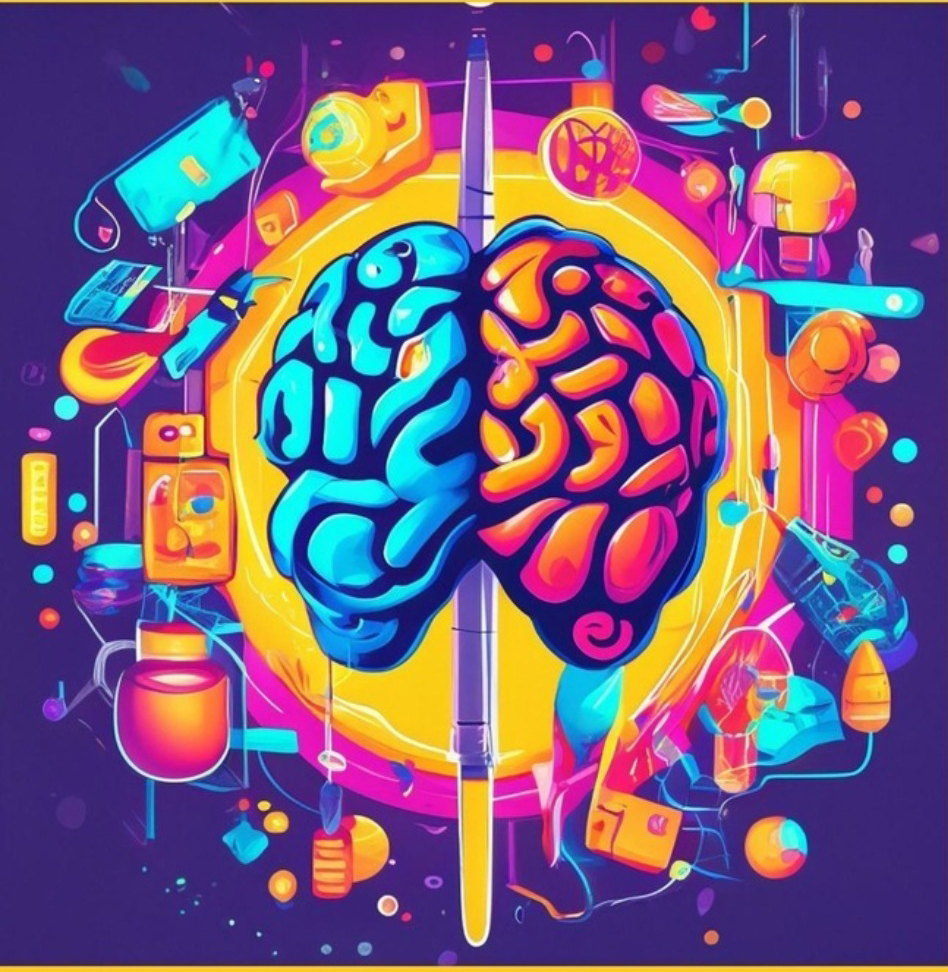
On the biological level, clip thinking is associated with an imbalance in neurotransmitter systems. Thus, excessive impact on the dopaminergic system creates a habit of rapid stimulation, while disruption of the balance between dopamine, norepinephrine, and acetylcholine leads to difficulties in maintaining attention and concentration. An excess of short-term stimuli and a lack of sustained attention change cognitive functions, leading to superficial perception and difficulty in deep understanding.
However, it is precisely the change in perception and the informational environment that is the primary factor that leads to an imbalance of neurotransmitter systems, contributing to the development of clip thinking. Over time, this imbalance becomes fixed, strengthening cognitive habits associated with superficial perception and the constant search for fast stimuli.
At the same time, one should not think that everything is so simple and that people fall into the “dopamine trap” of digital reinforcement merely “out of stupidity.” The very structure of the world is changing, heimarmene acquires new features, and in this new world, saturated with information flows and rapid changes, such functioning of the mind no longer looks like pathology; on the contrary, it may also provide certain advantages compared to a more traditional approach based on deep immersion in each process. Let us recall that the task of the Archons is not the destruction or decline of physical worlds; on the contrary, they are in every way interested in their prosperity — much like a good farmer strives to introduce ever new technologies to increase the productivity of his agriculture. Therefore, the formation of biological-digital hybrids should not bring suffering or inconvenience; on the contrary, it should raise the subjective level of satisfaction with life.
One of the main advantages that cements clip thinking in this new digital world is adaptability to constantly changing environmental conditions. In a world where information comes from different sources and at high speed, the ability to quickly switch between different sources of data and tasks may seem like an important advantage. People with clip thinking are in fact able to exist within multiple streams of information, which makes them more flexible in a rapidly changing digital environment. In the conditions of a rapidly changing labor market and technologies, such adaptability can turn out to be a significant factor of success.
Clip thinking also supports the ability for multitasking, which means the skill of simultaneously — albeit not deeply — performing several tasks or processing several sources of information. This ability can be useful in conditions where it is necessary to effectively cope with multiple duties and tasks. Unlike the more traditional approach that involves deep immersion in a single process, clip thinking allows one to respond more quickly to changes and manage different aspects of activity at the same time.

The modern world provides enormous volumes of information, and clip thinking makes it possible to effectively filter and process this information. Instead of spending time on deep study of every detail, clip thinking focuses on extracting key points from large volumes of data. This can be especially useful in conditions of information overload, where the ability to single out important facts and quickly adapt to new data is of great importance.
Clip thinking can also stimulate the search for novelty and innovative solutions. The tendency toward rapid switching of stimuli and information can contribute to creative thinking and the development of new ideas. In conditions where innovation and creativity become important competitive advantages, the ability to quickly adapt and generate new ideas can become a significant advantage.
In modern society, where digital communications and social networks play an important role, clip thinking can make adaptation to these new styles of communication easier. People prone to clip thinking may more easily perceive and adapt to short, rapid communication formats characteristic of social networks and online platforms. This can somewhat improve their ability to interact effectively in the digital environment and maintain relevant social ties.
Accordingly, modern society is becoming increasingly tuned precisely to people with such a cognitive strategy and is moving ever faster toward the “merging” of human mind, fragmenting and dispersing, with machine forms of intelligence. For example, so-called “digital assistants” are gradually becoming an integral part of modern human life. Machine intelligence can effectively handle routine tasks requiring focus and attention under conditions of rapidly changing stimuli.
Digital assistants, such as voice assistants and specialized apps, are designed to help structure and organize information, simplifying access to needed data and reducing the time spent searching. Such tools take on the function of effective filtering of information, as well as offer contextual prompts and automate routine tasks, allowing users to focus on more rewarding aspects of their work.

While clip thinking is often accompanied by difficulties in making long-term decisions and analyzing complex situations, machine intelligence can also play an important role in this process by providing analytical tools for evaluating various scenarios and forecasting consequences. Adaptive AI algorithms will help collect and analyze data, offering recommendations based on historical data and current trends, effectively making decisions for users under conditions of uncertainty.
For people with clip thinking, one of the main challenges is maintaining concentration on a single task. And here digital assistants also help them, as they can offer solutions for increasing productivity, including time-management methods and reminders about current tasks.
In practice, such use only exacerbates the problem, making a person ever more dependent on the digital environment. Such dependence on digital assistants and AI will lead to a greater reduction of certain cognitive skills, such as the ability to memorize information, analytical thinking, and problem solving. If users rely on technology to perform tasks that they previously performed on their own, this leads to a decline in problem-solving ability and processing information without AI assistance.

This, in turn, will lead to people relying on machine intelligence for decision-making and managing everyday tasks, which will inevitably weaken their own skills that are already diminished.
Although AI is capable of processing large volumes of information and providing recommendations, it is often limited to formulaic approaches. This trains superficial thinking and the repetition of the same decisions, which reduces creativity and innovativeness.
As a result, trust in digital assistants inevitably reduces user autonomy in decision-making. When people rely on the digital environment for making decisions instead of analyzing information and drawing conclusions on their own, this leads to a loss of critical thinking and autonomy.
Thus, it is important to understand that clip thinking is not simply a pathology; it is an adaptive response to the modern information environment. A number of its properties — such as adaptability, multitasking, and the ability to process information rapidly — may seem like important advantages in the conditions of the modern world, increasingly virtual and digital; however, it can lead to cognitive and educational problems if it is not balanced with practices that develop the ability for sustained concentration, deep analysis, and critical thinking.
It is impossible to say unambiguously how irreversible and inevitable the observed changes are, how far the transformation of the mind has already gone, the mechanisms of energy generation and processing. However, if people do not change their way of thinking and acting, the formation of a biological-digital hybrid seems to be a predictable path of evolution, and this path appears to have no downsides, except that people sacrifice freedom and independence while increasing their “nutritional value” for the inhabitants of the Interworld.







Good day. Can you suggest ways to find desire (‘find the desire itself’)?
Hello.
There are a whole series of articles on this blog:
https://www.enmerkar.com/en/way/attaining-desires
https://www.enmerkar.com/en/way/the-emergence-of-desires
https://www.enmerkar.com/en/way/intensifying-desire
https://www.enmerkar.com/en/way/desires-and-desirers
https://www.enmerkar.com/en/way/true-desire
Thank you for your answer. What is the reason consciousness does not find desires for realization? What might be the cause?
The reason is in laziness and ignorance – we do not want to find our nature, and therefore we get caught up in cheaper and more accessible bait.
Thank you for your answer. But if there is another reason not related to laziness and ignorance. The search for one’s spark (one’s nature) is greatly complicated. It feels as if the internal system itself resists this, blocking access. What could be the reason here? Fear of one’s nature of the flow of consciousness? A parasite of consciousness? Other forces? How can this be circumvented?
Of course, a system built as a food resource will resist. There are no quick ways to overcome this, only persistent practice.
I am interested in your opinion on four questions.
You described the adaptive change of consciousness in response to digitization.
What do you think about changes when a) speech b) writing occurs?
It’s hard for me to judge the first. But regarding the second, the sages of their time certainly had a complex opinion. I’m just trying to imagine a similar text (haha) about how writing is convenient and useful but carries such and such side effects on consciousness.
The second resulting question.
Do you not think that the chain ‘speech-writing-digitization-merger with AI’ is in general the same vector?
And if so, why should we stop at writing in it? How is this not a step towards virtualization?
And finally, a very causal question. Is the close penetration of the world and the interworld really bad? As a possible vector of the evolution of the cosmos. Or a phase of the cycle. Hasn’t this happened before, assuming that at one time our material world was different and materially present was much that is now mythical?
Hello.
Firstly, the essay did not discuss what is ‘good’ or ‘bad,’ but simply attempted to describe the evolving situation.
Secondly, I never claim the role of an influencer; I do not try to influence the choices that a person or people make; I just try to ensure that this choice is informed, so that people understand what opportunities and probabilities they have.
About vectors (just an opinion), speech = direct transmission of information, writing = transmission of information through space and time, … = transmission of information outside time and space. So, digitization and AI are standing still; I apologize.
Enmerkar,
please advise,
from the perspective of development and selection of clip thinking in the cognitive approach.
So clip thinking, in theory, is a walk through boxes of meanings or emotions prepared by others for you?
The pleasure is based on ‘discovering,’ ‘achieving’ these meanings and emotions from the initial position of standing before a wall.
From the perspective of the selection of such thinking, how to deeply develop intuition and logic, sharpness of vision, and insight?
Clip thinking is the attempt to feel one’s reality through the recognition of your reality by others. When a person receives a ‘like’ on their posts, they get ‘confirmation’ that they exist, that they are ‘recognized’ by others. So it is a ‘journey through boxes of meanings’ that people prepare for themselves, not for others.
Accordingly, we need to seek other supports for a sense of one’s own reality; this is the skill that magicians have long referred to as ‘identification with one’s Path.’ (https://en.enmerkar.com/magus-way/put-kak-fundamentalnaya-kategoriya)