Worlds of Yggdrasil
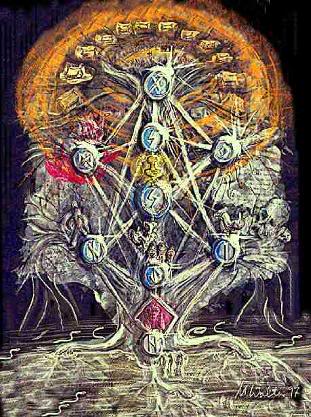
The idea of the Nine worlds, forming a single whole within the World Tree’s branches, is a universal system in ancient cosmography.
Indeed, a triad as the highest expression of cosmic harmony is ideally suited to describe the manifest cosmos.
In the ancient Norse system of world description, The Nine Worlds of Yggdrasil depict the fullness of the perceptual field of the human mind.
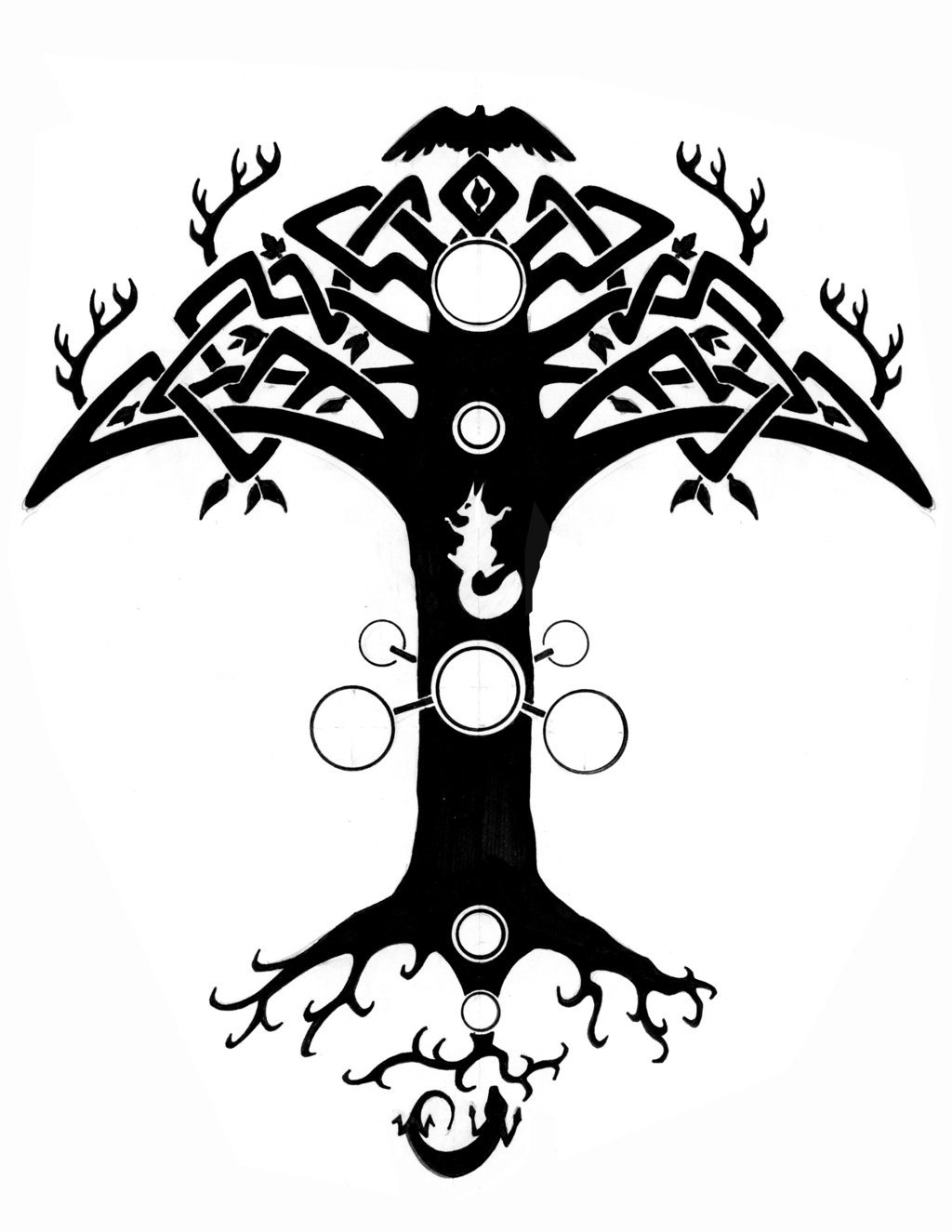
This system can be approached from different perspectives, but any interpretation inevitably involves distinguishing an “upper”, a “middle” and a “lower” triad.
We have already described various approaches to understanding the idea of the Nine worlds; we will now consider one more approach, which has important practical consequences.
To begin, recall that the Myth we are considering defines a World as a complex of perceptual elements that form a cohesive system, generating the characteristic laws of interaction among its individual elements.
In other words, a world is a system self-contained, separated from other similar systems by a perceptual barrier.
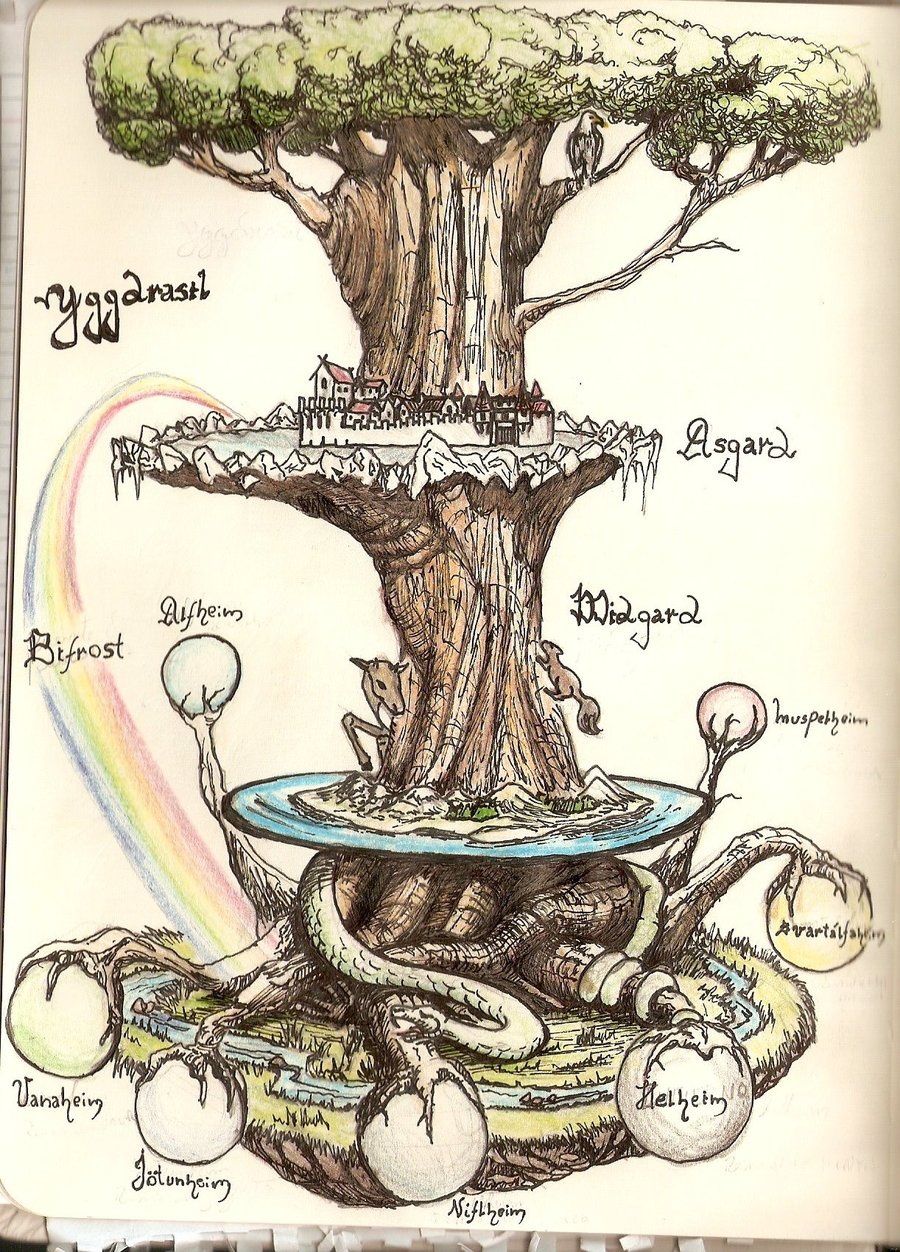
Accordingly, one can speak of movement between worlds when the mind shifts from one stable state to another.
From this point of view, the set of stable positions available to the mind constitutes the set of worlds accessible to it.
For the human mind in its “classical” form, it is precisely nine such states that are most readily available, which led to their description as a collection of “cities”, “houses”, “heims” united by the World Ash.
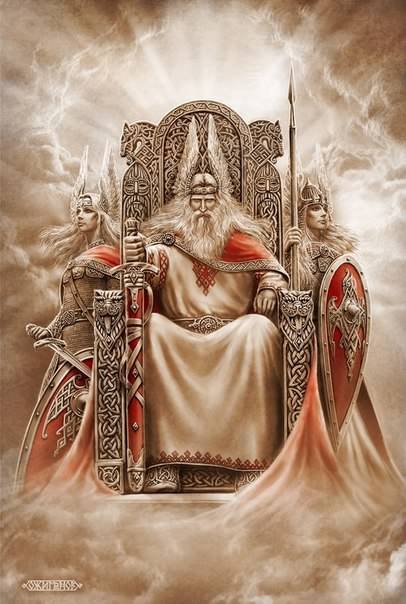
Note that, as mentioned, within the Microcosm it is impossible to single out the “worlds” of Yggdrasil — that is, there is no region of the mind that is “Asgard” or “Midgard” — yet within the Microcosm one can, and sometimes it is quite productive, to access Asgard’s energy, the power of the Jotuns, and the luminous breath of the Ljosalfar.
Each world, each state of mind, is also a particular kind of energy, and the ability to engage with these energies can bring considerable benefit to a developing mind.
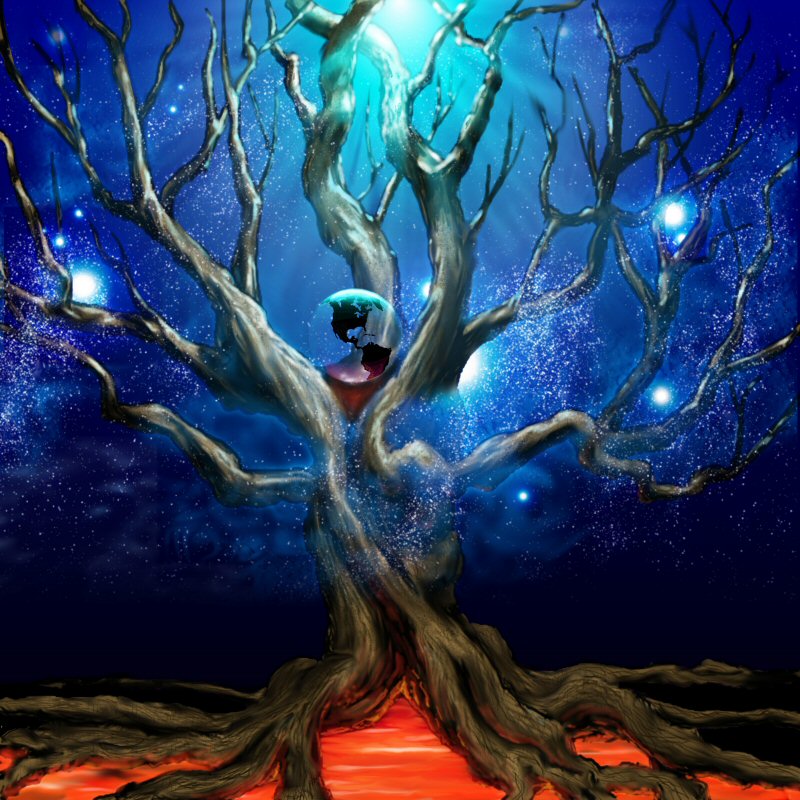
In this sense, it may be productive to consider the Worlds specifically in terms of forms of energy: 1) a triad of potentials: Muspelheim (thesis), Niflheim (antithesis) and Jotunheim (neutralizing); 2) a triad of creation: Ljosalfheim (+), Svartalfheim (-) and Vanaheim (neutralizing); 3) a triad of sustenance: Midgard (+), Hel (-) and Asgard, which holds them in balance.
The point is that Muspelheim expresses a state of active potential energy which, meeting its negative component, Niflheim, is prevented from annihilation by the force of the primordial ancestors. Accordingly, a magus wishing to create a new state of mind — that is, a quasi-world (and any realization of creative will is the creation of such a micro-world) — must balance fire with ice by means of an act of will.
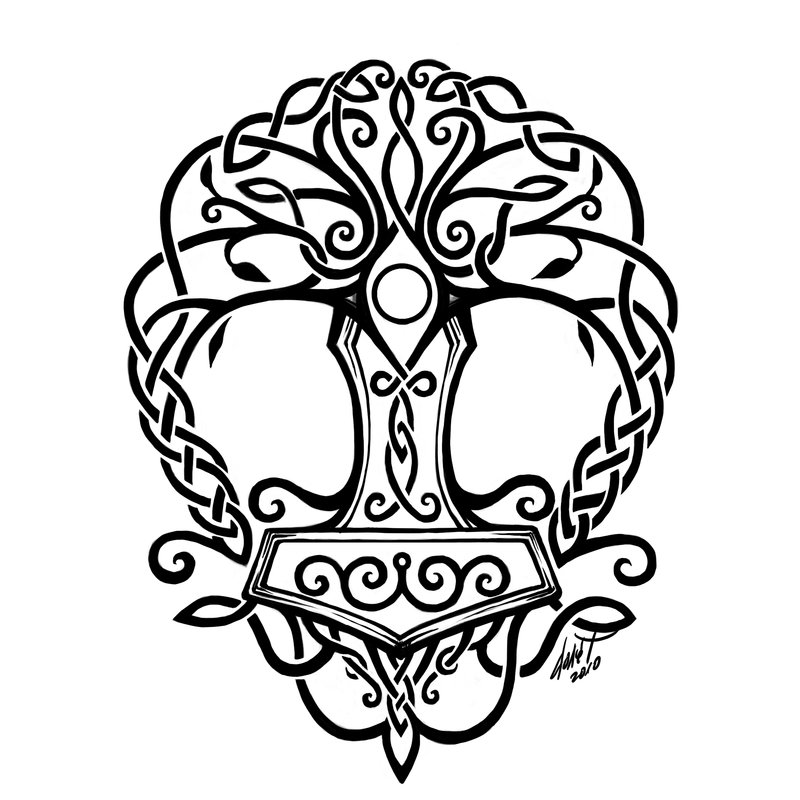
Similarly, to alter the state of an existing system one must deploy pure intelligence (the Ljosalf force), balancing it with subconscious creative activity (the Dvergar) by means of life force (the Vanir).
Finally, to sustain any system one will find useful the energies of life (as phenomenon, not as principle) and Death, balanced by creative intelligence.
Understanding the nature of these energies and the interactions between them allows not only a deeper insight into the mechanism of the ritual, but also the discovery of new keys to its refinement.
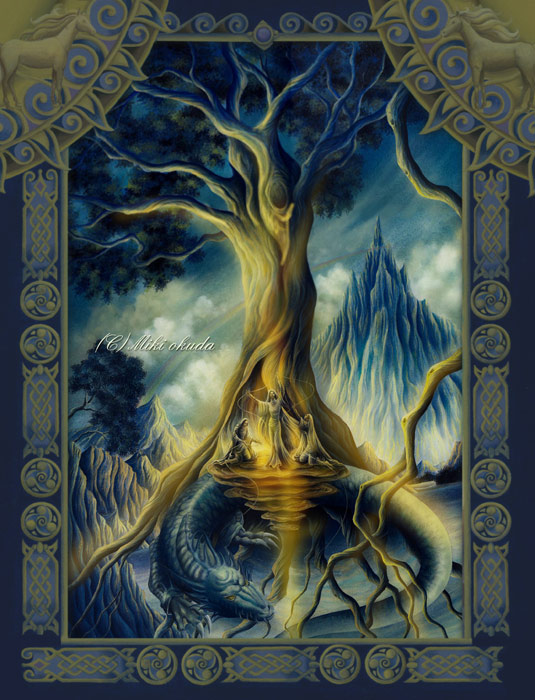

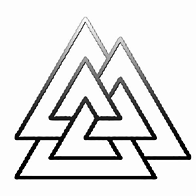
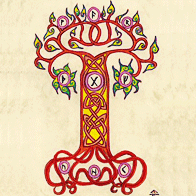
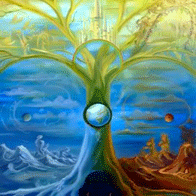
Is it possible to use corresponding runes for a better awareness of worlds in the psycho-cosmos, for example, by wearing their images as a pendant?
The narrow-mindedness of the Microcosm does not allow overcoming the barrier of perception of the world. Having purified and raised awareness to the magnitude of the world in which it dwells, it can overcome the barrier of perception. Overcoming the barrier of perception, consciousness encounters the Predators of the Macrocosm.
Enmerkar. In almost all your articles, you discuss binaries. Either a binary approach, a struggle without end. And here is the article about the world structure, from which one can conclude that the universe is built not on the struggle of opposites, but rather on integration, even with the help of a third force. The path of synthesis is nonetheless preferable, more harmonious. Of course, I understand that the dual description of the world, the principle of eternal conflict can evoke energy and determination in a student, but it can also drive one mad with the understanding of the infinity of this hostile process. Still, there is some ideal state of wholeness that one can reach, right? In general, in all articles, dualism and struggle, but in the world structure, there is trinity, balance, and unifying principle. How come?
The universe is certainly built not in a binary or ternary way, but according to a quaternary principle. However, the quaternary develops gradually – from a binary of possibilities, through a ternary of creativity. The system of Yggdrasil is trinomial, as it is dynamic. If considered in a ‘static’ aspect, then Midgard is in the center, around which are two quaternaries – right and left.
Dear Enmerkar!
Please tell me, what nature do Nidhogg and Jörmungandr have? Do they have some kind of kinship? Are these beings used in practical magic of runes or evocations?
Respectfully
https://www.enmerkar.com/en/myth/the-world-serpent-enemy-of-creation