
Mind as an Ordering Activity
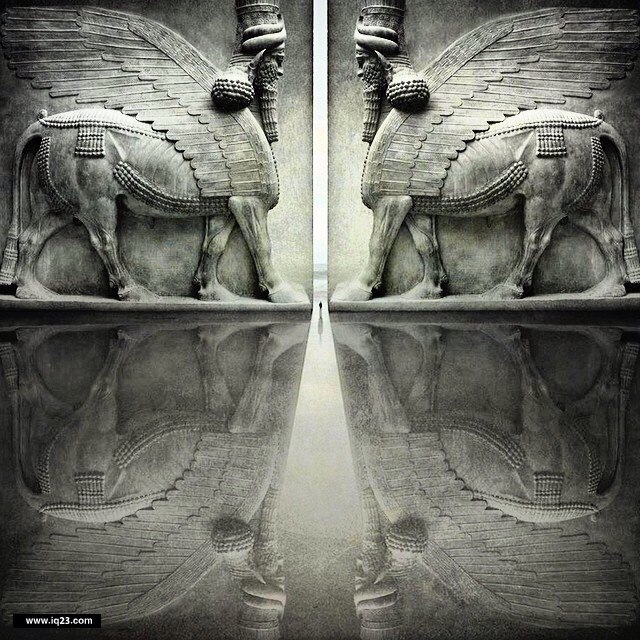
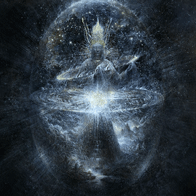
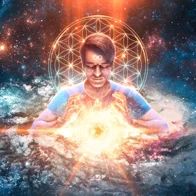
We have already spoken more than once that the Myth describes reality as the product of the interaction of two basic categories – being and mind, with being constituting an infinite field of possibilities, of probabilities, whose ordering/actualization is carried out by mind.
In fact, focusing on each category that gives rise to two ways of describing the cosmos – the one we call the scientific, the physical, and the one usually called magical or mystical. That is, when we consider how being is ordered, we study it from a ‘scientific’ point of view, and when we attempt to describe the creative influence of mind we enter the domain of mysticism.
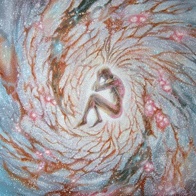
At the same time, it is obvious that the two categories are interdependent: without the formative, actualizing power of mind, being remains merely a virtual reality, as the idea of the anthropic principle indicates, for it is mind that chooses which possibility from the infinite field of the Environment to ’embody’, to realize. Conversely, mind needs a ‘field of activity‘ for its creativity. Without anchoring in being, the mind is likewise deprived of the possibility of fully manifesting itself.
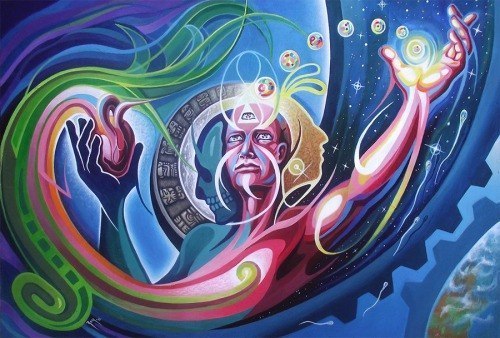
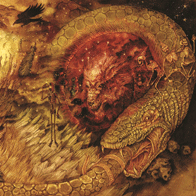
Nevertheless, the mind’s efforts to order, actualize, and shape the cosmos are often confined to the mere actualization of reality and do not extend to the Psychocosmos itself. The situation in which mind becomes ‘enslaved’ by its ‘external’ activity — becoming merely a force producing reality with little or no inner development — Western Magic calls ‘absorption by being’ or ‘whirling in the gilgul’, while Eastern Schools call it ‘obscuration’ and ‘immersion in Samsara’. The ‘Wheel of Being’, set turning by the power of mind, becomes filled with reality and interdependence of its phenomena; it requires further ‘nourishment’ from the formative power of mind, draws that mind into an endless differentiating activity and thus enslaves it, making it its servant, its builder, a lover of its own works — a Pygmalion admiring his Galatea — and forgetting that he himself is the true author of those works. Enthralled by the differentiating activity that produces reality, the mind falls into the illusion of separateness and begins to regard the very reality it produces as the true value and meaning of its existence.
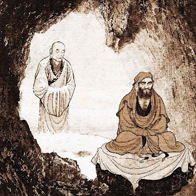
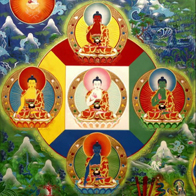
It has long been observed that such a situation is disharmonious and unbalanced. Throughout human history many attempts have tried to correct it, among them attempts to synthesize the ‘scientific’ and the ‘mystical’ outlooks, expressed in Theurgic schools that try, from the standpoint of mind, to describe the formation of being; in modern currents in physics oriented toward relativistic views (including quantum field theory and string theory); and in Buddhist Schools aimed primarily at ordering the mind itself and harmonizing it.
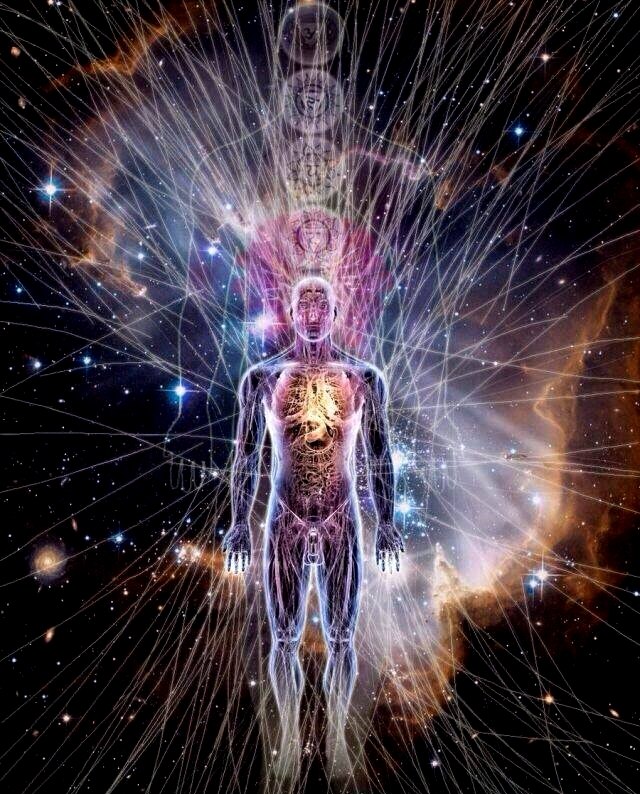
In any case, the mind senses the imbalance of being seen merely as its moving force, feels the deficiency of such a condition and always (more or less consciously) strives to correct it. At the same time, idealizing the mind (in the form of theistic views) is no more harmonious than idealizing being. A person who says that reality is only atoms and molecules is as unbalanced as one who speaks only of the ultimate reality of Sabaoth or Brahman.
Both the denial of the necessity of creative activity and its absolutization lead to a narrowed mind and to dissatisfaction. When Buddhist Masters speak of the ’emptiness’ of the world, they do not mean its unreality but merely emphasize the absence of the independent existence of objects and phenomena. When mystics speak of the Great Spirit, the Para-Brahman, they do not deny the reality of matter or the Environment; they only point to the necessity of ‘the primacy of spirit over forms’.
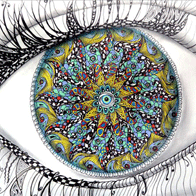
Nevertheless, it is precisely insufficient attention to the mind’s self-ordering that is the fundamental error leading to dissatisfaction and suffering. However successful the activity of actualizing being may be, the mind must above all rely on itself, and use the Environment as a field to manifest its will. So long as, instead of a Psychocosmos, there exists psycho-chaos, the mind will remain a slave of being, merely an auxiliary ordering activity, infinitely bound to the cycle of interdependent arising.
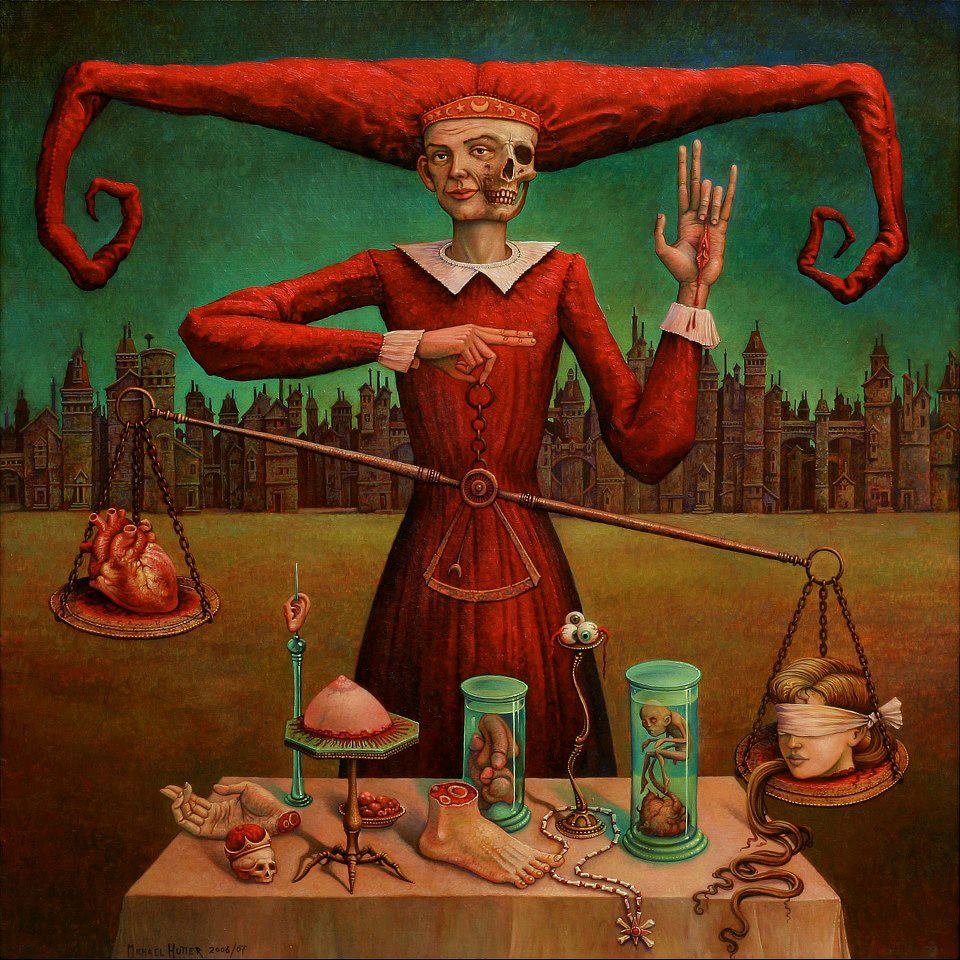

Spinning a top (gyroscope) is a stable state, even in positions “on the tip of a needle” and at any angle – it’s interesting to find an analogy in the state of consciousness.
Great, Enmerkar. The theme of psychokinesis is relevant. The traps of Lucifer’s duality are hidden in the release from samsara. I recently realized that 98% of suffering is virtual, meaning it’s due to the mind 🙂
Greetings to all.
I have long been looking for a suitable site where I could find a lot of study material, one that does not divide everything into black and white and where every line is not soaked with nonsense and imagination. There is none of that here, and that pleases me.
And while I will be studying the material presented here, I would like to find a person who can evaluate me and suggest which direction to move in. A mentor, if I may say so. I will be very glad if someone responds in the comments.
If such comments are prohibited – I apologize, but I don’t see a forum here, and I’m not quite sure where to write.
Greetings.
Mentorship is somewhat different… but studying and figuring things out together is always more interesting, and discussing events as well. Write to titeo@bk.ru
So what is Consciousness? How is it different from the other energies of being, what is it made of, how does the composition of human consciousness differ from that of other forms of life… there is no answer yet.
The meanings are presented very accessibly. Thank you. Awesome!!!