Information, Falsification, and Induction
We have already discussed repeatedly, from the point of view of the Myth we are considering, the manifested world can be described from the point of view of three aspects:
- mind (and its individual modes – monads),
- energy (as the basis of manifestation, interactions – vortices),
- information (and its ideal sources – logoi).
At the same time, the flows of mind, ordered by monads, serve to actualize energies, while logoi guide this actualization. Namely, mind creates reality by describing the possible manifestations of energies in accordance with the logoi available to it.
The possibilities of existence, interaction, and structuring are “essential” properties of reality, “stitched” into its very structure, and therefore any manifestation can be considered
- as a product of observation (“observation,” “measurement”),
- as a field of interactions, and
- as a structure
– that is, in terms of consciousness, matter, and information.
And if the “material” and “mental” aspects of reality are usually studied and discussed quite broadly, then less attention is paid to its informational (logostic) level. Nevertheless, for any aware rational being, it is precisely information that is the guide of its life; based on information, it builds the strategy and tactics of its activity.
From the point of view of modern physics, it is assumed that information is embedded in the very structure of the space-time of the Universe. This idea is connected with attempts to unify the fundamental concepts of physics — information, space-time, and quantum regularities.
Therefore, many researchers consider the Universe not only as an object that develops in time but also as a structure containing information at its core. Thus, information is not considered as a separate layer but as an integral part of the fundamental structure of the Universe.
From this point of view, space-time is perceived as something more than just emptiness or a “container” for matter and energy; it also contains built-in rules and laws that can be regarded as ways or forms of encoding information.
Such descriptions include descriptions of quantum networks or quantum interconnections that bind particles and fields of the Universe. These connections facilitate the transfer of information between different regions of space-time.
Even in classical thermodynamics, entropy is associated with uncertainty and the amount of information in a system. An increase in entropy is usually associated with an increase in uncertainty in the system, which can be regarded as an increase in information. Thus, energy, interacting with a system, can change its state and, consequently, the information associated with it. In the aspects of information and uncertainty, entropy and related measures provide a mathematical toolkit for measuring the amount of information and the degree of its uncertainty in various systems.
In a quantum system, information about the state exists in the form of a wave function, which describes uncertainty with respect to a specific state. This uncertainty is associated with the principle of superposition and the limits of measurement accuracy provided by the uncertainty principle.
That is, various physico-mathematical approaches to describing the observed, manifested reality can no longer ignore the informational component.
We have already said that, from the point of view of the Hermetic Myth, the ultimate source of information is the hierarchy of logoi — the meaning-creating aspects of reality. At the same time, logoi themselves are only ideal structural foundations, only absolute principles which, in interaction with the flows of mind, reveal different aspects in the form of ideas, eidoses or models (patterns) — nomoses (Me), and these models already give rise to a concrete form as an element of structure.
At the same time, along the logos–eidos–matrix–form path, of course, “failures” can occur: distortions, conscious or unconscious violations and falsifications.
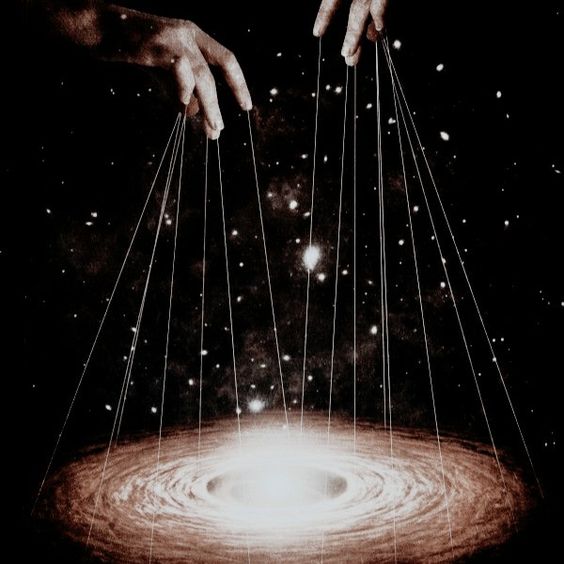
In other words, it is precisely the informational aspect that is the source of its distortion; it is in this “layer” that there lie both the possibilities for development, the guides of evolution, and the paths of “fall,” degradation.
We have said that the accumulation of such distorted informational flows creates the “limiting” aspect of reality, called heimarmene.
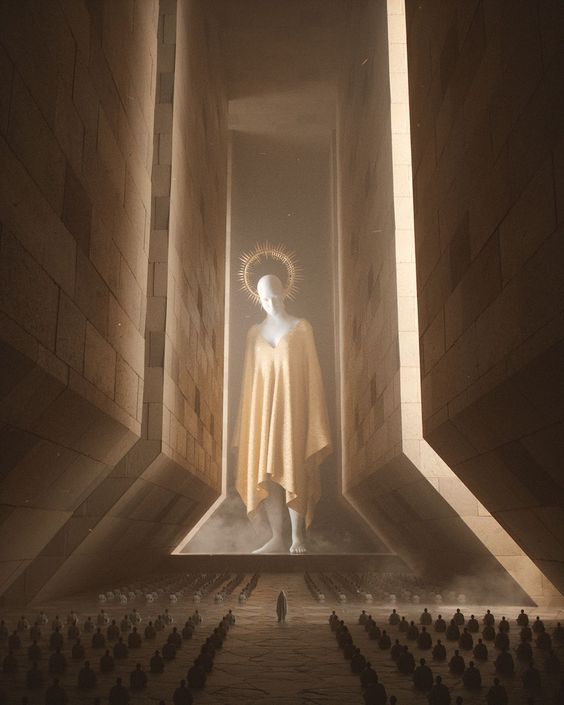
Thus, we can say that any “natural” information — that is, originating from the very structure of the logostic aspect of reality — is true, while any information “artificially” created on the basis of imperfect knowledge, an incomplete vision of this aspect, is to a greater or lesser degree “false,” that is, darkened or distorted. It is clear that the complete insight of logoi necessary for the error-free development of mind is accessible only to its fully enlightened flows; all the others live in conditions of greater or lesser falsification, greater or lesser distortion of perception.
Nevertheless, a way to determine the “closeness” of a description of the world or its individual elements to their logostic foundations is “cross-checking” using other aspects of reality.

In this sense, the notion of induction is important — the ability of stronger flows of being or mind to “tune” weaker or less stable flows to themselves, to cause the manifestation of properties similar to their own.
Accordingly, to reduce the chance of distortion, when forming an image of a particular phenomenon or process, mind must rely on two sets of data:
- its own notions and views (that is, the informational aspect), and
- analysis of changes induced by interaction with this phenomenon or process.

In Traditional images, this “double knowing” is depicted as the joint
- application of “Apollonian,” that is, analytical, rational efforts, and
- as reliance on the “Dionysian aspect,” a sensory-intuitive approach.
In modern conditions, when various informational flows flood each person, and when a significant part of this informational overload consists of lies, falsifications, and manipulations, such a Traditional double check can provide invaluable help for correct orientation.
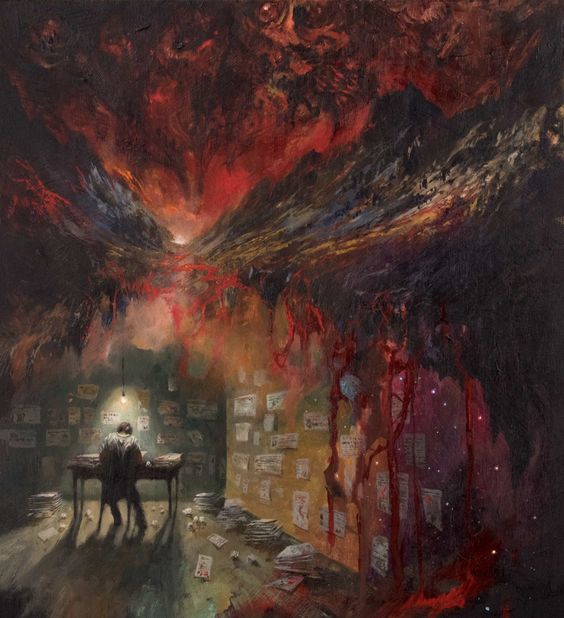
It is extremely important not only to ask yourself the questions: “how true does this information seem to me?”, “how much does it correspond to my views?”, “how much is it supported by public opinion?” but also: “how much does this information correspond to my sensations?”, “what changes does it cause in me?”, “what changes does it induce in me?”, “do these notions bring me closer to my true nature?”, “do they contribute to the growth of love and freedom in me?”.
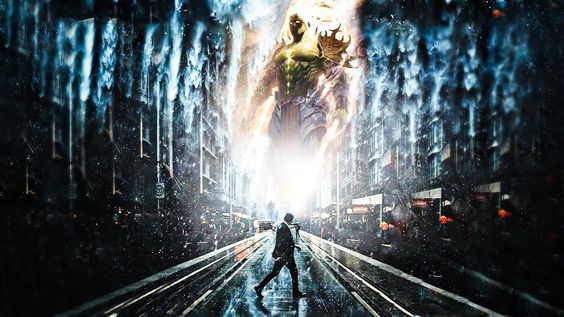
With such an attentive attitude, it will turn out that very much of what is presented to society as “true,” “correct,” or “good,” in fact turns out to lead to darkness, to degradation and an increase in darkness.




Dear Enmerkar, thank you for the cool systemic information. Please tell me (sorry for the primitive, but still practical question). I know several wonderful people who practice so-called Theta Healing. And if the criterion is the question ‘do they contribute to the increase of love and freedom in me?’, I can say, observing them, that they indeed contribute. At the same time, I find that this movement is very commercialized, primitive, and pseudo-scientific (and pseudo-spiritual). So how to determine where the “truth” is? P.S. This question can be applied not only to theta healing but also to most new esoteric and quasi-magical movements.
The criterion is always the impact on the practitioner and their surroundings. It is just important to understand that the observed “positive changes” can also be an imitation, a falsification, and therefore it is important to assess not only how a person behaves in and of themselves, but also how they behave towards others and what they radiate around them.
Absolutely any construction has a matrix-informational foundation. If, looking at the text, one cannot extract information, this text is empty and meaningless, because it is precisely for this meaning that consciousness grabs, building correspondences and connections “thinking over” what is seen, i.e., creating new constructions within oneself. But you have only touched on this deeply interesting topic superficially. Ah… to break down the mechanism of correspondence to understand how it is arranged, so one can learn to create matrices themselves.
One of my latest practices is to impose a pure and “correct” matrix on a distorted one and bring it into alignment. I’m still studying the result.
Good day. In this context, is the Monad just an abstract class for a subject-object relationship or a concrete entity?
The Monad is a conditional name for the axis of the flow of consciousness, a carrier of subjectivity that has potential reality.
https://www.enmerkar.com/en/myth/monads-logoi-and-vortices