Boundaries and Gatekeepers
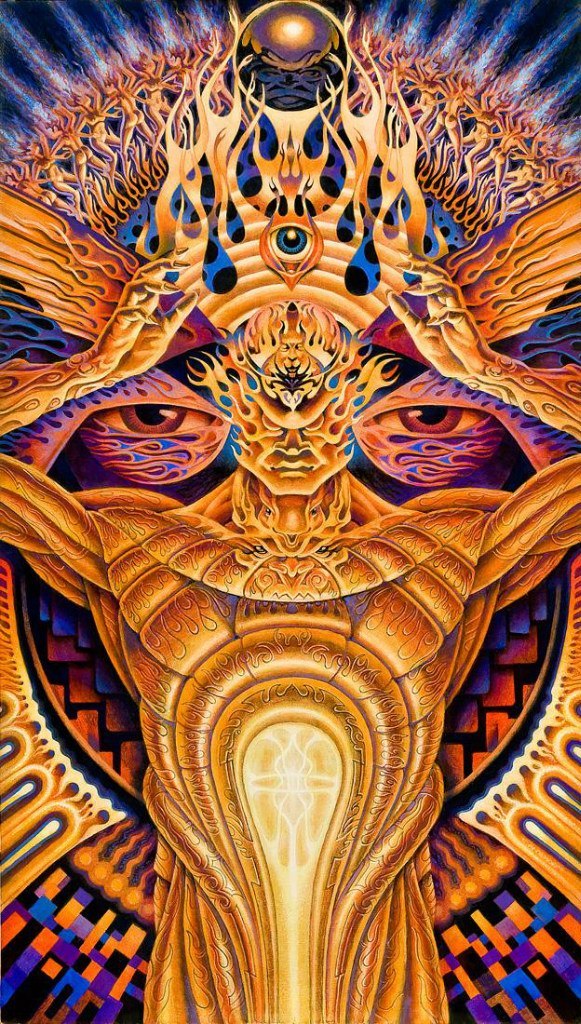
The multiplicity, individualization of the mind of the Great Spirit is a necessary condition for His self-knowledge in the infinite variety of His aspects.
The maintenance of individuality, uniqueness, and inimitability of these viewpoints — Monads and their «reflections» — energies — is sustained by the cosmic force of Repulsion, which manifests in a beneficent, evolutionary aspect as the Guardian of the Threshold, and, when taken to an extreme and unbalanced, as the World Serpent Nakhash.
Although the very notion of a limit, Boundaries, is only a provisional concept arising in the course of what is essentially a single act of self-knowledge, it is crucial to the performance of that act.
The duality of the process of knowing, its division into subject and object, and the multiplicity of the One’s perspectives upon itself — these are, in essence, manifestations of the same force: the Great Father of Worlds, who affirms differentiation as his fundamental principle.
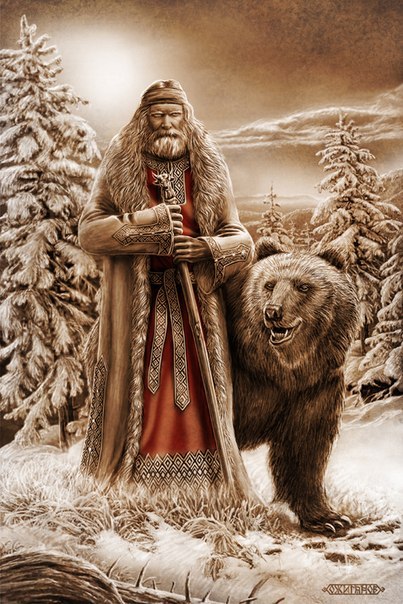
For the Magus, the idea of this force is extraordinarily important, since his cognitive activity is concentrated precisely on the interaction of the mirror of the mind with the energies reflected in it, which are in flux and transformation. In other words, the Magus engages in self-knowledge through the transformation of the Environment, by acting upon the object of the mind, registering within himself the changes produced by those actions. Unlike the Eastern contemplative, who studies mind from the standpoint of mind itself — the subject — “from within,” the Magus studies the mind from the standpoint of its objects, “from without,” while never forgetting the conventionality and relativity of that very division. The Way of the Magus is a way of action and reaction to that action; it is self-knowledge in transformation, self-knowledge from the perspective of the Immanent.
That is why Threshold Forces — both the Keepers and those Crossing the Threshold — are of such great importance to the Magi and Magic.
Acknowledging the Unity and even its relativity, the Magus concentrates on the multiplicity, diversity, and individuality of the Monads and energies.
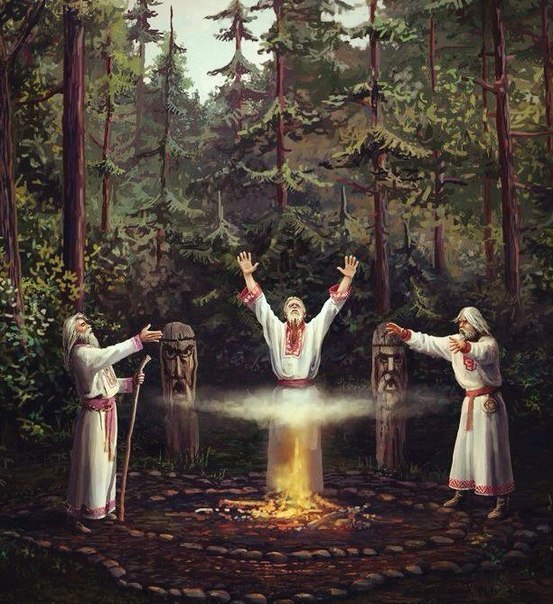
Threshold Rituals, the Wild Hunt, and Goetia are, among other things, means of entering into contact with the Differentiating force of the cosmos in the full diversity of its manifestations.
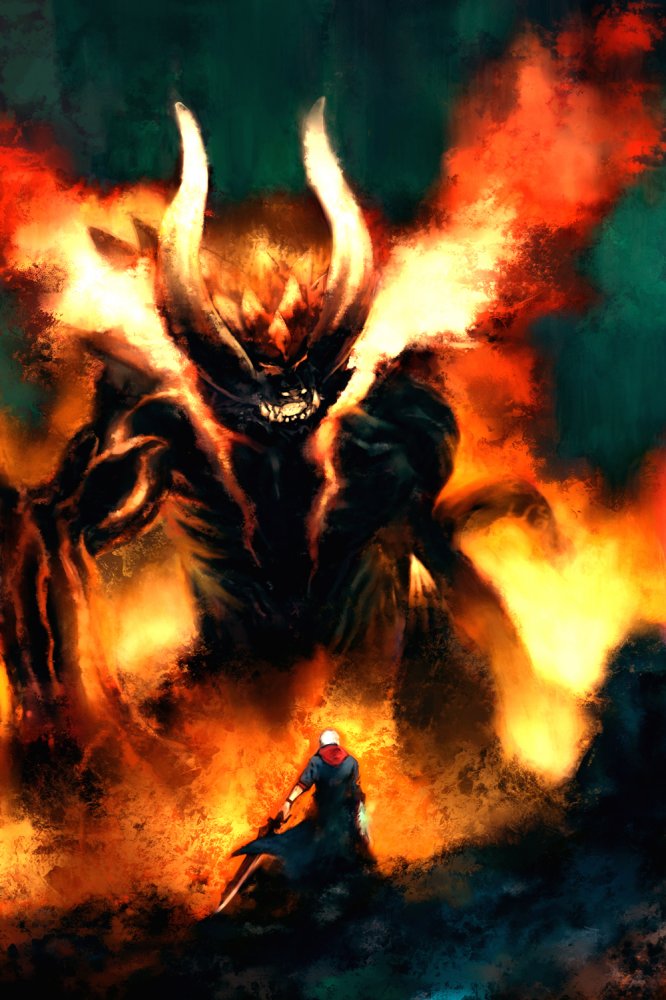
Since a critically important task for the Magus is overcoming separateness and acquiring individuality, it is precisely the study of the Threshold forces and their interaction with the mind that constitutes the chief practice of Magic.
The Magus seeks contact with this force, seeks ways to purify and transform it from a force that compels him to set himself against the whole cosmos into a force that brings about cosmic harmony in the diversity of the One’s manifestations.
And the more apparent the Threshold Forces become to the Magus, the better he understands their characteristics, leverage points, and mechanisms of influence, the freer from their influence he becomes.
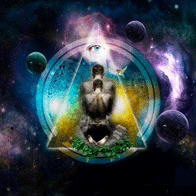
When the Magus breaks the limit, opening the hunt, he hunts his own separateness; when the Magus summons a demon into the Triangle of Art, he externalizes his destructive impulses, and these externalizations — which are essentially analogous to the Great Spirit’s universal process of self-knowledge as reflected in the Environment — serve the Magus as instruments for the development, expansion, and purification of his mind.

I’m a little confused. It’s clear that the magician is not fully aware of his inseparability from the World, otherwise he wouldn’t need to summon demons and hunt for something.
Am I right in understanding that even without realizing this inseparability, he summons a force that he feels as external, while essentially based on the idea that it is NOT external, and thus, working with the global flows, the magician ultimately organizes his own psychocosmos?
Precisely because the magician is very well aware of his inseparability, he is equally aware of his individuality, since unity without multiplicity is just one pole of the binary, and not its entirety. Although in reality, the division into ‘external’ and ‘internal’ is conditional, just as the expression ‘one’s psychocosmos’ is conditional, it is important from a relative point of view. Strictly speaking, Psychocosmos is just a psychocosmos, an ocean of consciousness that manifests itself in an infinite number of individual ways. Nevertheless, truly, consciousness still considering itself separate and limited can regard forces as ‘external’ and ‘internal’, and its way of functioning precisely lies in establishing correspondences between ‘external’ and ‘internal’. A magician summoning a demon is simultaneously a consciousness contacting the dark part of itself, but also a separate part contacting another separate unit. For absolute consciousness, there are no demons, just as there is no manifestation at all; for individual consciousness, a demon is the dark part of itself, while for personality, relative consciousness, a demon is an external force.
I have a question that arose regarding the mage summoning a demon; it’s clear what and why here, but how can one explain the moment when to understand anything or anyone, it’s possible to become this, penetrating into the very structure of the known. To become it from the inside, to take shape, to feel the breeze and the reaction of the known to this fact. To be there temporarily. Not interpreting what is happening in any way, but understanding the state, and perhaps even the reasons. This does not necessarily concern people; why is this so, stone, mountain, water, yes, anything. The wind blows, the vestibular apparatus must be strong, but for cognition, it’s great. Where is the threshold here, and is there one, or maybe we set it for ourselves after all? After all, to move forward, one needs a different purity, not the one with which we came once. The Spirit is all Spirit, in all Spirit, diverse with a huge number of commas, and the Strength (Threshold in this case), it is Strength and is also as diverse as everything else. And if this is in you, then are the names important, or is it still more interesting to understand what is happening and have a set of qualities necessary to pass the threshold – after all, everything is One.
It would be beautiful and useful to be the music that you hear, at least occasionally. To live, then trying while looking down. Beautiful.
An amazing article, just at the right time for me (isn’t that something), thank you very much). I was particularly impressed by the fact (which is obvious), that even threshold power can increase the level of coherence, harmony, instead of the opposite, as is usually the case).