Akme Vyaz – Fruits and Results
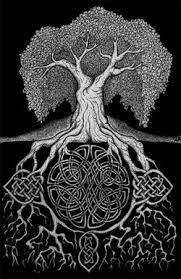
First Akme symbolized the forces of birth, the second – the forces of growth, the third – the forces of dispersion, and the fourth is devoted to the interaction of this system with its surroundings, its influence on its surroundings, which serves as its medium for that influence.
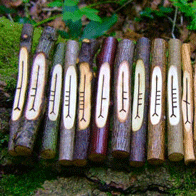
Feda of the fourth akme have a fundamentally different marking pattern than the previous ones – they are denoted either by long horizontal notches or by knots on the druim, which indicates a two-way interaction or the tying of knots, connections, between this system and other structures. From a linguistic point of view, the feda of this akme are vowels, unlike the consonants of the previous families, which also gives their energy a broader reach by the breadth of its diffusion.
1. Alv (alm) – Vyaz (Fir, Spruce). The first fid of the fourth akme speaks of the emerging ability to bear fruit, of the possibility for the system to extend beyond its limits. With regard to the feda, this refers to the so-called Shrubby or Low-growing vyaz — a small tree that grows along roadsides. This aspect signifies the “tree’s emergence from the forest,” that is, the appearance of a force where none existed before. Vyaz is a tree that sends abundant shoots from its roots even after the main trunk has died, which also points to the external orientation of this energy. Fir and Spruce, which are also associated with the Alv fid, encase their seeds in cones, from which they are dispersed by birds and mammals over long distances to distant places; both were also regarded as symbols of rebirth and the expansion of life.
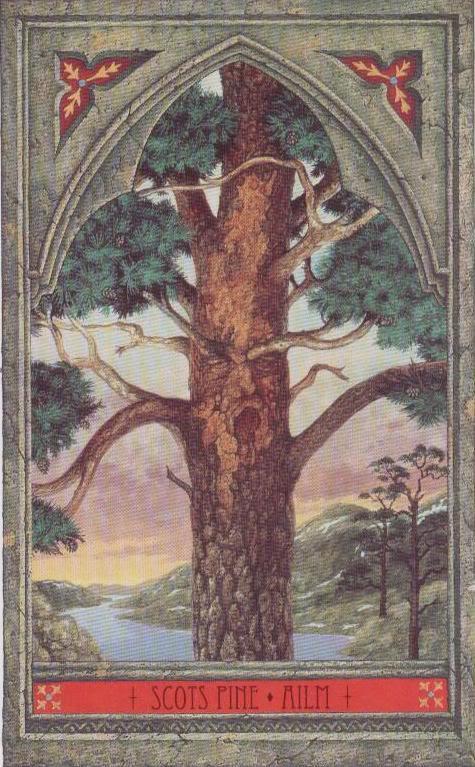
Accordingly, the magical application of the vyaz fid consists in awakening the system’s capacity for transcendence, to transition to a qualitatively new level, and also in a broadening of outlook — in a broader perspective and expanded consciousness.
2. Onn (Onen) – Utesnik (gorse). The “core” expression of the energy of the fourth akme is embodied in the image of yellow, sunlit thickets of leguminous shrubs — Utesnik and gorse. These are plants that flower almost year‑round, which attests to the inexhaustible energy of fertility symbolized by this fid. Whatever the conditions, Utesnik continues to bloom, which indicates the continued external expansion of the system’s energy despite external circumstances. Both plants are excellent nectar producers, which further augments the “fruit‑bearing” energy. Thus, the energy of Utesnik is the energy of propagating its effects — as honey, in the bright flowers set against gray coastal cliffs, and in feeding flocks of sheep. Accordingly, the magical application of the Onn fid consists in activating energies of fertility and the system’s life-giving influence on its surroundings.
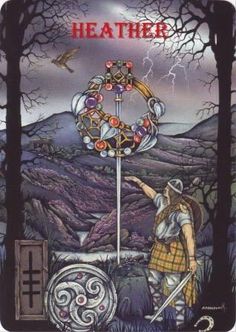
3. Ur – Heather. The activity of the fruiting akme is embodied in the energy of the Heather fid — a plant of freshness and morning dew. The word “ur” translates as “earth,” “moist,” “new,” “fresh,” which likewise indicates the fecund character of this energy. Heather is believed to bring good fortune; it is one of the best nectar plants, and heather honey was regarded as “food of the gods.” Heather is the energy of summer, warmth, sweet honey, and heady ale. Accordingly, the energy of this fid is life force spreading everywhere, experiencing no lack or delay. The magical application of the heather fid consists in activating energies of resolution, overcoming problems and obstacles, a powerful surge of vitality.
4. Ezaz (Eye) – Aspen (Poplar). The receptivity of the fruiting akme is expressed by the Aspen (the trembling poplar) fid. This is a very hardy tree that grows in wet lowlands and on dry mountainous slopes, reaching significant size in both. At the same time, the Aspen “absorbs” the energy of the place where it grows, actively taking in and transforming that energy. The Aspen’s capacity to accumulate negative energy and absorb evil, to take in “evil,” led to its wide use in black magic: aspen rods were used for casting curses, and in Scotland still no agricultural tool is made from aspen wood. Aspen was widely used at the funerals of suicides, those who died violent deaths, and also of sorcerers and witches, since it was believed to “absorb” the evil emanating from them. Accordingly, the magical use of the Ezaz fid comes down to protection, the “absorption” of evil, activating the system’s capacity to transform negativity into life energy — to turn death into life.
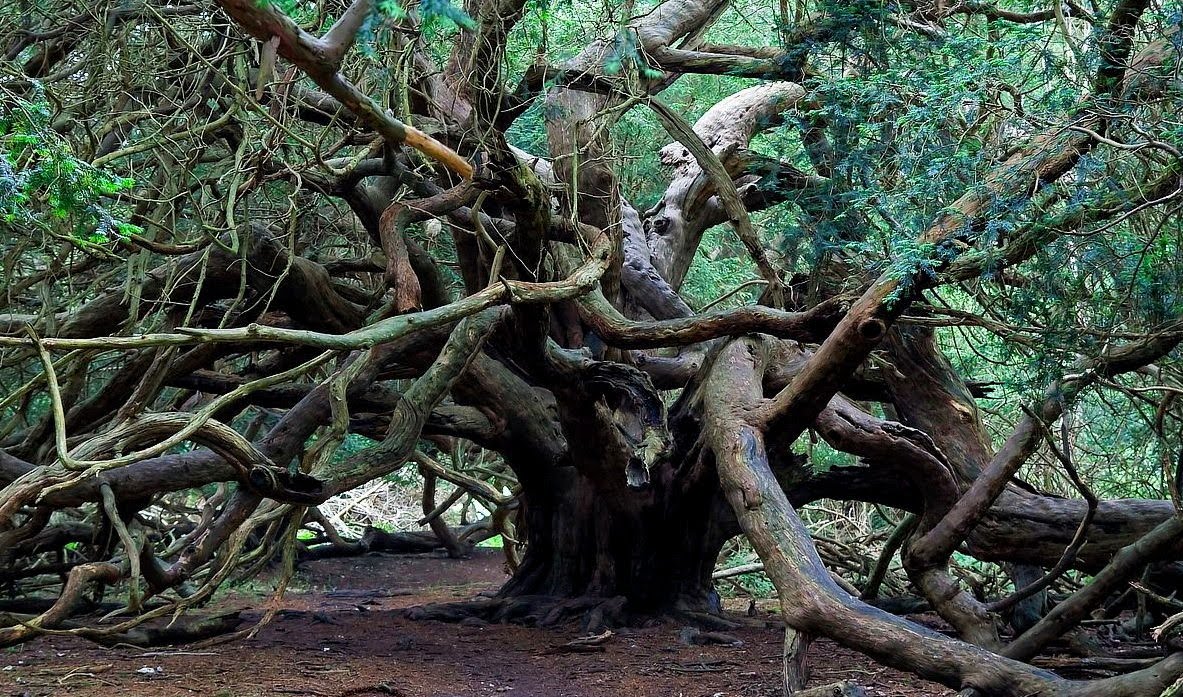
5. Izaz (Iver) – Yew. The final fid of the akme of influence is the fid of completion, the “last day.” The Yew is a very long‑lived tree that, even when dried can sprout anew, “come back to life.” At the same time, it is both strong and flexible. It is a remarkably durable evergreen that outlives generations of neighboring trees. Thus the Yew is the tree of the wheel of life, of rebirths, repetitions, and wisdom. At the same time, yew foliage is deadly poisonous, which points to the familiar principle: “in much knowledge is much sorrow.” As a German proverb says, “there are no charms that can stand against the yew,” for yew’s wisdom is no longer merely worldly wisdom — it is universal and transcendent. Accordingly, the magical use of the Yew fid consists in awakening the system’s primordial wisdom, its primal principle, and also its steadfastness, endurance, and resilience.