
Akme of the Hawthorn — Young Growth
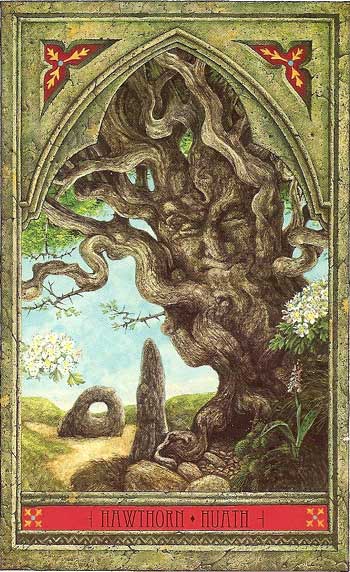
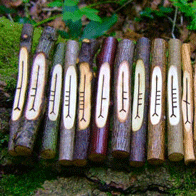
The second family of feda of the Ogham corresponds to the initial stages of a sprout’s life: its vertical growth, its reaching for the sun, its eager delight in life. In this sense this akme can be compared to the period of late spring–early summer, when the succulent young foliage seeks to absorb the maximum energy of the sun.
- Uath (Huath) – Hawthorn. The word huath is translated as “fear”, “terror”, and sometimes “harm”, which reflects the primary condition of a newborn infant — its fright before the vast world that has opened to it. As the “parental” fid, the Hawthorn sets the tone for the entire akme, which corresponds to the Druid goddess in her dark, destructive aspect (this is reflected in the “left” position of the feda notches). At the same time, the thorns of the hawthorn are an active protection against all evils; as the saying goes: «hawthorn smoke drives away witches», and uprooting or cutting down a hawthorn was considered a very bad and dangerous act, since it deprived one of protection from harmful forces. Thus, the magical application of the Hawthorn fid is active protection, the “rejection” of evil (much as a sprout grown toward the light avoids the dark and strives for the light).
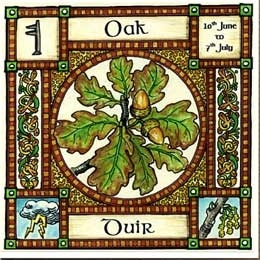
- Dur, Daur (Duir) – Oak. Any new life is characterized by a steady, unyielding will to exist. A child has no doubt that its lot is life; it embraces life eagerly and tirelessly. This unrelenting thirst for life finds its symbolic expression in the Oak fid. Sometimes the name of this fid is also translated as “hard”, “unyielding”, “steadfast” or “secret”, which reflects different aspects of the Oak’s power. The Oak is the tree of royal authority: solid, commanding, aiming at expansion and dominance. In any case, as an energetic symbol, the Oak corresponds to a steady current of life-force, the continuation and development of the impulse that first manifested in the Rowan and then winds its way into the immortal ivy. At the level of Dur we mean the young oak, the “young king”, full of strength and vigor. Accordingly, the magical application of the Oak fid comes down to the “awakening” of a system’s dominative properties, and also to “opening gates”, since the “young king” inaugurates a new era — his reign — and thus opens the gates to change and novelty.
3. Tinne (Tynen) – Holly (Ilex). The activity of the akme of growth is symbolized by the paternal tree, the Holly. The word tinne is translated as “iron ingot”, which associates the activity of this fid with metal for weapons and tools. In the Book of Ballymote this fid is also associated with the Cypress, another distinctly expansive tree. The sexual energy at Dur, at the stage of Tinne transforms into fatherly power, into “adult”, “responsible” authority. The ringing “D” of the Oak gives way to the softer “T” of the Holly; the king matures, becomes less hot-tempered but more responsible. This is no longer the juvenile shoot that was ready to crush everything around it; this is a more attentive, cautious, receptive being. If the Oak tended to dominate without listening to anyone, the Holly listens to its surroundings, and although its spines are sharp and its foliage evergreen, it does not rush to act unnecessarily. Accordingly, the magical application of the Tinne fid activates a system’s cooperative qualities, its capacity for internal and external cooperation, while subordinated to the general, “fatherly” principle of hierarchical union.
4. Coll – Hazel. The dominative properties of the Oak and the Holly give way to the curiosity and attentiveness of the Hazel. At the level of Tinne, receptivity was only an auxiliary property of activity; at Coll it becomes a central independent value. It was believed that hazelnuts bestow knowledge in the sciences and the arts. The hazel was used as material for the wands of the druids — the orators — and linked to the art of eloquence. At the same time, “the nut of knowledge is hard”, and therefore great persistence is required to extract its contents. In this sense, the Hazel corresponds to the ability of attention to “pierce beneath shells”: attentiveness, observance, receptivity. Expressing the “attractive” aspect of the second akme, the hazel symbolizes the striving for knowledge, the “attraction of wisdom”, and at the level of a tree’s growth — the roots’ striving to absorb ever new sources for its existence, showing itself more in root growth than in the hardness of the wood. Accordingly, the magical application of the Hazel fid reduces to awakening in a system a “cognitive activity”, i.e., the ability to assimilate and use what the environment provides. It was believed that wearing a sprig of hazel on one’s hat protected against lightning. Another association attributed to the Hazel is the nourishing milk of the Goddess.
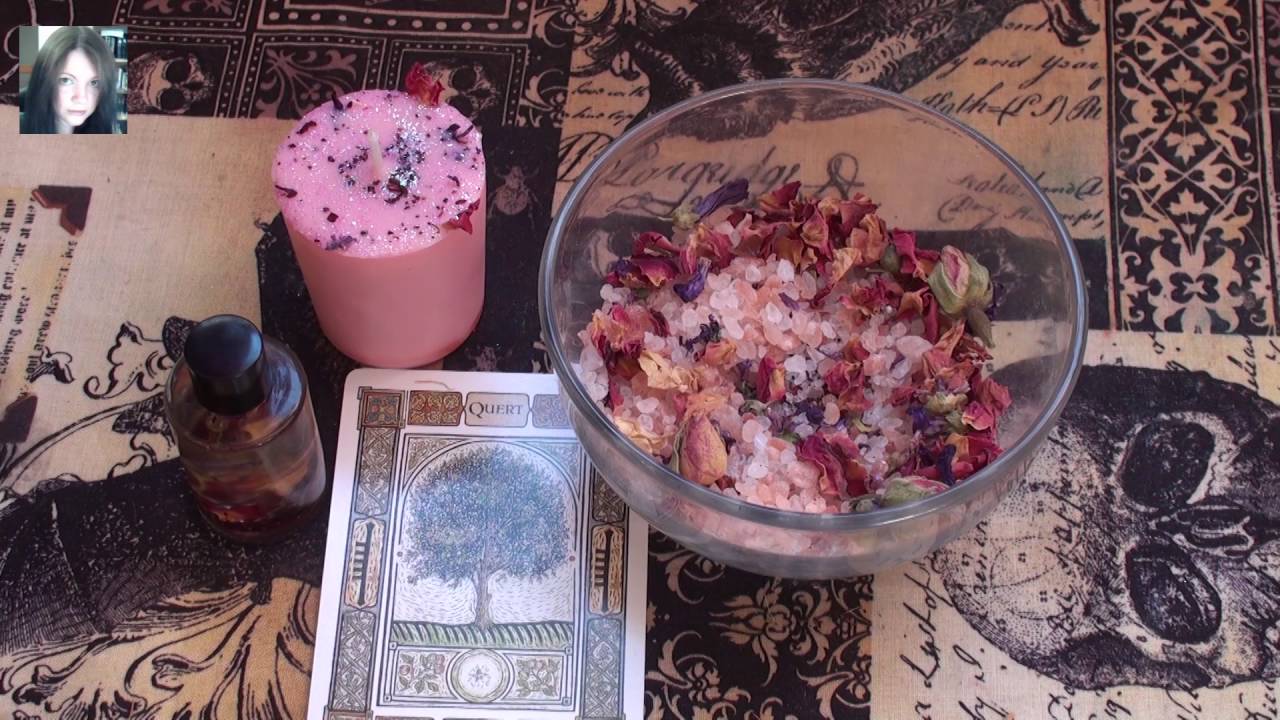
5. The akme of growth is completed by the fid Ceirt (Quert) – Apple tree. Literally, the word ceirt is translated as “bush”, and also “patches”, “rags”, which points to the “heterogeneous” manifestation of the energy of this fid, the combination within it of various energies. It is precisely this ability to “join the heterogeneous” that sums up the entire activity of the Hawthorn akme, which joins life and death. Unsurprisingly, the sacred Celtic place of the “Feminine” nature bore the name “Avalon” (Emain Ablach), from afal, “apple”. At this stage, the stream of life that was engendered in the first akme finds its steady state and therefore inevitably confronts death as its alternative condition. Two kings — the hot Oak and the valiant Holly — are balanced by two queens — the nourishing Hazel and the flourishing Apple. Passing through the stages of terror, self-assertion, self-possession and assimilation, the sprout finally reaches a phase of confidence and wholeness, which is reflected in the Apple fid. Accordingly, the magical application of the energy of this fid consists in awakening a sense of integrity and wholeness in the system, establishing continuity and self-awareness. Power learns to draw on its sources and to convert energy into steady vitality.
Thus, the akme of the Hawthorn outlines the changes that occur at the stage of a system’s “maturing”, its transition from frightened newness to a steady state.



It resembles chakras…