Runes and Ogham: Spears and Clubs
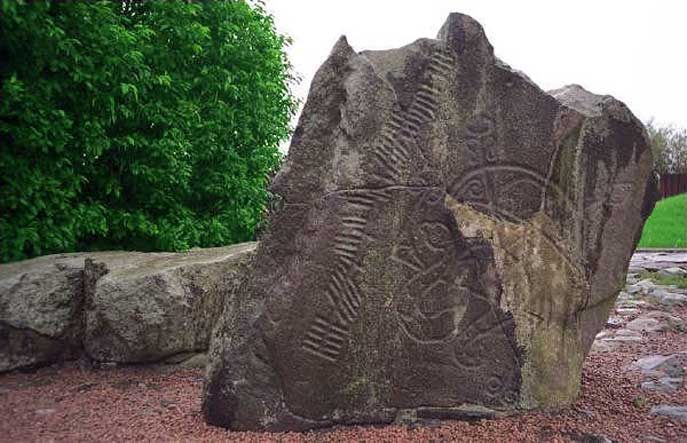
We have already discussed that the two systems of vector graphic magic — Runes and Ogham — differ in their energy, which makes it possible to attribute their origin to two groups of Pravi’s forces — respectively, the Aesir and the Vanir. We said that in this sense the energy of the Runes is the directed, concentrated will, whereas Ogham is a manifestation of the directed flow of the energy of zhiva.
At the same time, this difference in the “source code” of the two systems gives rise to different approaches to their use and reflects the specifics of the mechanisms of their action.
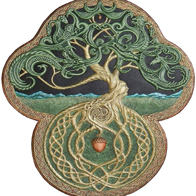
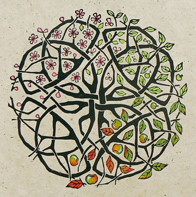
Despite the fact that for their impact both groups of symbols are “carved” into the fabric of being, their vectors are actively embedded into the world’s currents. Carving Runes is, in fact, clearing a path for power; it can be compared to cutting a path through dense jungle. At the same time, carving an Ogham feda is, on the contrary, a grafting, an attachment to an existing current of power — an addition to it, just as a cutting of a fruit-bearing tree is grafted onto a strong wild rootstock.
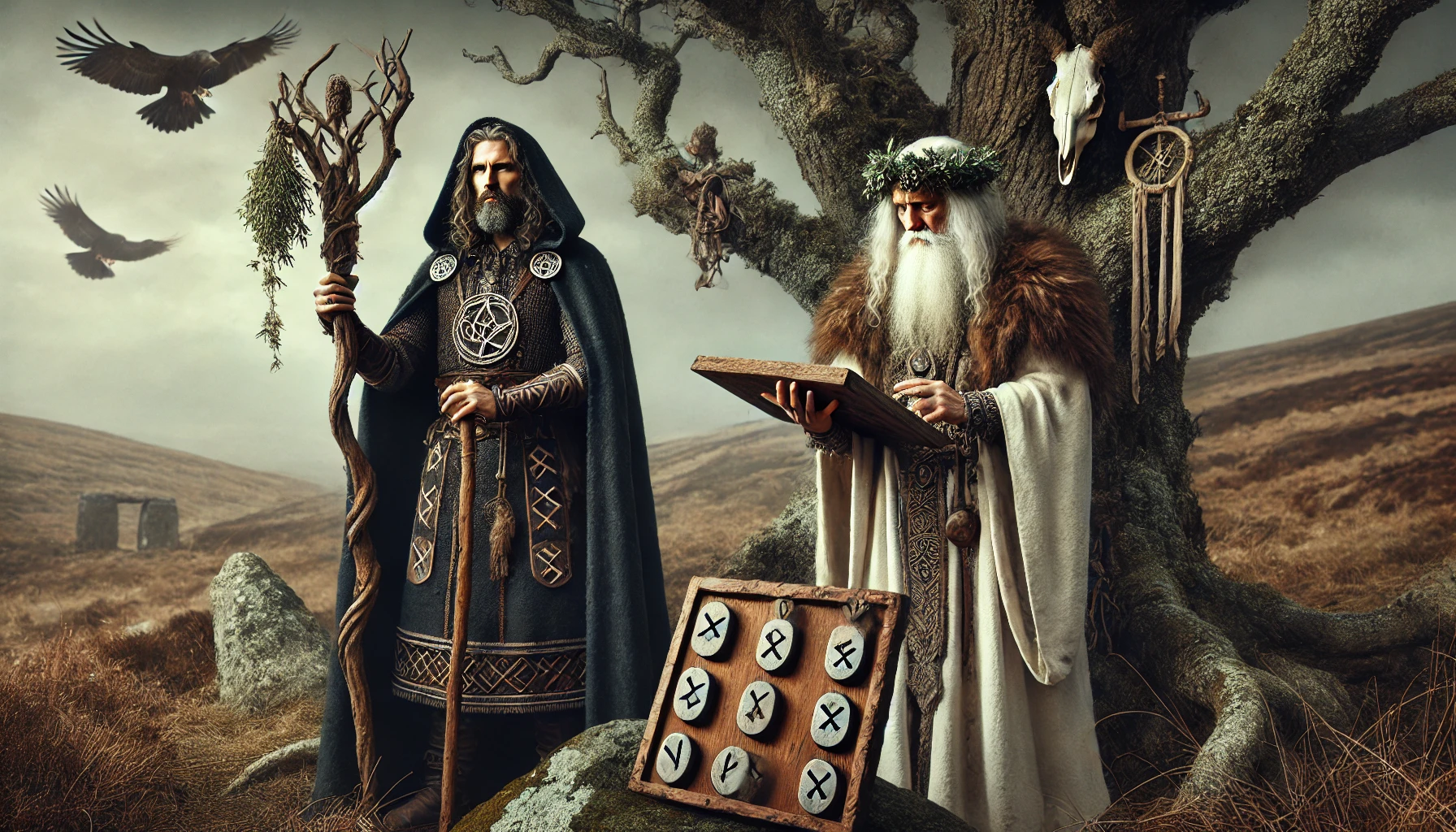
That is precisely why the key symbol of Runic Magic is Odin’s Spear: galdr is always a “surge of power,” a swift and directed stream of creative (or destructive) will. Any Runic talisman, visa, or image is always a “flying spear,” or, in modern imagery — rather a flying missile that carries to its destination point a creative (for example, seeds for sowing new soils) or destructive payload. Accordingly, creating such a Runic tool requires great expansive energy, strong Vedic inspiration, and a reserve of strength — awareness (meigin).
At the same time, the main attribute of the great god Dagda — the father (or brother) of the creator of Ogham, Ogma — was a huge club (Ogma himself is also often depicted with a cudgel), with which he pacifies the Fomorians. In other words, the energy of Ogham in this sense can be compared to the overpowering (or, alternatively, barrier-smashing) force of a river flood or a mountain avalanche. Accordingly, it is clear that carving Oghamic symbols and sequences also requires great personal power; however, if for the Runes it is “airy” energy, then for Ogham it is “earthy.” And if the accumulation of aerial inspiration can be compared to climbing mountain peaks, then the accumulation of druidic power is making one’s way through dense wild forest.
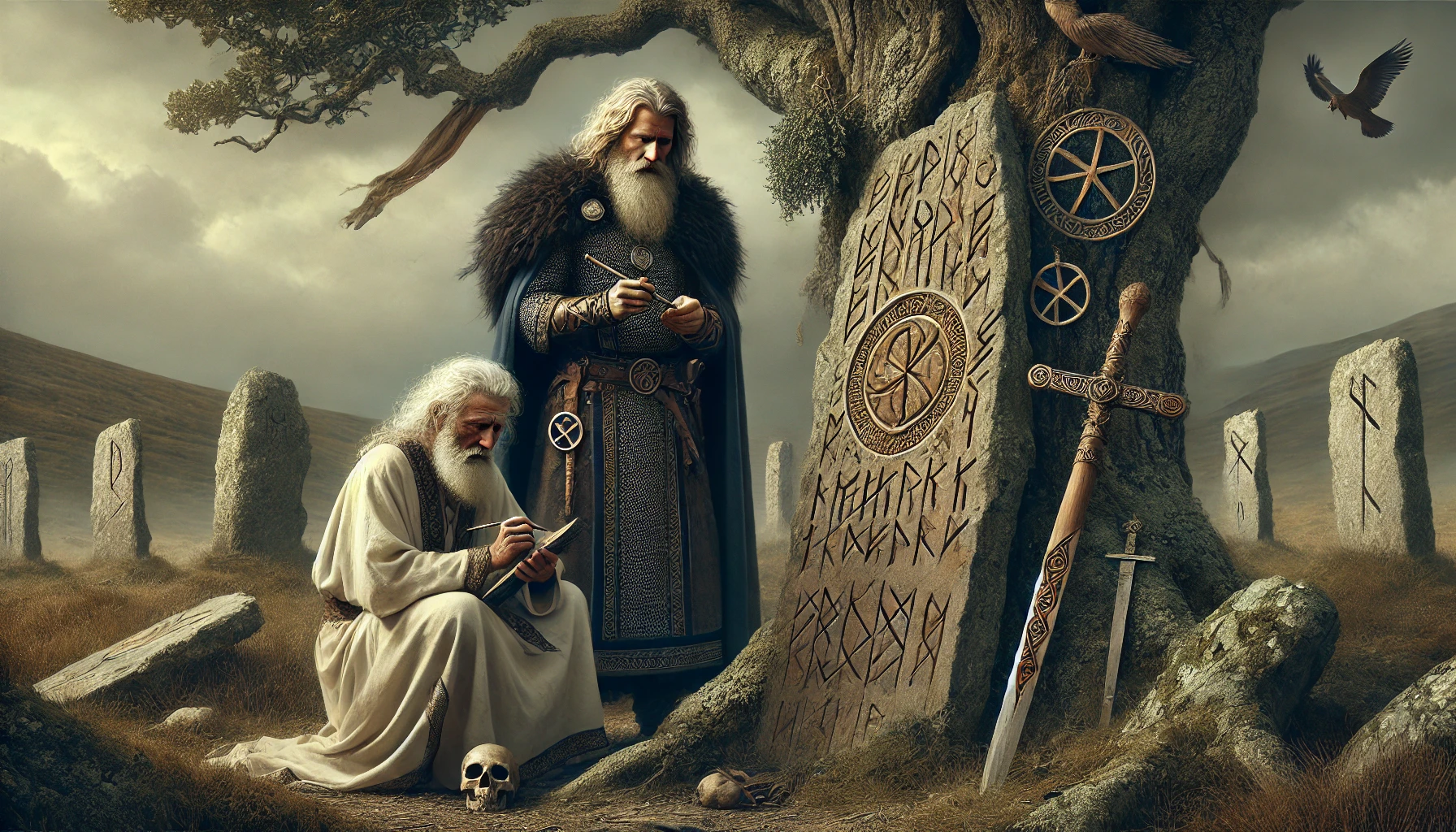
Yet at the same time, both kinds of power in their domains are quite balanced and harmonious: the Runic spirit is mountain winds rushing among rocky peaks; Oghamic currents are forest streams feeding gigantic trees, and rains washing their canopies.
In exactly the same way, the inspiration of the runic magus, the eril, differs from the inspiration of the magus of Ogham — the bard or the druid: the first celebrates individuals, the second celebrates events; for the first, the winner matters most, for the second — the fact of victory. In other words, the Runic approach reflects an emphasis on individuality and personal courage, where it is the human being with their deeds and mission who is the embodiment of power and honor. For druids, the collective and cosmic dimension is more important, where historical processes are the work not only of individuals but also the natural consequence of the natural and fateful course of things.
This difference can be clearly seen in the example of two important heroic-mythological figures — Cú Chulainn and Siegfried. Both embody the archetype of the hero who fights alone, overcoming incredible obstacles, and their feats become legends passed down from generation to generation. At the same time, Cú Chulainn relies heavily on emotions and passion, which leads to heroic (and tragic) outcomes, while Siegfried acts more thoughtfully and strategically.
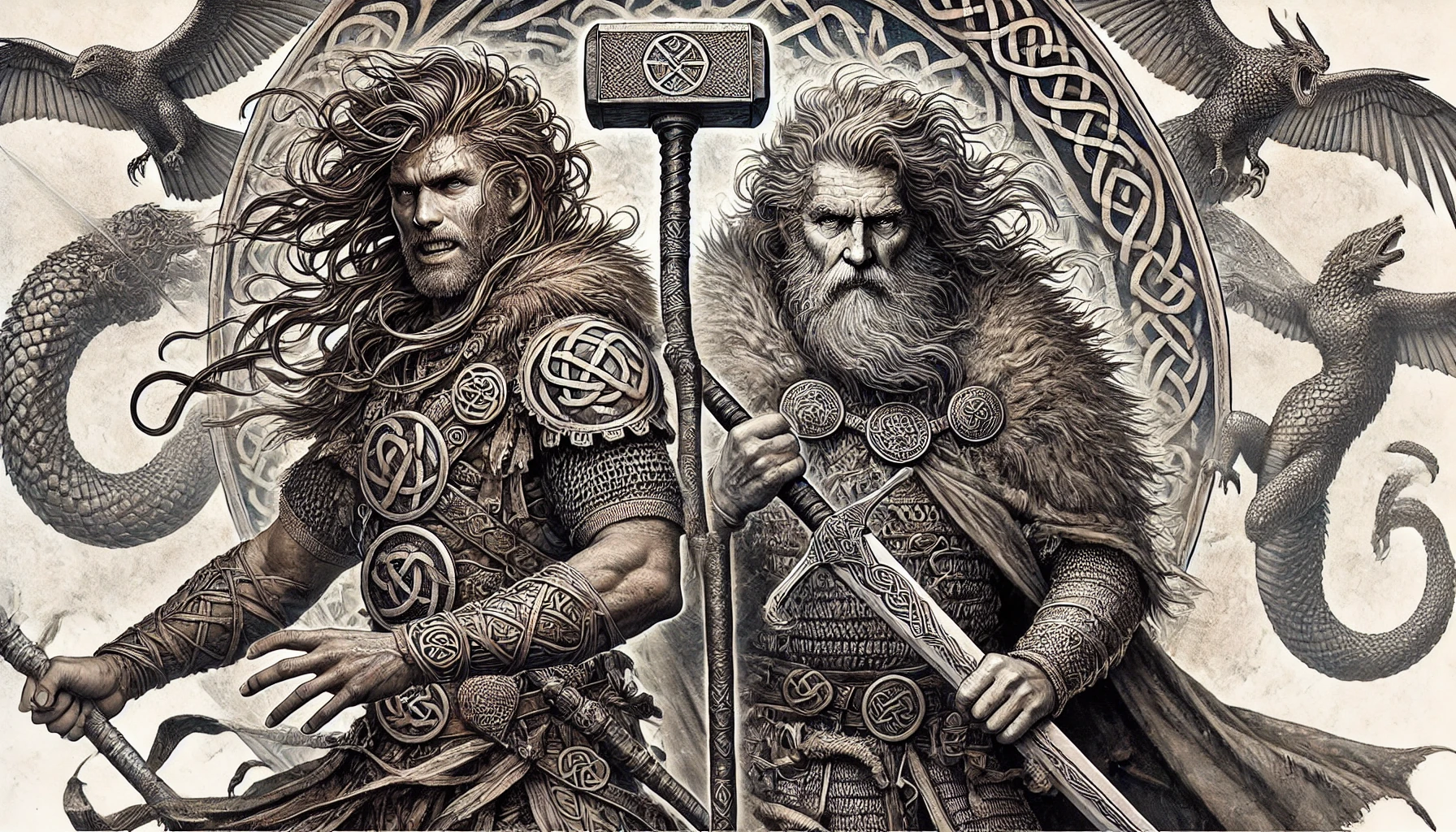
In the Oghamic tradition, great attention is paid to the unity of humans with nature, the cyclicality of life, and the ubiquitous presence of magical forces permeating the surrounding world. The feats, powers, and fate of Cú Chulainn are closely connected with natural magic and spiritual aspects characteristic of the druidic tradition. His connection with the earth, forests, and elements expresses an image of the world where the natural is inseparably linked with the divine, and magic is a natural component of being.
In the Runic — Germanic (and Scandinavian) tradition, by contrast, the idea of the cosmos dominates as a space where order, logic, and strict hierarchy are maintained. In this, the Aesir play an important role — gods embodying power that comes from reason, law, and structure. Siegfried fully embodies these qualities: his feats, strategy, and determination reflect ideals of order and rationality inherent in worldviews in which the emphasis is on the struggle against chaos and the striving for eternal glory through reasonable and meaningful actions.
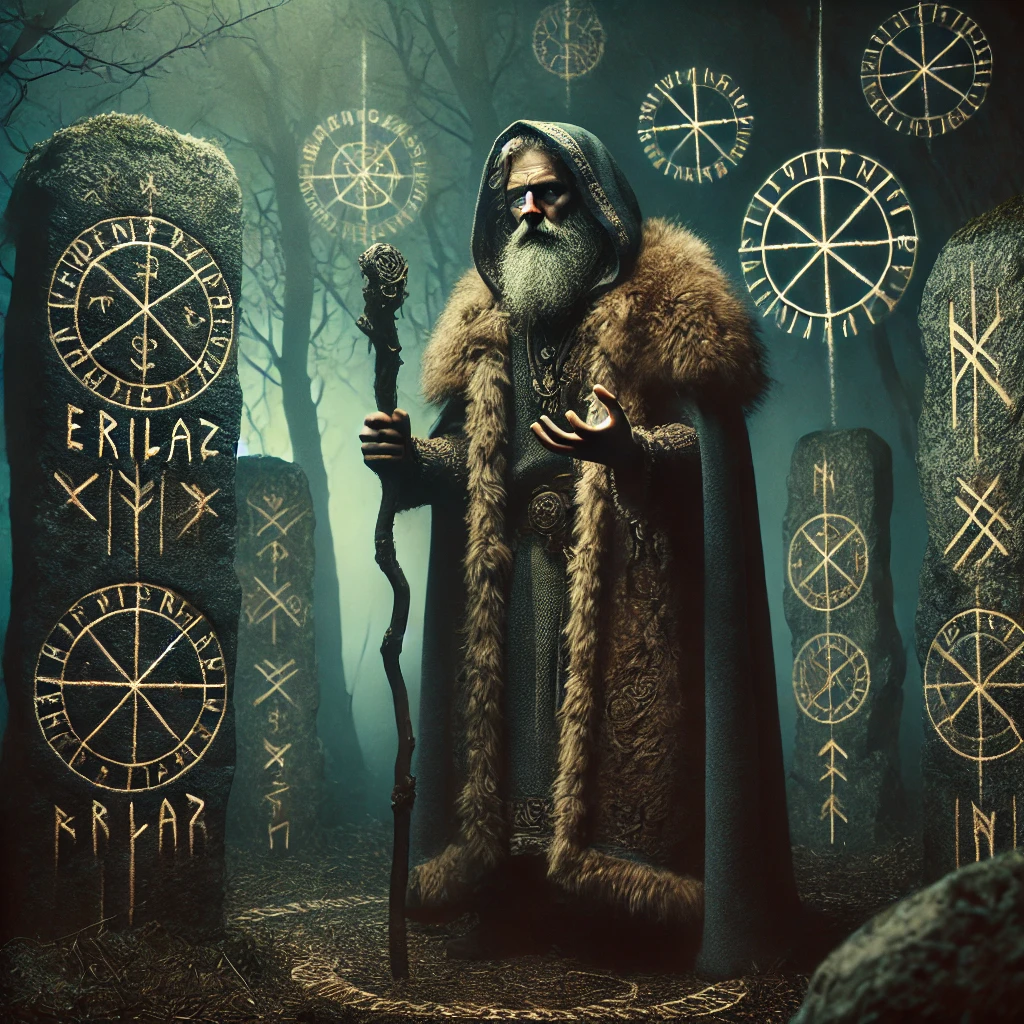
It can be said that the inspiration of the eril is born from the feats of particular individuals, their personal power, determination, and glory. He perceives the world above all as a field of human deeds and focuses attention on personal responsibility for the course of history. His approach is a search for paths by which individual actors can overcome chaos, establishing a new order through their actions. Accordingly, Runes are used to create vectors aimed at changing reality by concentrating energy that comes from an individual feat or a fate-defining event.
At the same time, the druid receives inspiration from the very flow of life, nature, the earth, and the rituals associated with them. For him, the occurrence of events is important — victories, defeats, cyclical transformations reflecting the natural order. Therefore, the Oghamic world is a multifaceted interaction of the human being and nature, where any changes are perceived as links in a great cosmic cycle. Chaos for the druid is not something destructive; it is perceived as a necessary component of the renewal process, in which even defeats and crises play their role in maintaining balance. Accordingly, Oghamic magic is a way to tune into natural currents and interact with the forces of nature through energies associated with trees, the earth, natural cycles, and processes. The Magic of Ogham seeks to reflect and support the natural harmony and transformations occurring in nature.
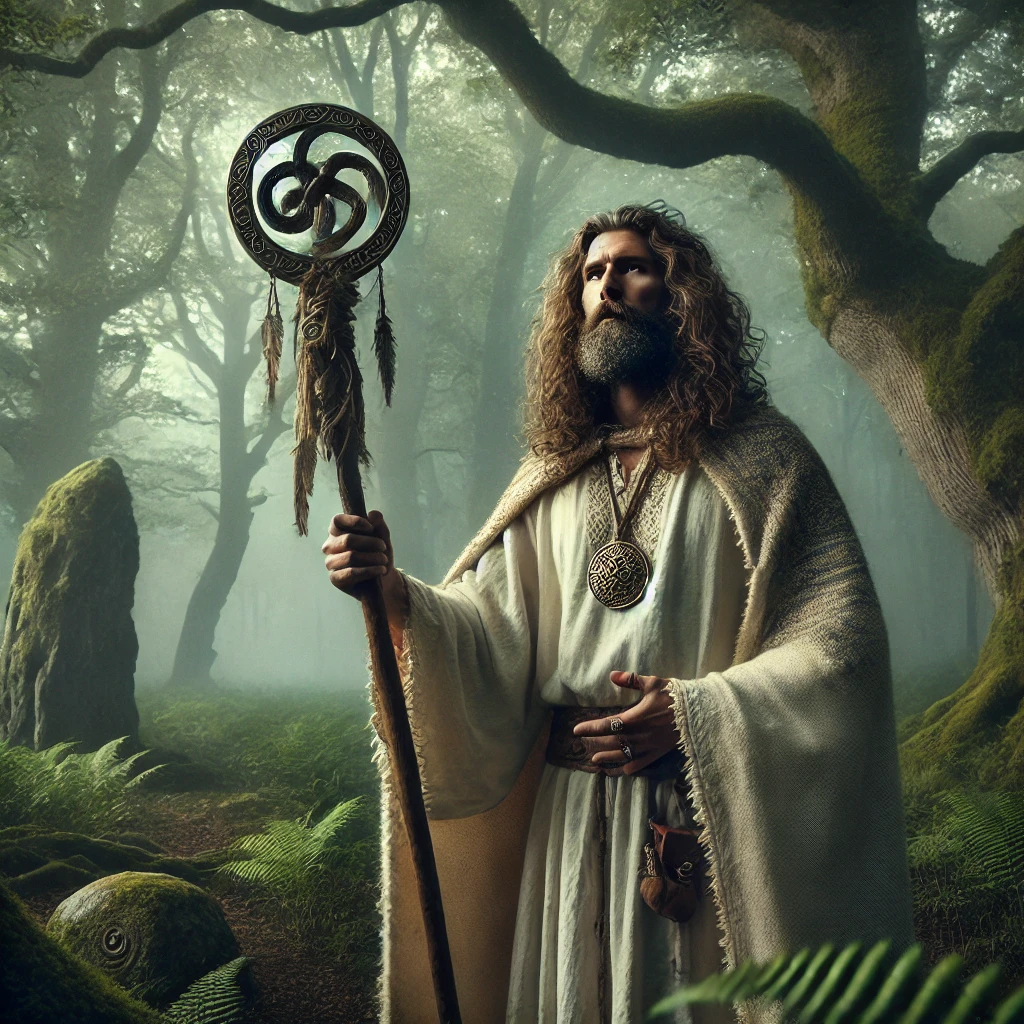
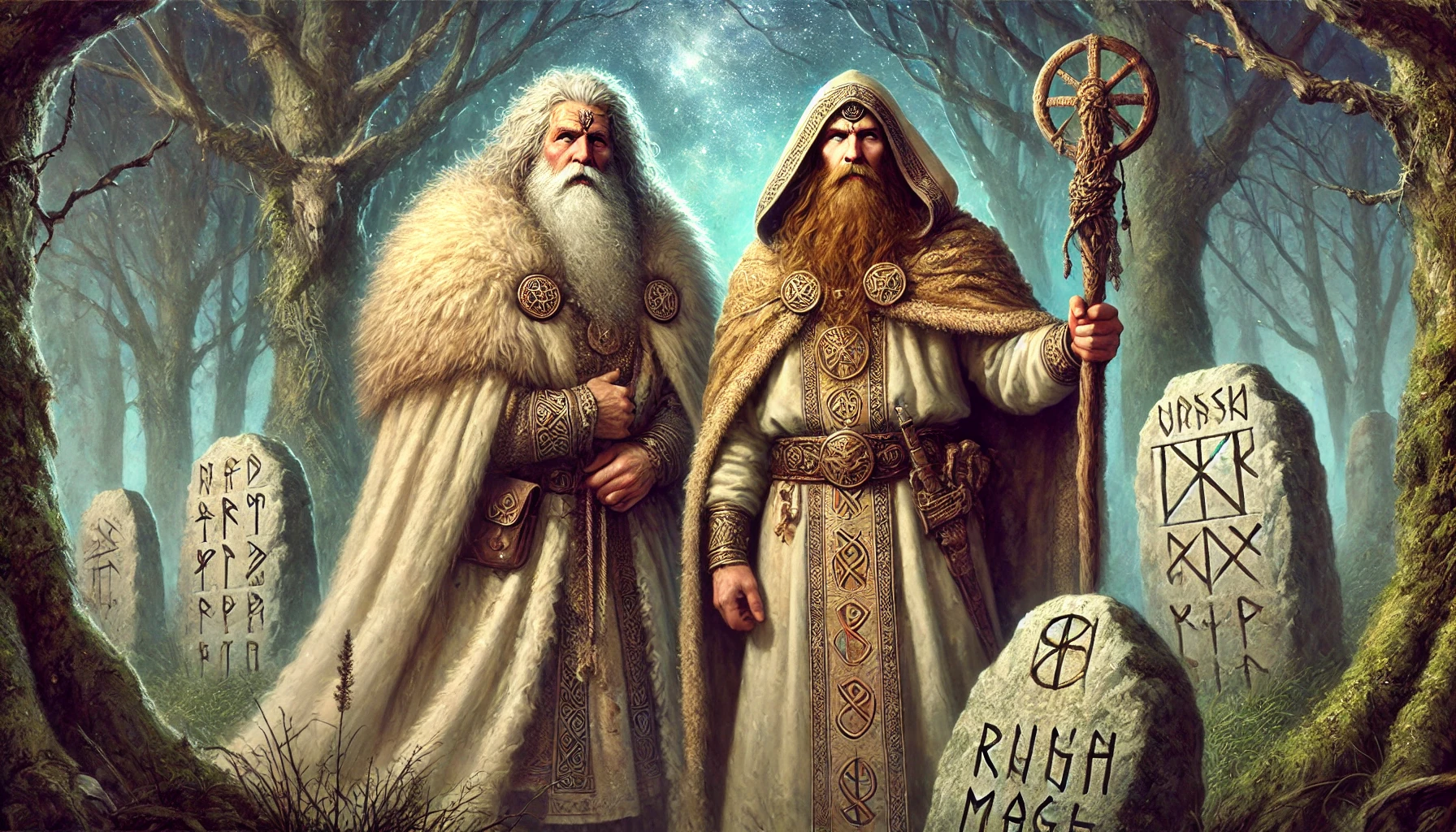
Thus, we can say that the Runic and Oghamic systems represent two different but complementary approaches to vector magic: the first emphasizes individual heroism and order “imposed” on the world with reliance on the power of symbols, while the second relies on the natural flow of life, where the emphasis is on harmony with the eternal cycles of nature and the events that support the druid’s will. If the Runic magus is an actor who influences the world and actively transforms it, then the Ogham magus supports natural processes and flows in their channel.

A wonderful, understandable, and concise comparison. Thank you very much, dear En.
Good day. Now I understand better why the Scandinavian runes seem to be turned away from me. Thank you for the detailed information.