Names of Demons
Goetic ritual practice is fundamentally name-based – to summon a spirit one must know and use both its proper name and the hierarchical names that allow influence over the flow of Power governed or warped by that spirit.
Accordingly, since the manipulating names underpins both “external” and “internal” goetic work, correct knowledge, spelling and pronunciation of each name are conditions for the success of the operation, and errors in manipulating names can have grave or even fatal consequences.
The system of the “Lemegeton”, which offers an extremely effective method for diagnosing and treating mental disorders, likewise requires a clear understanding of the principles for forming and using names of both demons and Genii. While the Tradition has established and tested variants for the latter — the Shemhamphorash table — names of the Lower Gatekeepers often pose problems.
The difficulty is compounded by the fact that most of the demons in the Lemegeton tradition bear names that are, in effect, epithets developed in Europe, deriving mainly from Latin, Old English, and Old French. Only a handful of Gatekeepers have preserved their most ancient, Hebrew or even Mesopotamian, names.
As mentioned, within the Magical Tradition the name of any spirit reflects its functions, and a change of name accompanies an energy change, and vice versa — a change in activity results in a name change.
For example, the same demon and matrix, when manifesting as Belial (בליאל, gematria 73=10=1), primarily affects the personal emotional life, disrupting social belonging and replacing it with mutual exploitation; manifesting as Matanbukh (מטנבוק, gematria 207=9) — he presides over sexual deviations; and as Agriel (עגריאל, gematria 314=8) — he rules the masses. Although the essence of his energy remains the same — the disruption of the principle of union — the manifestations of that energy vary.
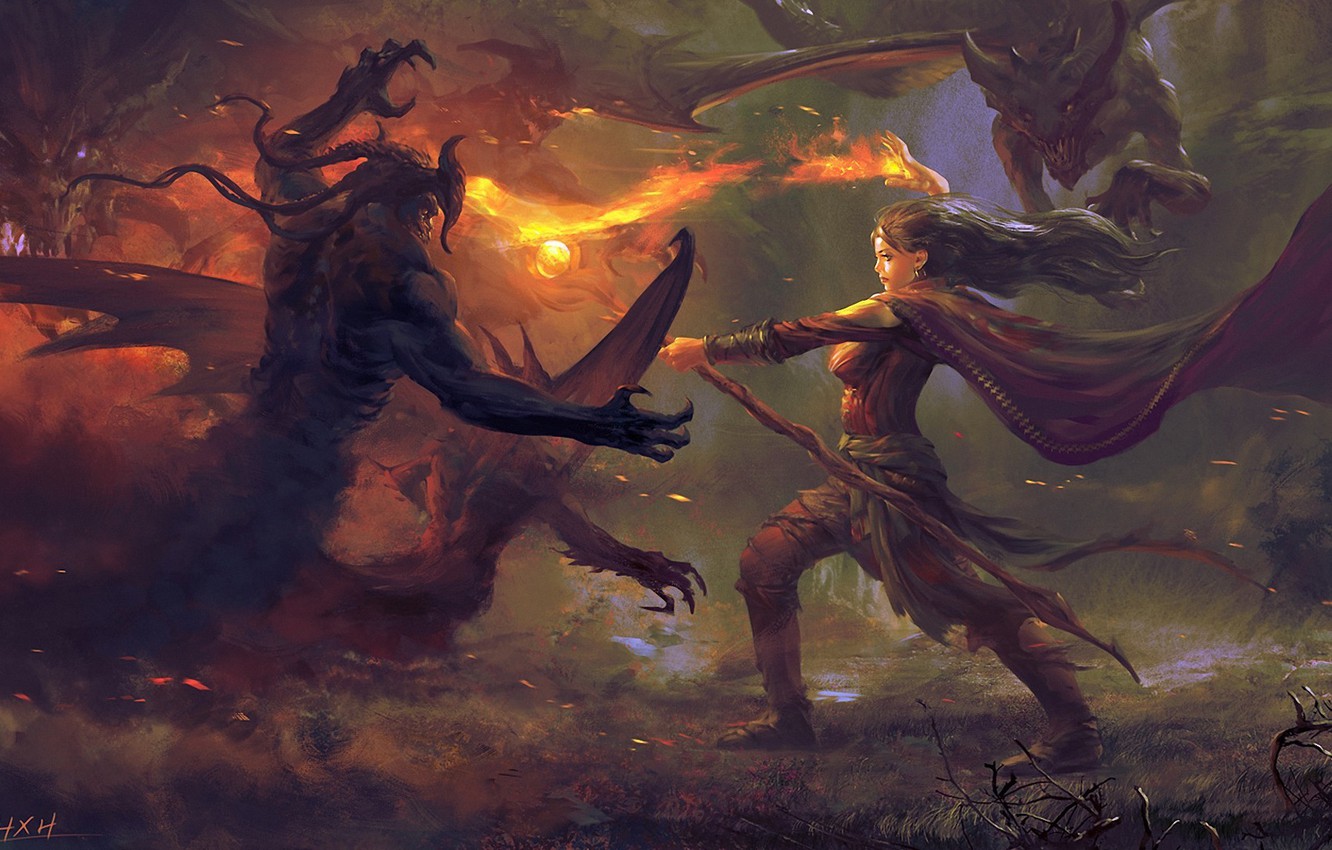
Employing the Shemhamphorash approach requires a precise method to discover the names of goetic Gatekeepers, since it is the correspondence between a demon’s name and the name of its corresponding Genius that lies at the heart of the transformational method.
It is traditionally held that for this purpose four-letter forms of demon names are used, since four is the number associated with materiality, the domain in which this force manifests.
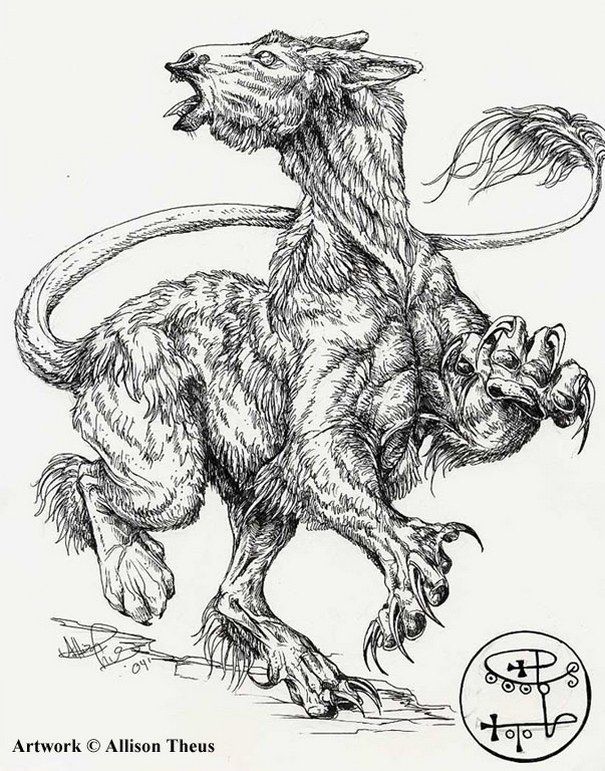
At the same time, it is important to understand a name’s origin, since the modern Latinized spellings are often distorted. For example, the name of the demon Halphas (38) derives from the word “khalif,” “ruler,” and its written form — קלאב — reflects that etymology. Another form of this demon’s name — Maltus — comes from the Greek word “Μελίτη,” “honey,” evoking the “clouding of vision” produced by this demon of agitation, and is written as מלטו. An even more complicated situation is that of the demon Malphas (39), whose name is formed from the Latin “malum,” “evil,” and is a literal rendering of the word “רעלו”, Heb. “רע” — “evil.”
In evocational practice one can effectively use different spellings and pronunciations of names; they may rely on gematria or notarikon support, on egregorial currents of tradition, or even simply on the operator’s personal will and power.
At the same time, for alchemical transmutation it is preferable to use the written form that matches the Genius’s gematria, since, according to the Tradition, numerical identity underlies the analogy between energies.
The use of the transformational approach, on the one hand, offers broad scope for the operator’s creativity, but is not arbitrary and must consider existing connections and patterns.