Beasts of the Rift
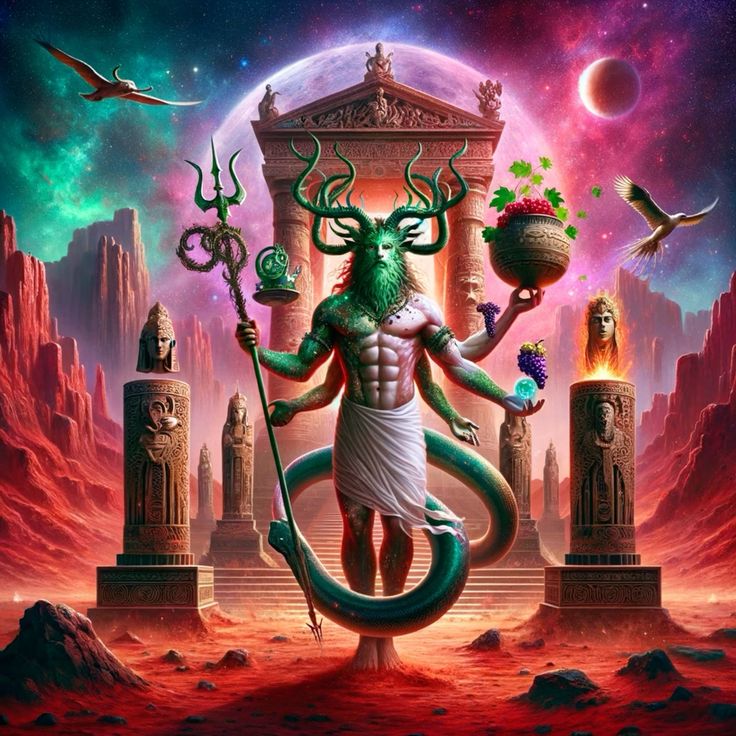
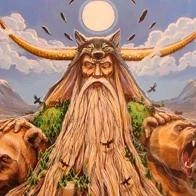
The Great Guardian of the Threshold, Veles, Gwyn ap Nudd, Heimdall, Anubis — is not without reason often depicted in animal form or with zoomorphic traits: the act of crossing the Edge has, in many respects, an elemental, Dionysian nature, and therefore contact with it for a human is like an encounter with a wild beast — dangerous and unpredictable.
And it is not surprising that many Threshold events are perceived this way — as the appearance in the world of magical, often frightening and ferocious, animals of the Borderland.
This subjective experience may, to a considerable extent, be the result of interpretation; however, it almost always rests on the actual properties of the energies with which the collision occurs.
In general, one can say that contact with a real or “reflected” Threshold animal may occur in different cases:
a human being, significantly reducing the fixity of its form. may belong to the Seelie or (more often) to the Unseelie court, and therefore the outcome depends on their particular traits; however, such encounters always destabilize any “definite” being, including a human being, significantly reducing the fixity of its form. Any contact with the fae is a threshold event, but in the case of the animal forms of the Fairy Folk, their portal nature manifests most strongly, and it is no wonder the Celts and ancient Germans so feared all “water horses.”
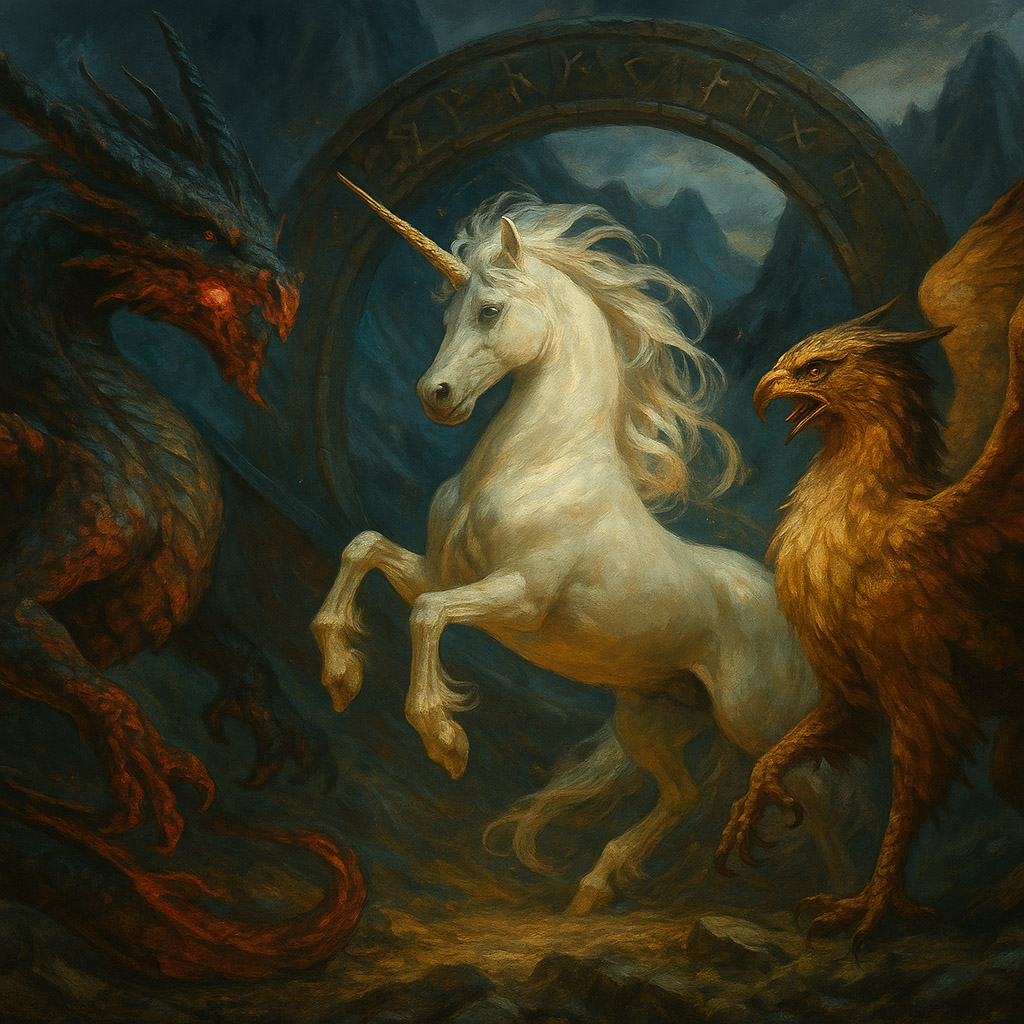
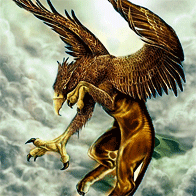
2) Maternal forces — embodiments of the elements. Such are, first of all, various dragons, as well as griffins, unicorns, and others. They are manifestations of “vortical” structures, acquiring a characteristic form and often — an individuality. Although these entities, strictly speaking, are not threshold entities, their belonging to the fabric of the Interworld also makes interaction with them one that destabilizes the mind.
3) “External” or “auxiliary” expressions of larger forces. This group includes, first and foremost, “mounts” — vahanas of gods or companions of demons. An encounter with such a manifestation indicates the nearby presence of the “main” force and prepares one for the main contact.
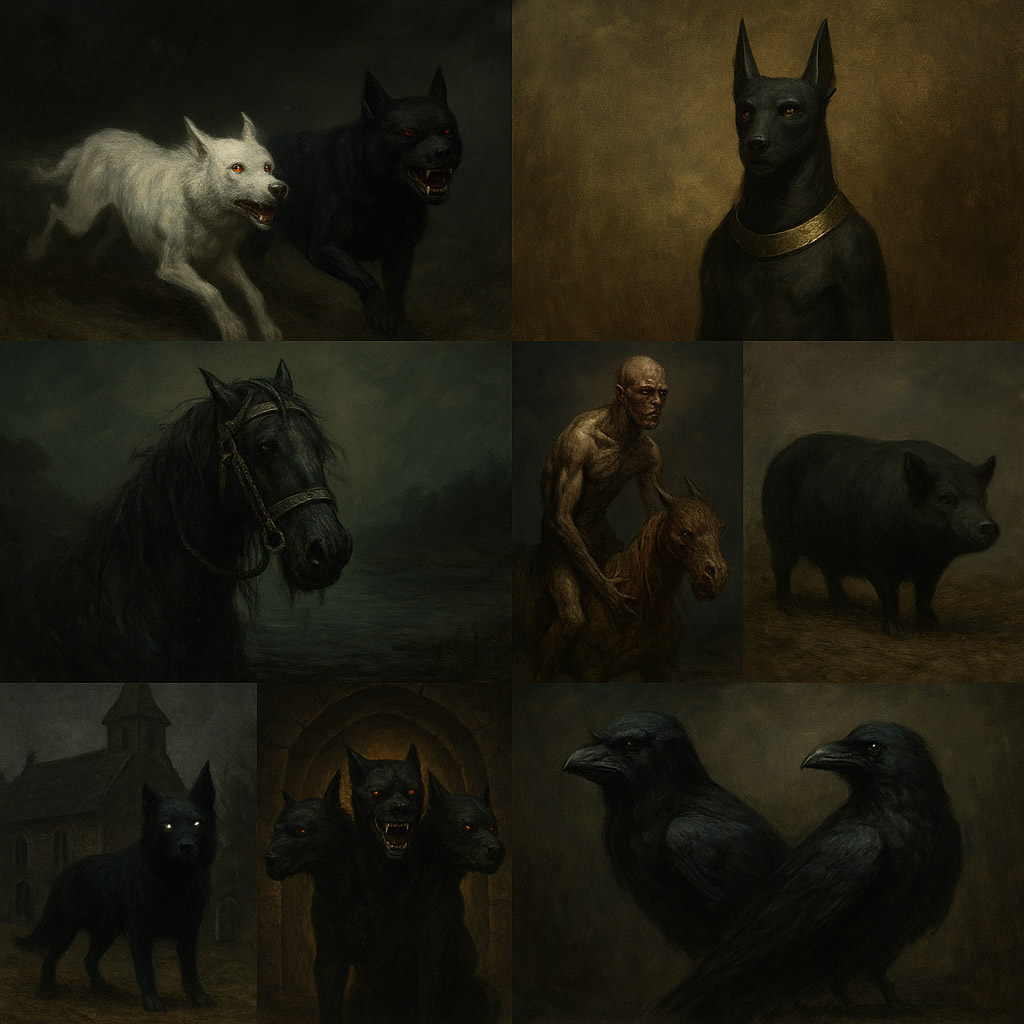
4) Proper manifestations of the Threshold — barghests, nuckelavees, ar uh di gwota (Yr Hwch Ddu Gwta), Ammit, and other “runaway” elementals and phantoms, returning them to the Interworld, sometimes performing a protective role and sometimes a hunting (that is, forcibly “driving” into the Portal) function. During the Wild Hunt, the Judgment of Osiris, and other similar events whose function is neither to let anyone out nor admit anyone without the “permission” of the Otherworld’s god. Such are hounds of barghests and other hounds of ravens (Huginn and Muninn) guide to the Interworld, while Ammit sends the “unworthy” heart into the gloomy spaces of the afterlife. This also includes the Guardian-guides of the Gates: the Greek Cerberus, the Nordic Garm — dogs/wolves at the passages into the World of the Dead, whose function is neither to let out nor to admit without the “permission” of the God of the Otherworld. Often, various birds act as psychopomps and scouts of the Threshold beings behind them; in European folklore — guides of souls, the “seven whistlers” and others.
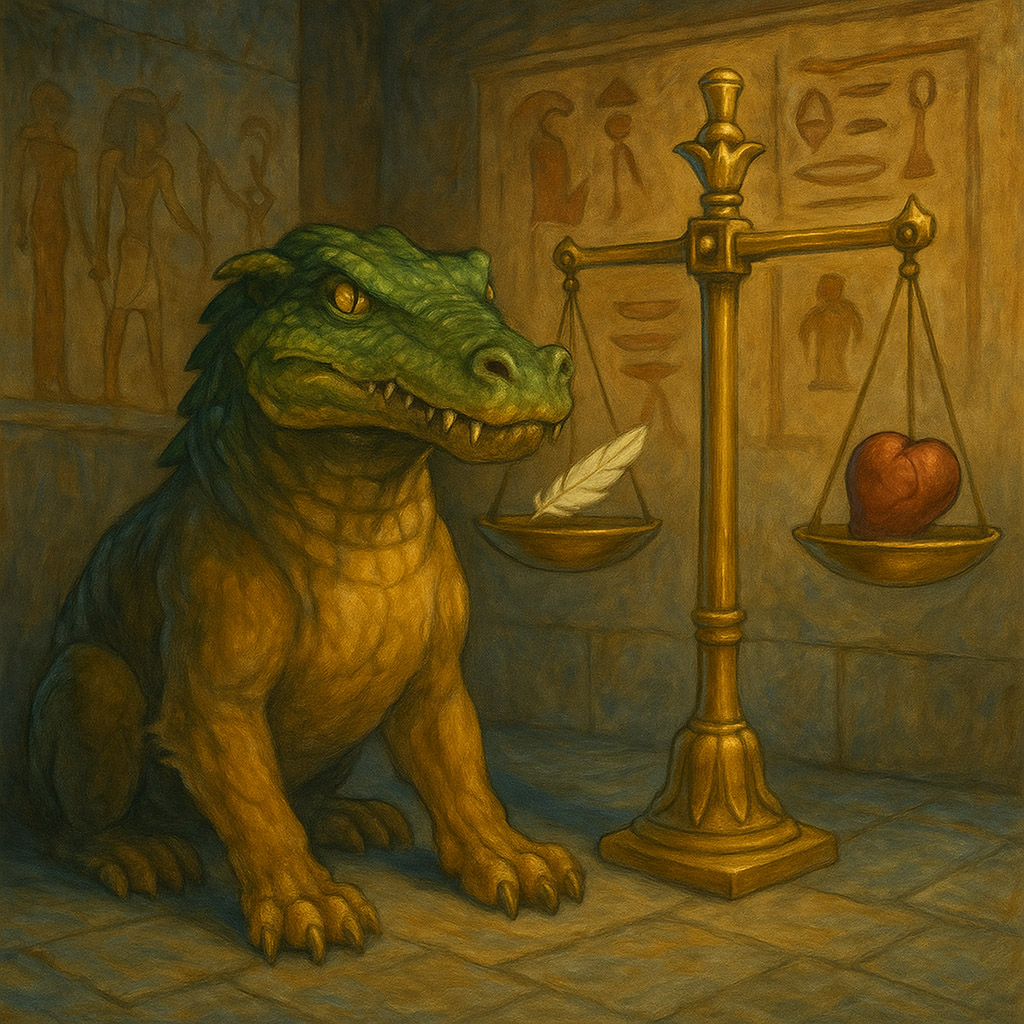
At the same time, quite often the animals of the last group act as part of the overall food chain of the Interworld, not only absorbing the energy of their victims but also “pumping” part of it across the Edge. In that mode they hunt the living, taking various kinds of energy that are used both to sustain themselves and as “prey” for the hungry interworld beings standing behind them.
And when they say that, for example, a kelpie or an ar uh di gwota “stole someone’s soul,” they mean that, along with an outflow of life force, there has been a significant loss of psychic energy. Such losses can be irreversible: a person who survives the encounter may lose their “inner cohesion,” remain subdued and depressed, sometimes lose their sanity altogether, or lapse into a vegetative state.
Accordingly, the behaviour appropriate to each such encounter differs.
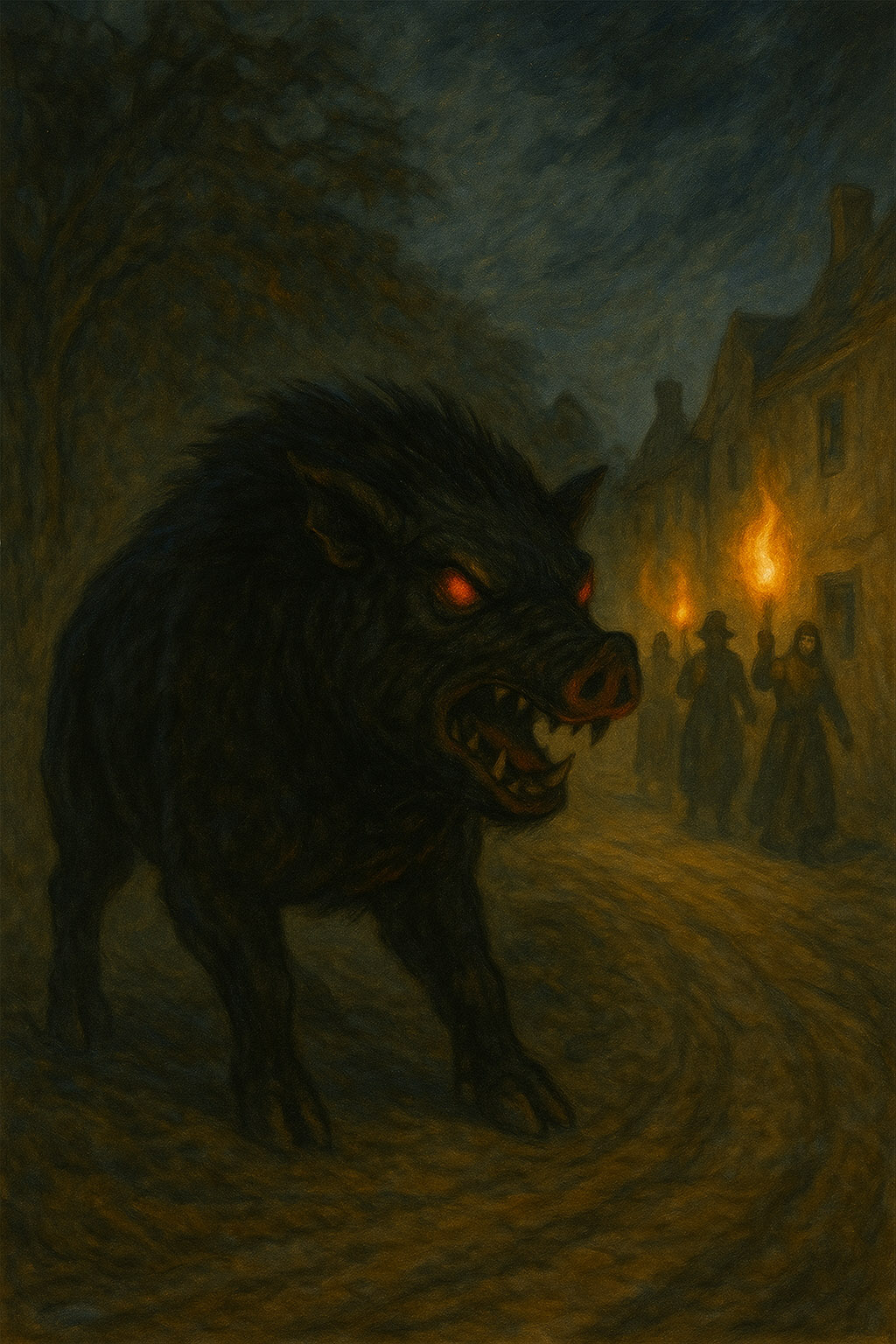
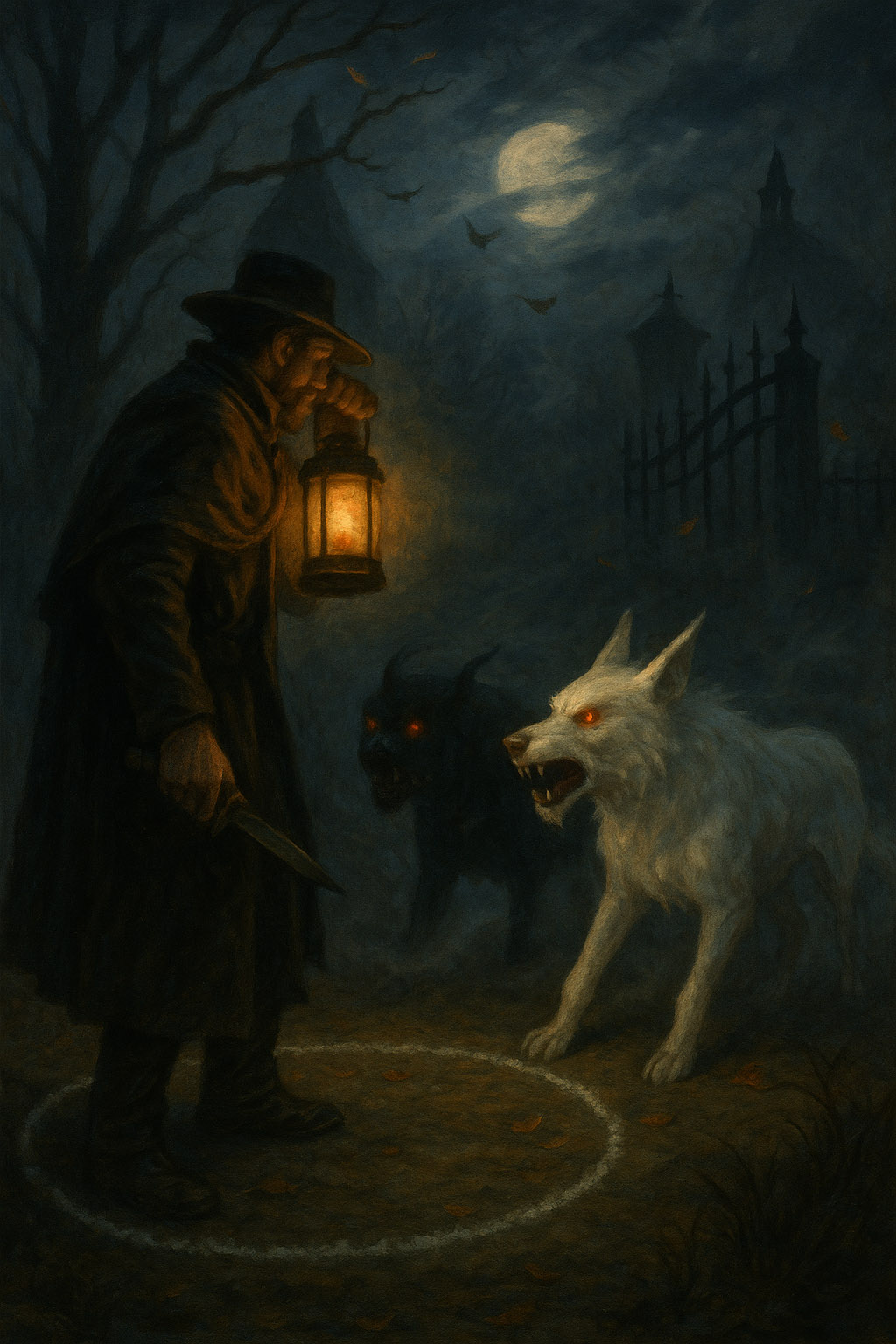
Accordingly, the strategy for each such encounter differs. The Hounds cannot be fought — they are not opponents but the Threshold’s “service.” When confronted by a pack, it is best to stop, keep your gaze below the line of the snout, and speak your full name (if you have one — magical or initiatory). It can also help to mark a boundary by tracing a circle or at least a line with steel or salt. With water horses the most important rule is: never mount them or touch their mane or bridle; with sea creatures the best direction of retreat is toward fresh water, where maritime thresholdness weakens — sea horses cannot tolerate fresh water. The black sow fears fire, both physical fire and the inner fire of the soul — strong desire.
The Wild Hunt is the most difficult encounter: it allows no participation — neither contests of wit nor playing along; any responsive action is treated as a bid to be drawn into the cavalcade. When encountering guardians and psychopomps, the main rule is not to cross the trajectory of their movement and not to “give yourself away”: hide, cover sources of light, avert your gaze, be silent and remain still. In the case of encountering Anubis or Wepwawet, neither amulets nor tricks will help; the outcome depends on the state of consciousness and on the “weight” of the heart — as with Ammit, waiting by the Scales of Osiris.
In general, it is important to remember that, being a manifestation of indeterminacy and superposition, to one degree or another, all magical animals fear the fire of reason, the Apollonian light, and therefore, in order to avoid energy losses when encountering them, it is important to maintain clarity of mind. At the same time, excessive rationality can also be harmful, since it can fix the mind in an ineffective position and also deprive it of the capacity for creativity. And therefore, as always in Magic, the most successful person finds the correct balance between clarity and mystery, between reckoning and spontaneity.


Hello, Enmerkar.
Is it appropriate to classify the so-called snowman (yeti, almas, bigfoot, sasquatch) as part of the threshold beings? After all, according to many researchers, yetis are practically elusive precisely because they can appear in our world and disappear from it from another dimension.
Yes, of course, the yeti is an example of a similar threshold being, dwelling in the Interworld and appearing in worlds to hunt for food.
Tell me, why is there so little information about Heimdall? This month I was searching for it. Compared to other entities of northern myth and other gate gods, there is very little.
I have an inner feeling that there is a reason for this, but I don’t understand what it is.