
“Ars Paulina” and the Aggregation of Vortices
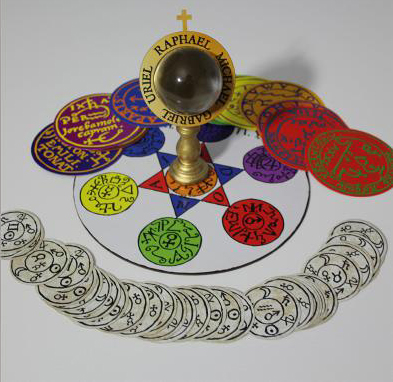
The Lemegeton is called the ‘Clavicula‘ of Solomon (‘Lemegeton Clavicula Salomonis‘) not because it is less important, but because its approach comprises several distinct methods, strategies, each of which is a separate “little key”, and together they open the Great Door of wisdom, the Gates controlling the “Subcelestial” forces. If the ‘Great’ Key (as, for example, the Abramelin) attempts to open the Gates in a single effort (with divine aid), the ‘little keys’ divide that task into several separate battles. The first ‘key’ — the “Goetia” — outlines the Gates themselves and considers their Gatekeepers; the second secures the support of the “unstable” “Grey Spirits“.
The third of the “Claviculae of Solomon” is presented by the book “Ars Paulina” (“The Art of Paul“), so named because its content traces back to the visions of the apostle Paul received in Corinth. The book is divided into two parts: the first examines the planetary spirits that govern the hours of day and night, and the second examines the zodiacal spirits that govern each zodiac sign and each of its degrees.
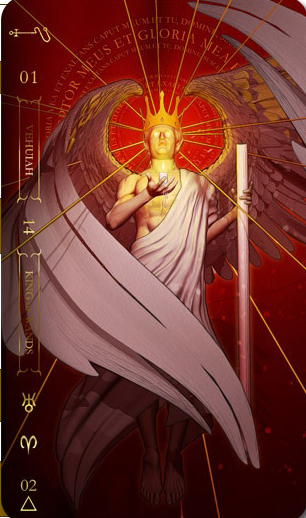
The second part is of particular interest to us, since the information it contains can be easily correlated with the Shemhamforash system and the general logic of the “Lemegeton“.
Even the great Swedish visionary Emmanuel Swedenborg (1688–1772) formulated and recorded an important principle for Magic — the principle of the aggregation of vortices: each vortex “of a higher order” can be regarded as a composite of vortices of lower order, and conversely, any group of vortices that share similar characteristics tends to coalesce into a vortex of a higher order.
Swedenborg, in particular, wrote: “the whole angelic society is as one person, in the form of an angel, … therefore the Lord and whole societies are called in the Word an angel; for Michael, Gabriel, Raphael are nothing else than angelic societies, to which these names are given according to their offices“.
Such “interpenetration” of vortices is well known also from kabbalistic descriptions, which likewise effectively speak of the fractal structure of vortices.
Understanding this mechanism makes it possible to establish the connection between the “angels of the zodiacal degrees” treated in “Ars Paulina” and the Genii of the Shemhamforash, for each Genius comprises five degrees and therefore, as a vortex, consists of five smaller vortices formed by the aforementioned “angels”.
Since, unlike the “planetary” spirits, the “zodiacal” ones have received far less attention in the magical literature, the approach of “Ars Paulina” indeed offers a unique and invaluable “little key” that allows one to work with the Shemhamforash matrices more profoundly.
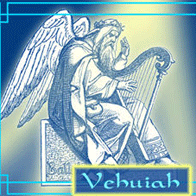
Thus, the angel Aiel (אייאל), ruling the sign Aries, “includes” the spirits Bi’el (בהיאל), Goshiel (גשיאל), Ha’el (האיאל) and Ganiot (חאנות), which together form the Genius Vehuiah (והויה); then — Kognel (כגנאל), Tafael (טפעאל), Ha’el (ההעאל), Kali’el (כליאל) and Lariot (לריות), which form the Genius Ieliel (יליאל), and so on.
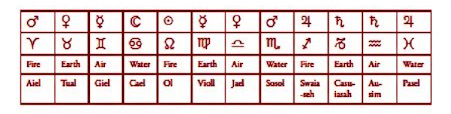
As in all other cases, a “letter-by-letter” analysis of the names of the “angels”, reading their gematria and correlating them with zodiacal and planetary influences (in this case — with the energies of Mars (which rules this part of the Horizon) — Samael (סמאל)) makes it possible to find additional characteristics of the Shemhamforash Genii matrices, and therefore to identify additional paths of resistance and the transformation of the Goetic gatekeepers’ influences.
In exactly the same way, a graphic analysis of the sigils and Seals given in “Ars Paulina” can expand the descriptions of the powers of the angels and the Genii.
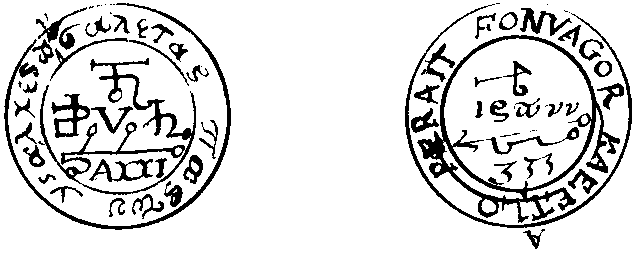
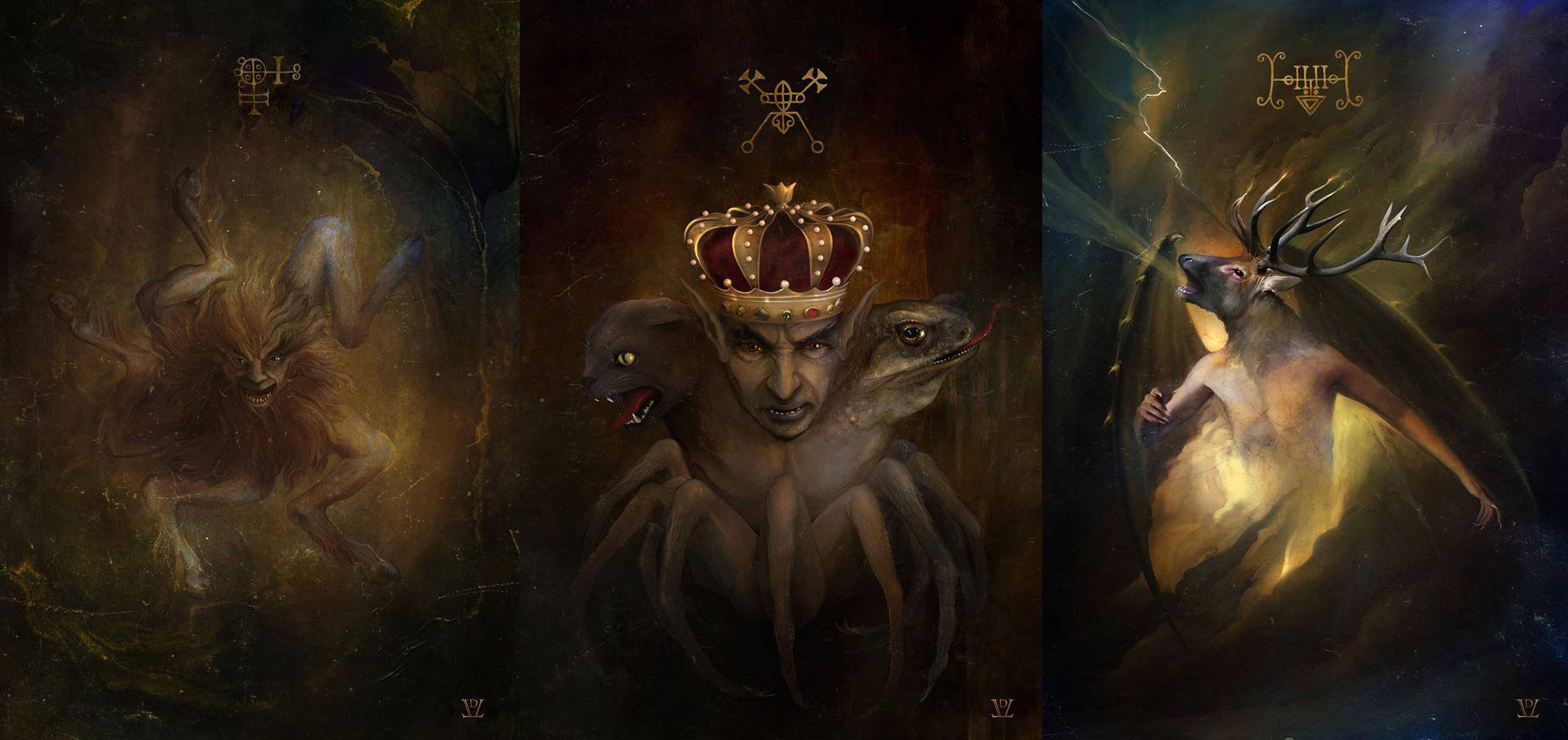
For example, the sigils of Aries show the general character of the first six Genii: the course of energy from center to periphery:

its connection to the “deep” sources:
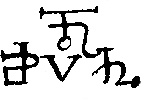
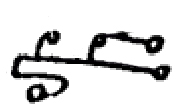
the impulse to choose and shape reality:
Thus, as with all the books of the Lemegeton, “Ars Paulina” naturally provides a resource for developing magical logic and intuition, enabling the crafting of an effective strategy for a magician’s development.


Tell me, can the angels of the first part of Ars Paulina, the angels of the daytime and nighttime hours, be considered a kind of gate to planetary forces? After all, these angels manifest different planets at different times, right? It feels like they are not exactly planetary angels, but rather ‘angelic gatekeepers’ who open the way for one or another planetary angel, and the same angel of the hour opens the way for different planetary angels at different times? Then they are not planetary angels, it seems, but precisely the angels of the daytime and nighttime hours?
Of course, these are manifestations and realizations of planetary (as principles) currents.
Enmerkar, thank you very much for such a detailed practical mapping! However, the deeper I dig, the more questions arise, for example, about the names of angels of the zodiac degrees by Ars Paulina: as I understood from the text, you are using not the edition of Joseph H. Peterson, but a more popular one, that of A. White, right?
And I am very interested in the source of these names of angels in Hebrew; I would be very grateful if you could point out where they can be found. Thank you!
Applied Kabbalah, to a greater extent, is always the result of personal experience, especially when it comes to the interaction of vortices. Therefore, in this and other similar articles, when it comes to The Names of Spirits, these are the names whose use proved effective in my practice. Readers are invited not to copy them, but to follow the logic and scheme of the author’s work and try either to achieve the same results as he did or to obtain their own Names and Words of Power that will prove useful and effective in their practice.
Thanks to your comment about the necessity of searching for my names and words of power, I decided to study the scanned manuscript, https://www.scribd.com/doc/227709475/Sloane-3825-Treatise-on-magic-including-Janua-Magica-Reserata-and-the-Lesser-Key-of-Solomon.
Structuring Ars Paulina a bit, I found that in some editions it contains a huge number of transcription and digitization errors, and I discovered, although quite uneven, yet easily readable alphabetical logic in the formation of angel names in the moneymaker.
The conditional Itael in one edition turns out to be Hael in the manuscript and הלאל, considering the alphabetical logic, while Ganiot turns out to be Zaciel in the manuscript and זס(י)אל according to the alphabetical logic. A separate pain is the transliteration of Hebrew, for example, ng, which is used in the grimoire to denote the throat closure (א,ע).
A bit separately are the signs under the influence of the luminaries (Cancer, Leo) and those that are opposite, under the influence of Saturn. There, maternal letters are used, some of which (מ,ש) are excluded from other signs.
Perhaps someone will find this interesting/useful.
Thank you, I hope such an approach will inspire others to independent research, which, however, should also be verified in practice.
What practical verification method would you recommend specifically for such ‘specific’ service spirits like grade angels?
Since the study of Kabbalah is also the practice of Kabbalah, in this case, one can use the corresponding methodological arsenal – verifying through gematria and notarikon, as well as it would be nice to trace the movement both ‘from top to bottom’ – that is, how larger vortex formations dissociate into smaller ones, as well as ‘from bottom to top’ – how the nature of smaller vortices merges into larger ones.