
The True Voice

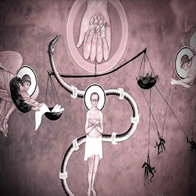
In all cultures and Traditions that created their maps of the afterlife, it is noted that one of the key stages of the Intermediate journey of consciousness is the so-called “Afterlife Judgment”.
However, despite the indisputable importance of this stage, its mechanism and specific meaning are often described vaguely, staying within the terms of “ordinary” jurisprudence and being reduced to “acquittal” or “accusation”.
Nevertheless, the essence and purpose of the Judgment are obviously far more complex.
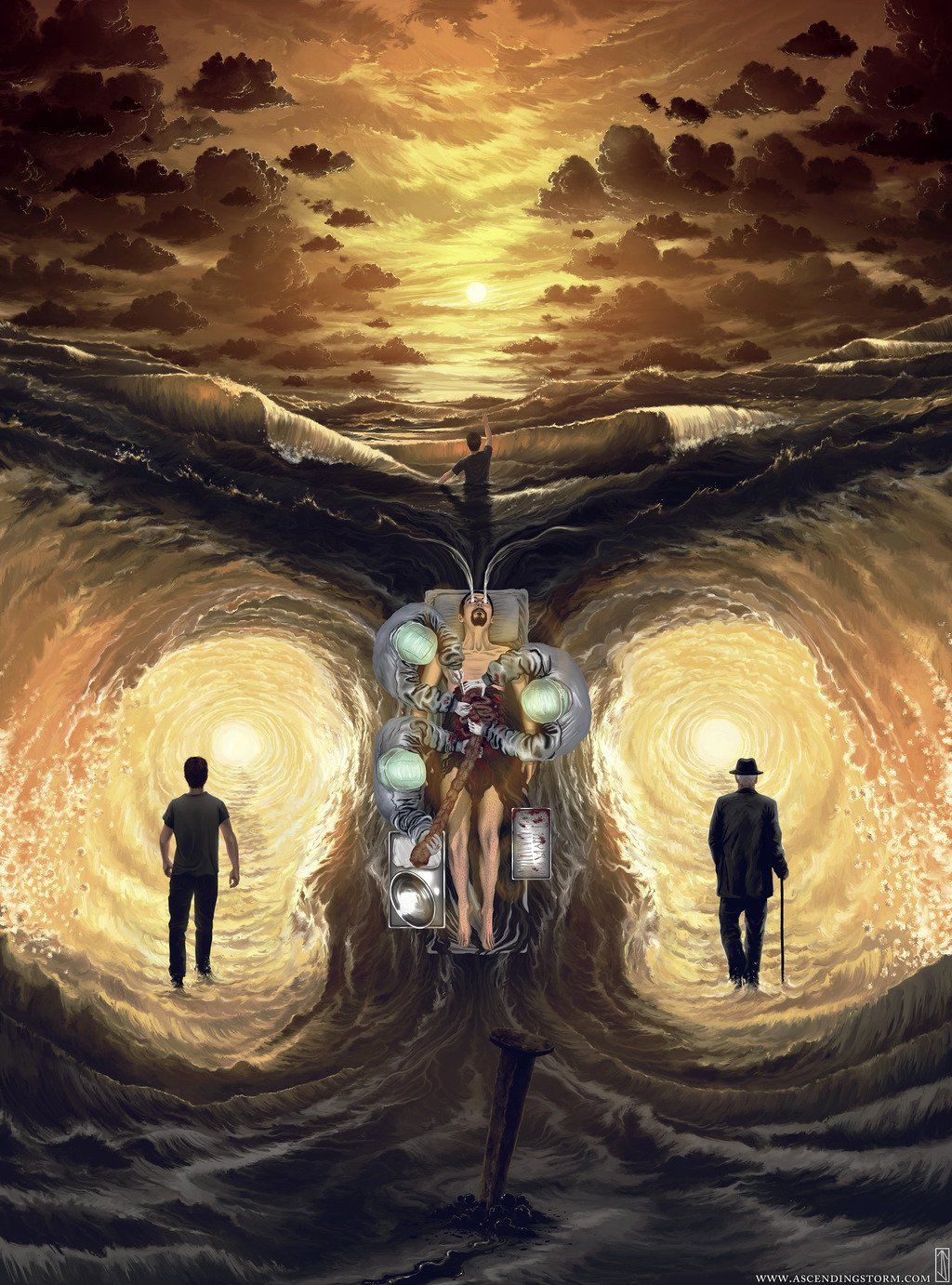
We have already discussed that the task of the Judgment is a kind of “test” of the deceased (that is, of the mind embodied in the Afterlife Body) for readiness, or, more precisely, the ability to integrate with other components of its psycho-energetic structure, forming a qualitatively new, “self-moving” or “self-determining” level — the “divine akh” (or jnana-kaya).
And in this sense, the Ancient Egyptian Tradition distinguished three outcomes of the Judgment:
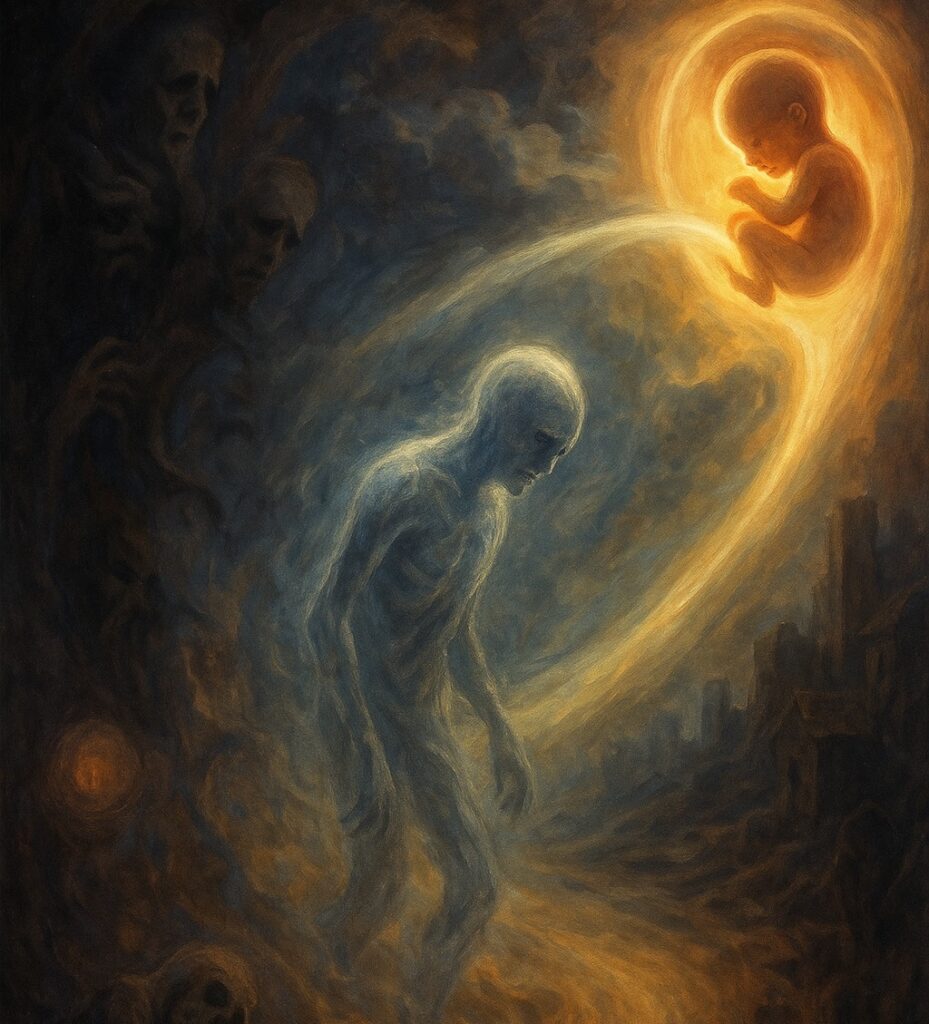
- The first — the most common, “neutral” one, when the mind turned out to be “not ready” for this integration because it failed to resolve its internal dead-ends and conflicts, yet still retaining evolutionary potential. In this case, it was reborn into a new incarnation on one of the celestial bodies (including Earth).
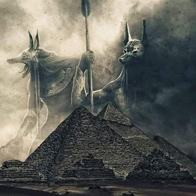
- The second — “negative”, when it turned out that the mind had accumulated a “critical amount” of destructive elements (“isfet”), and in such a state had no evolutionary potential. In such a case, the entire experience of its incarnations was “reset” (which was depicted as the “swallowing of the heart”, viewed as the receptacle of experience later called neshama, by the monster Ammit), followed by either — a “start from a clean slate”, or — “settling” in the “formless regions” — the dark regions of the Intermediate state.
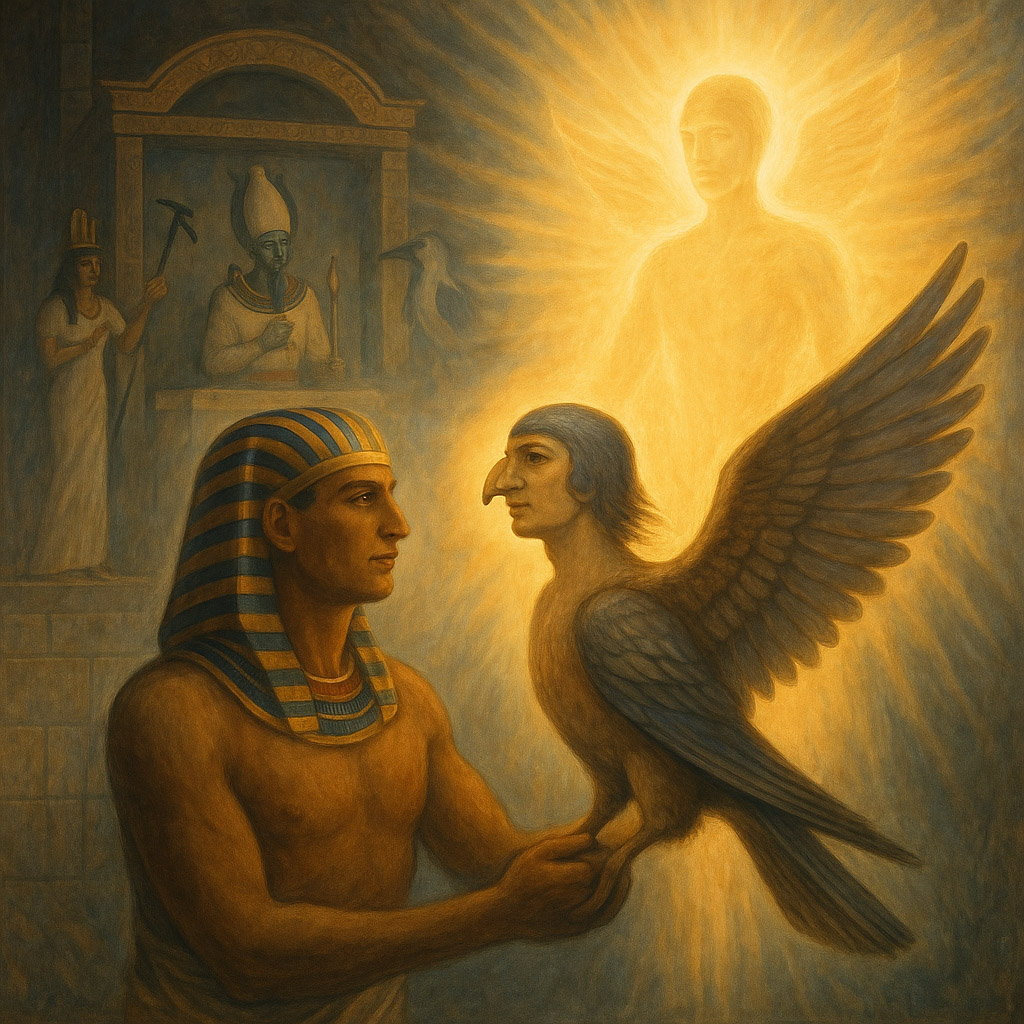
- The third — “positive”, when the inspection of the mind by the higher levels of the psychocosmos showed that its stream was sufficiently balanced and harmonious, and capable, by integrating its reflexive component, of forming an akh. The “Books of the Dead” call such an outcome “the gaining of voice”, and the deceased themself, “acquitted” at the Judgment — “the True Voice” (Maa Kheru (mꜣꜥ ḫrw ), which was a common titulary ending for a deceased pharaoh.
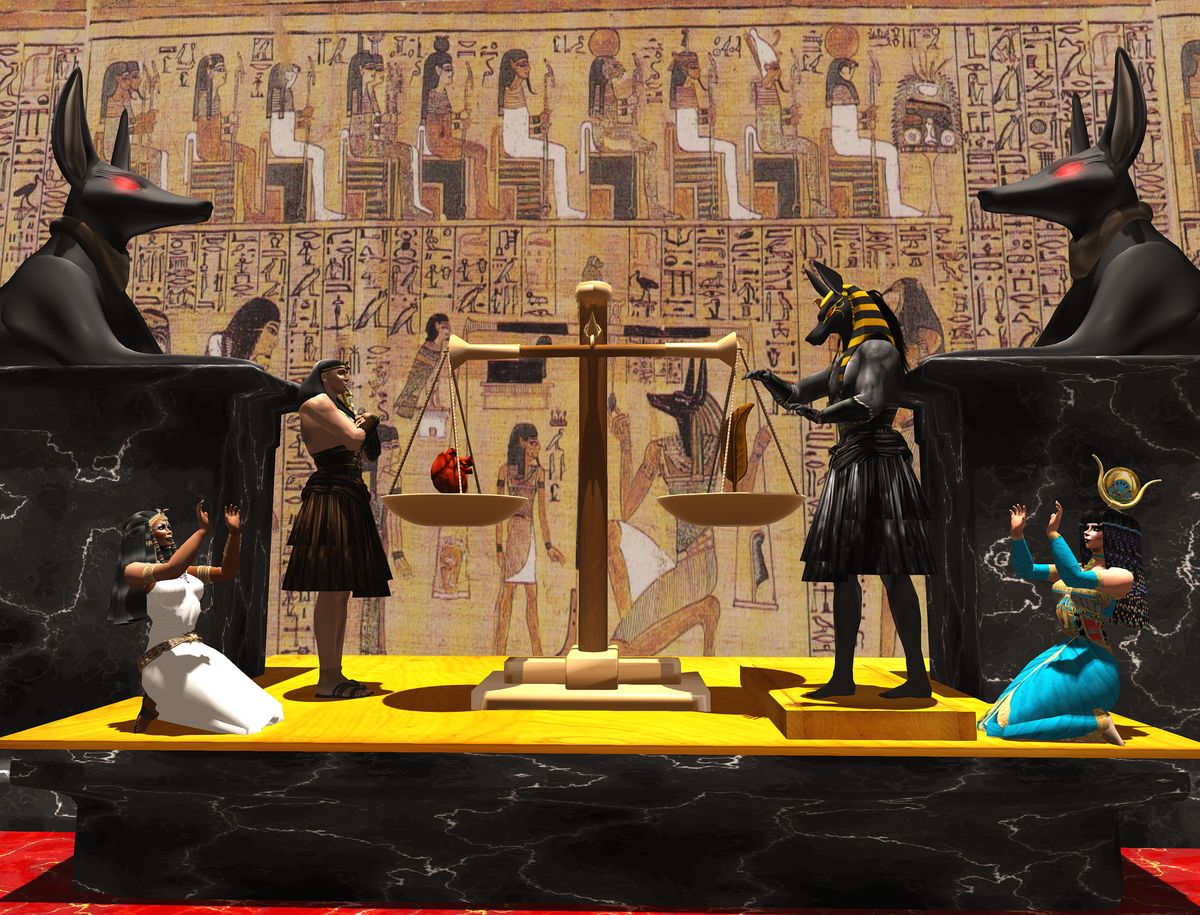
It is important that before the Judgment the deceased is described as “voiceless”, which, given the identification of speech and voice with creation, signifies exceptional passivity.
Indeed, we said that other traditions also speak of the fact that in the first (before the Judgment) stages of the afterlife the mind in fact has no will, no independent activity, being gripped by vivid experiences and images born of its unresolved attractions and impulses, and therefore it rather acts as an “object” than a “subject” of the afterlife.
And only after the Judgment, in the case of an “acquitting” verdict, does the deceased “gain a voice”, acquire subjectivity, the ability for independent movement and choice.
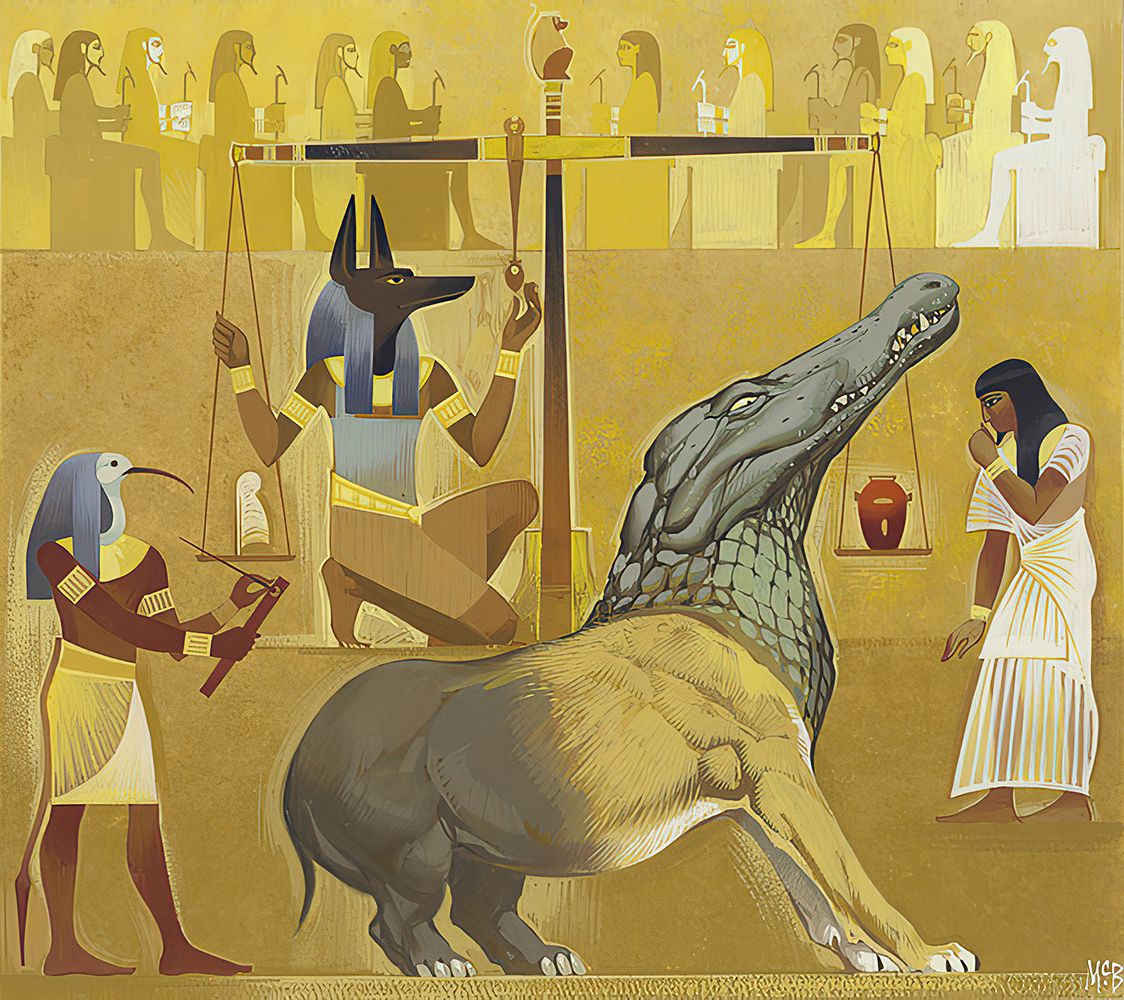
In other words, the Judgment is a “crisis” moment of the afterlife in which the mind either reaches the level where it can become the subject of its own posthumous existence, or returns to the cycle, or disintegrates.
On the practical level this means that the deceased who has gained their “True Voice” has “passed the test by the heart”, and their words correspond to their logoi, higher meanings, and essence. In other words, it is evidence that the mind has gained the ability to interact creatively with the world; that its speech is not mere sounds, but a formative force capable of changing reality, because it is in harmony with Maat — the forces of order, creation, and sustaining. Thus, they become the bearer of the creative power of the divine Word, directly part of the world order.
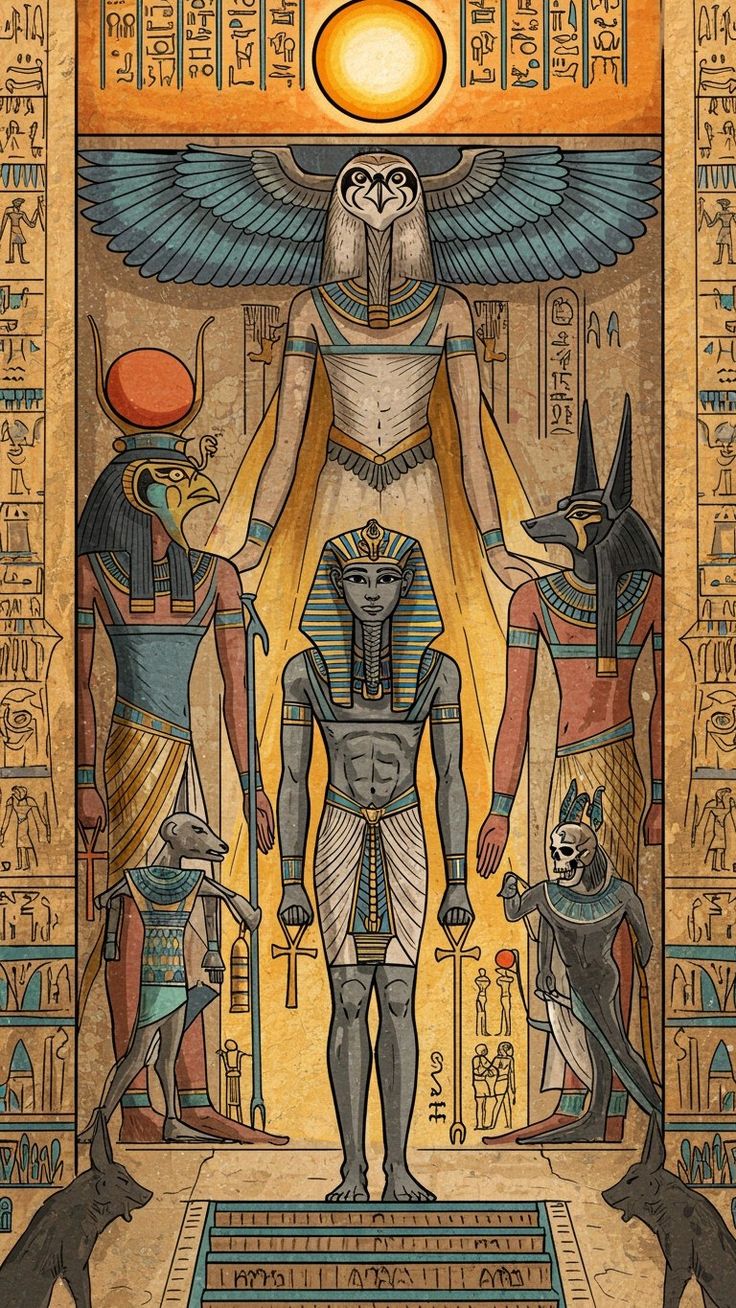
From a magical point of view, Maa Kheru is gaining a genuine magical level of mind capable of generating changes through focused intention and the creative word. From this point of view it is clear why it was precisely priests and Magi who sought to attain the state of the True Voice during life through the practice of pronouncing “true words” (hymns, prayers, spells), establishing contact with divine forces and cultivating creative subjectivity.
The gaining of the “true voice” means that ka (the perceptive component) and ba (the reflective component) of a mind-stream do not contradict each other and are able to balance and complement each other. This is possible when the perceptive mind (ka) is not overloaded with uncontrolled passions, and the reflective mind (ba) does not suppress vital impulses and does not distort them. Then the state of inner unity is achieved, in which sensory experience (ka) is grasped without distortion (ba), and understanding then expresses the life force directly.
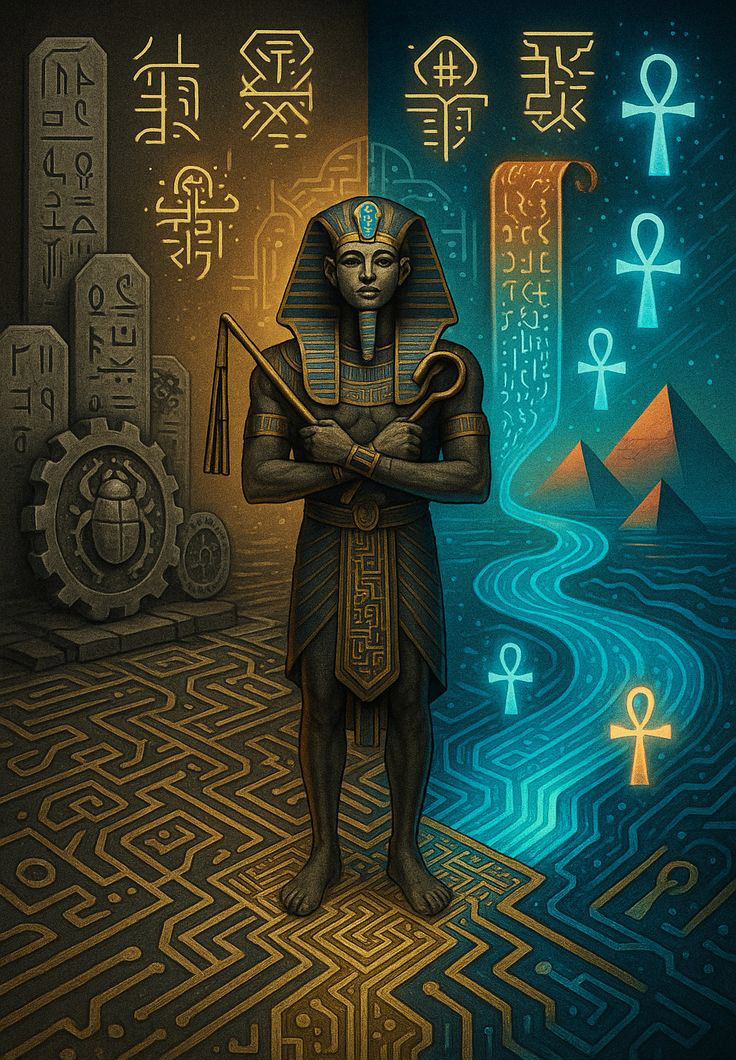
It is precisely this inner unity that makes it possible to form the third level of mind — akh, the higher integral structure which is simultaneously both perceptive and reflective and, most importantly, capable of acting autonomously, self-determined, and meaningfully. It is akh that is the “perfect” bearer of individuality, capable of free movement and creativity, because it is no longer divided into conflicting parts. Its inner harmony allows it to serve as a conduit of cosmic order (Maat) and to directly participate in the processes of world-creation and self-creation.
We have already discussed that at the Judgment, at the level of the Maat of Osiris (a hidden, potential order), the mind must assess its inner integrity and clarity regarding its deep motivations, unconscious aspirations, and hidden impulses. Here the mind’s ability not to deceive itself is tested — to be aware of and accept its true nature. And it is precisely this that is the most difficult test, because the mind faces the absolute truth about itself, without any cover-ups, justifications, and illusions. For this assessment, it is not so much what the mind did that matters, but why it did it. Accordingly, this test reveals hidden attractions and unconscious motives, which may be well and deeply concealed in the incarnate state, and determines how capable the mind is of seeing its own inner conflicts and imbalances.
Thus, the “readiness” of the mind for integration is determined by the degree of its inner balance, transparency, and ability to be honest with itself. This state is described by the concept of Maa Kheru — the True Voice, in which the mind is capable not only of perceiving the truth of Maat, but also of living in accordance with it, expressing it, being its bearer and creator. And it is precisely passing the trials of the Two Maat and the ability to see one’s real state without distortions and illusions that serves as the criterion that the mind is truly ready to integrate its components into a unified, integral, self-luminous being — the Divine akh.



Good day. Is it possible to achieve the state of akh in life or is it solely the province of post-mortem?
Hello.
Yes, achieving a fullness of consciousness in life is possible and even desirable, and it is the goal of many practices in various Traditions. However, it is important to understand that in an embodied state, the ability of consciousness to adequately self-assess is often clouded by various distractors, and therefore there is a high probability of making mistakes, mistaking imitation for a real achievement. In death, however, when consciousness is ‘unraveled’, the likelihood of self-deception is much lower, so even if the state of akh is achieved during life, in the early stages of the afterlife it is still temporarily lost and only restored after ‘Judgment’, that is, after the crisis of self-knowledge. It is important to understand that ‘Judgment’ is not some ‘external’ action upon consciousness; it is a stage of its natural movement, a point of bifurcation, at which it either becomes capable of achieving its integrity or moves towards further disintegration.
Again on point, Master.
Very good article. Thank you.