The Gods of the Faerie
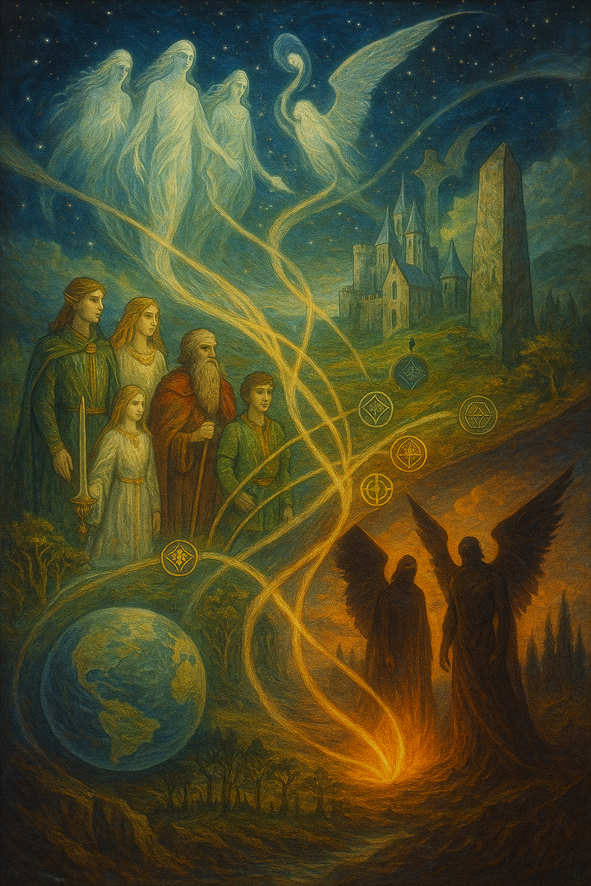
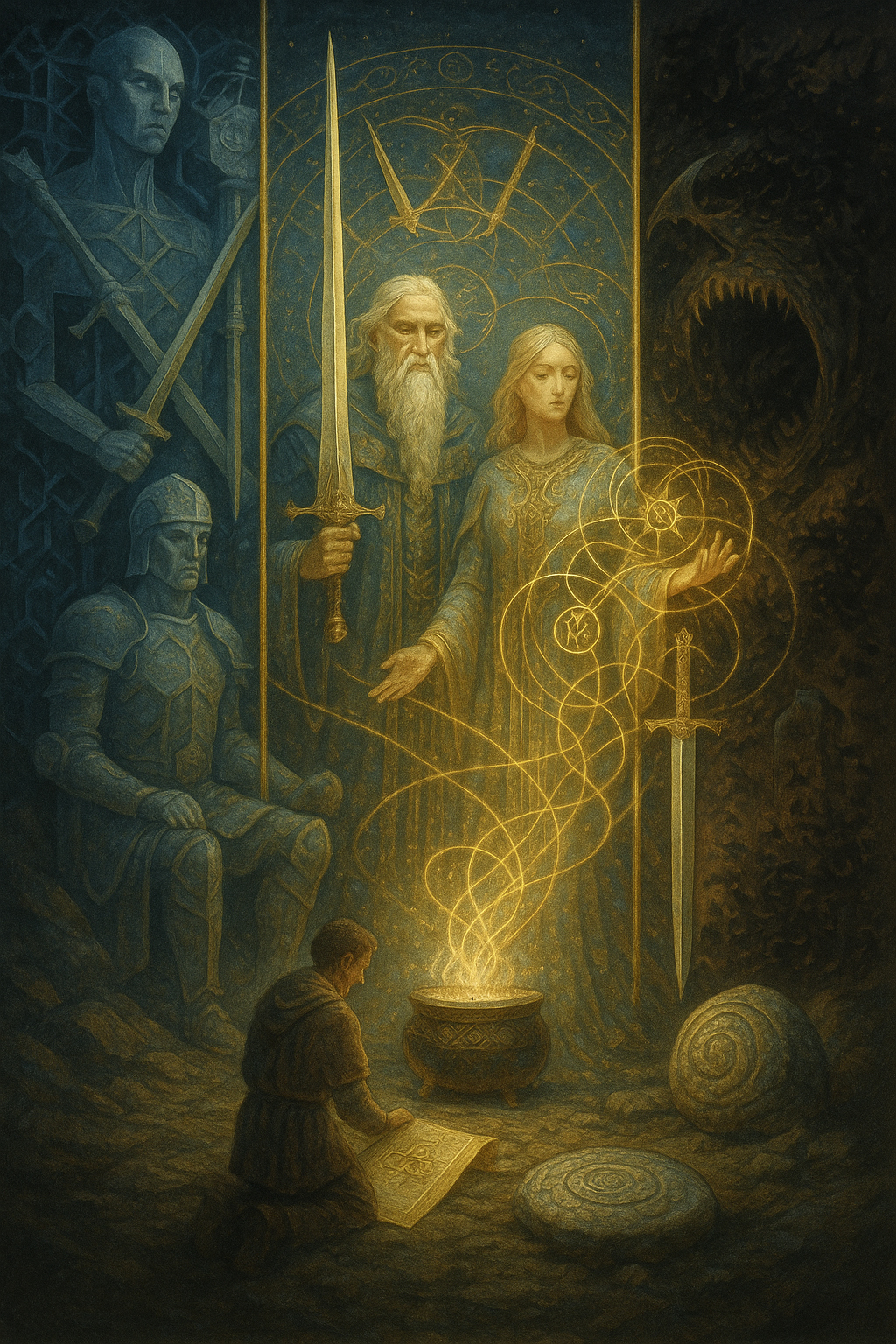
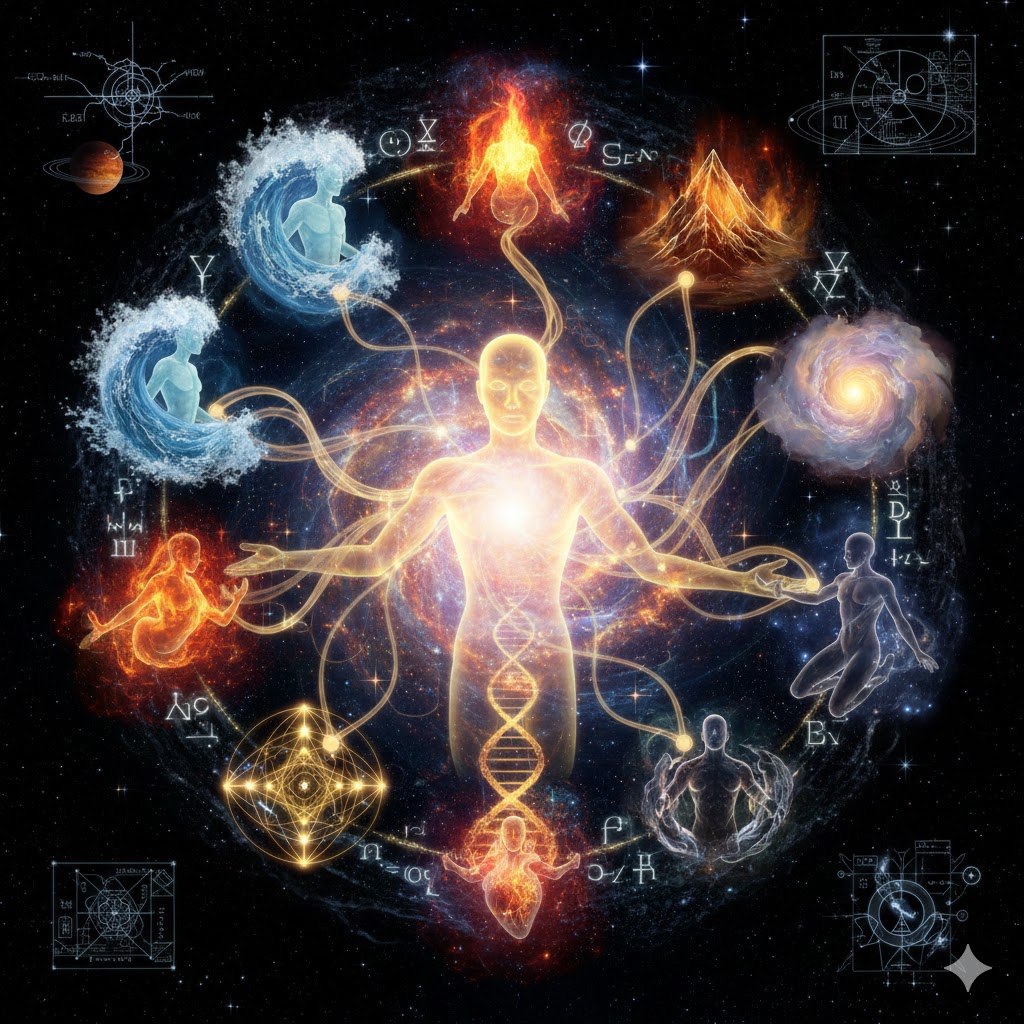
In the Second Age of the faerie — the Age of Partholon — two key events occurred in the formation of the Fairy People. First, the alves descended to Earth for the second time, from whom three important groups of the “Northern” branch of the Aes sí later emerged: 1) the “Guardians” of the upper ethers of the Interworld, the fae who never possessed “dense” bodies and who interact with both the rest of the Fairy People and with humans (who arose much later) only through visions and insights, 2) the High Sidhe, who at first played the role of alves’ “viceroys” in the manifested world, building Castles and other supporting structures for ordering matter, but later also mostly left the “dense” worlds, and 3) the “Fathers” and “Mothers” of the faerie people themselves, the leaders of the Tuatha Dé (“Tribe of the gods”), who then acted as divine transformers and guardians of the entire World of the faerie. Second, it was in this age that the grigori also appeared on Earth, later giving rise to the Southern branch of the Fairy People.
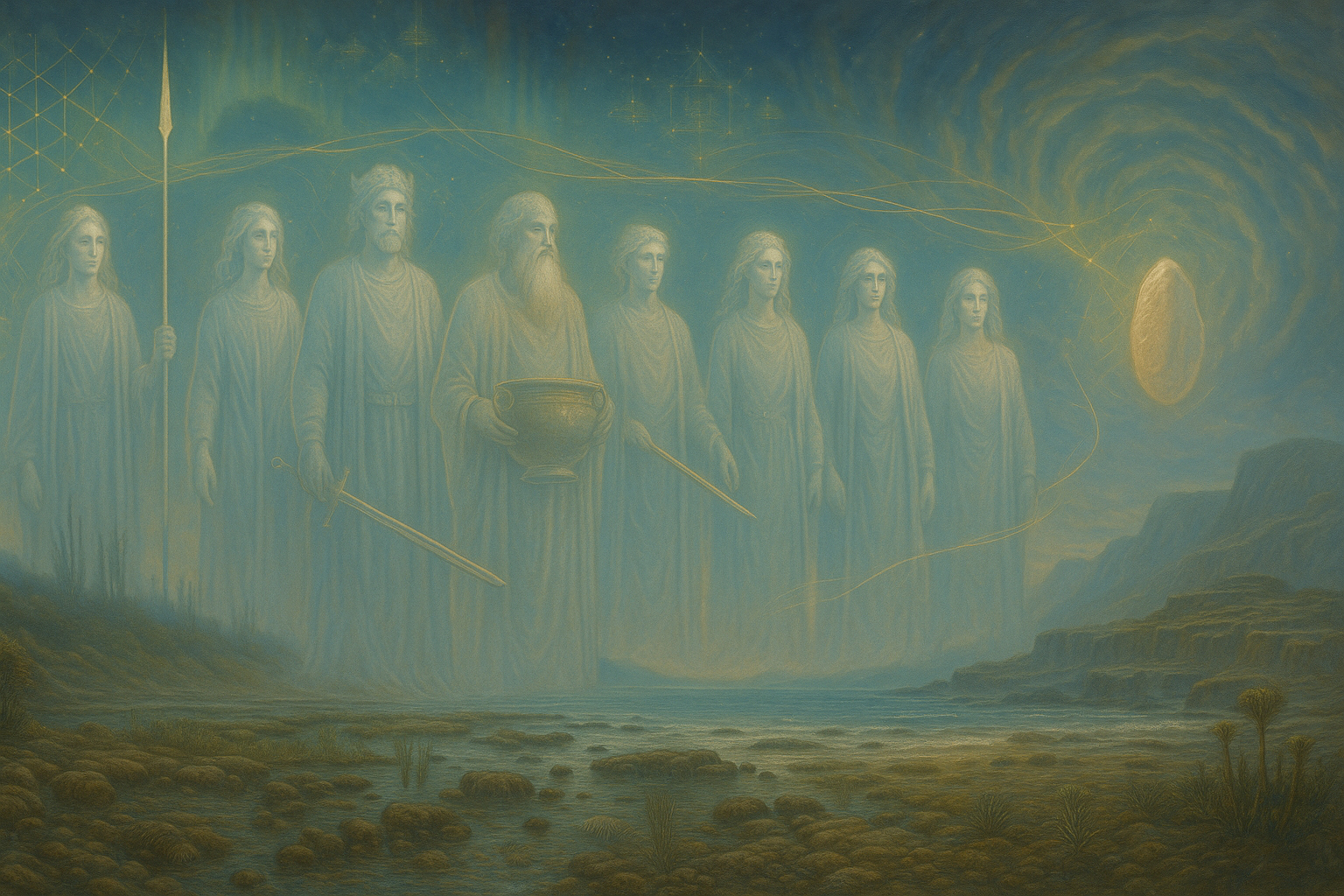
Although the formation of the faerie into a single people required much more time and further dramatic events were still to come, from this time onward the influence of the Aes sí on Earth’s “materiality” became key, rivaling in this sense the impact of “properly divine” forces — the aesir and the vanir. Just as in modern times the anthropogenic factor has become a cosmic-scale force transforming (unfortunately, toward destruction) the material world, from the Age of Partholon (that is, about 400 million years ago) and until the beginning of human expansion (until 200 thousand years ago), the most important transforming force was faerie activity. And in this activity the leading role belonged precisely to the Elder generation, the “Divine tribe,” which in many respects became known as the Celtic pantheon, although, strictly speaking, the term “gods” was rarely used for these beings.
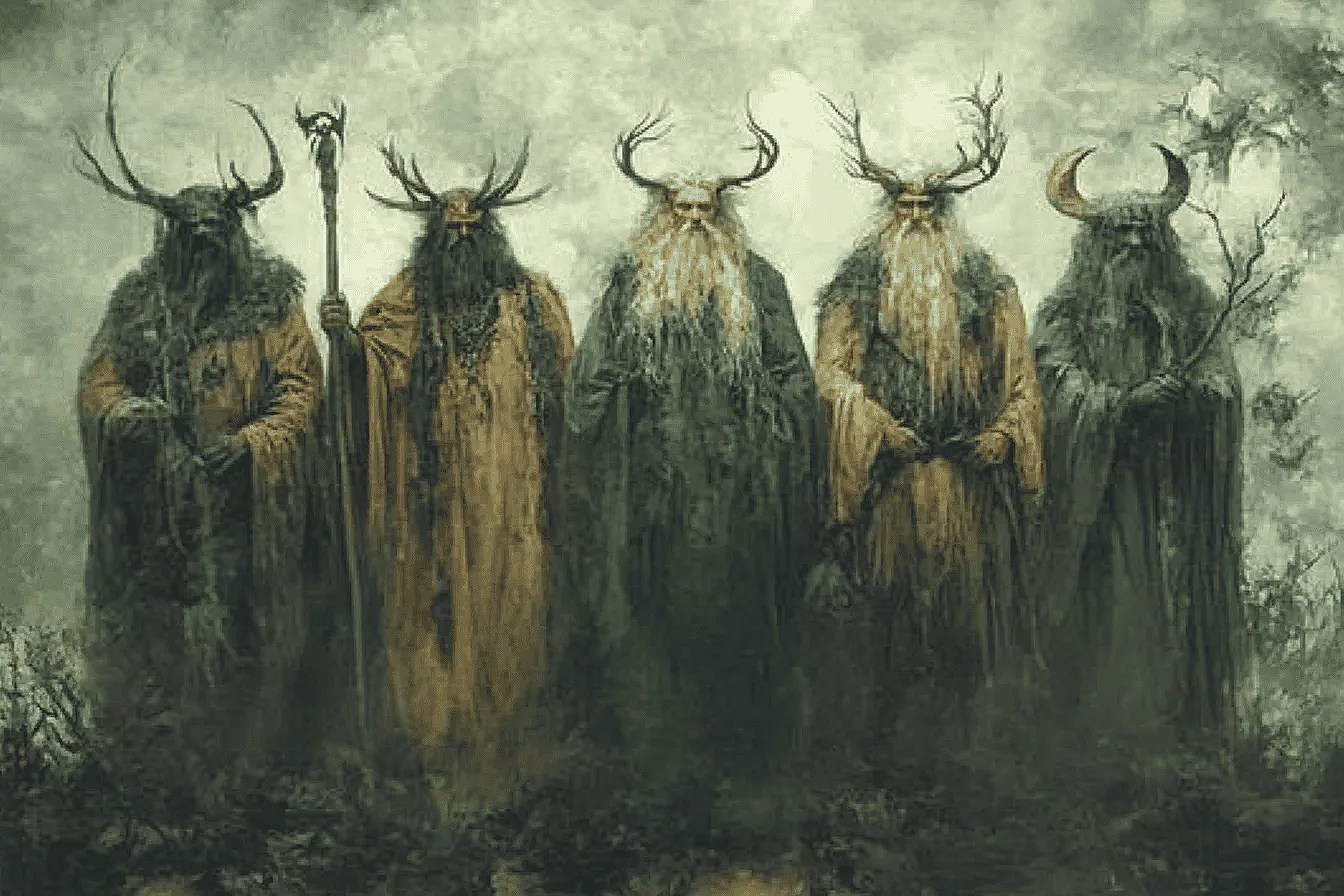
As the legends say, within the faerie people, even in later times, there was a distinction between “dé ocus andé,” that is — “gods and non-gods.” At the same time, it was precisely the “elder” nobility that were called “gods,” clearly distinguished from the other members of the tribe; moreover, “Dé” or “Dia” is not a separate people, but a stable internal status of “mighty” Rulers.
Indeed, formally, these “Shining Ones” (deywós) influenced the material world not by the “natural” and largely “involuntary” modes characteristic of “proper” gods; the “Dé” change the world more like magi do, through deliberate acts of will, directing their wisdom and energy, transforming streams of force and probability according to their will. The legends say so directly: “He (the Dagda) was to them a god of the earth because of the greatness of his magical power.”
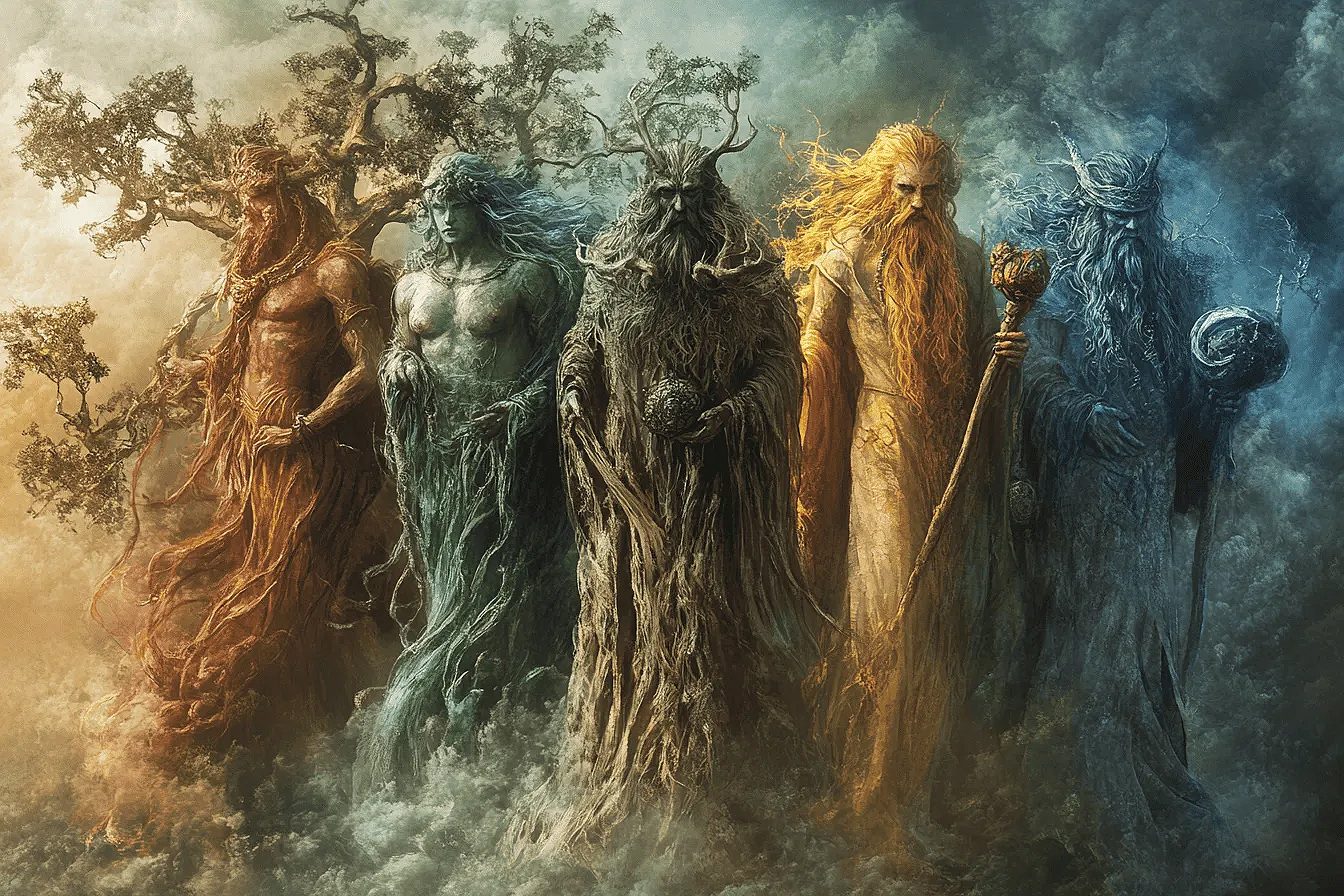
Nevertheless, their power is not inferior to — and sometimes surpasses — that of the “properly divine”; being the “elder children” of the alves, they see perfectly well the “underside” of the universe and are able to change the causes of events, rather than merely alter the phenomenal plane. Therefore it is unsurprising that, although later faerie “know” the true gods, at their core they are not religious, and the minor cult practices that they had (and still have) are, to a greater extent, ways of maintaining connection rather than acts of worship. For the Fairy People, the main sources of wisdom and “Prav” were and remain their own sages and kings.
As with the “real” gods, the true names of the Dé are unknown. Partly this is connected with the general principle of the “divine Name,” which grants power over worlds, and partly with the fundamental nonlocality of the Fairy People themselves, which makes it impossible to name them unambiguously.
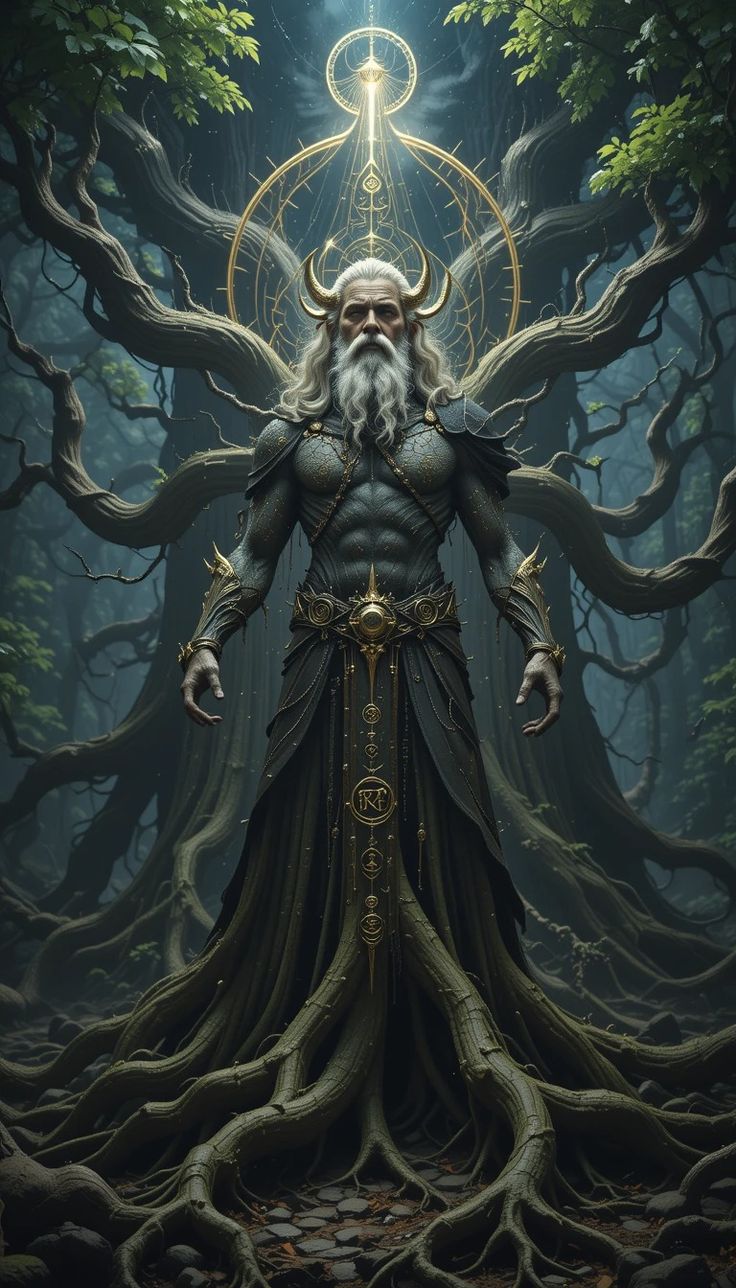
Therefore all the “names” that the legends have been passed down are, of course, epithets: Dagda — “the Good God,” Nuada — “Hero,” Manannán mac Lir — “Son of the Sea,” and so on. Of course, each of the Dé had many such epithets describing his features from different aspects: thus, Dagda was also called Eochaid Ollathair (“Rider, Great father”), Ruad Rofhessa (“Mighty one, Lord of great knowledge”), Daire (“Fertile”), Aed (“Fiery”), Fer Benn (“Man of the summit”), and so on.
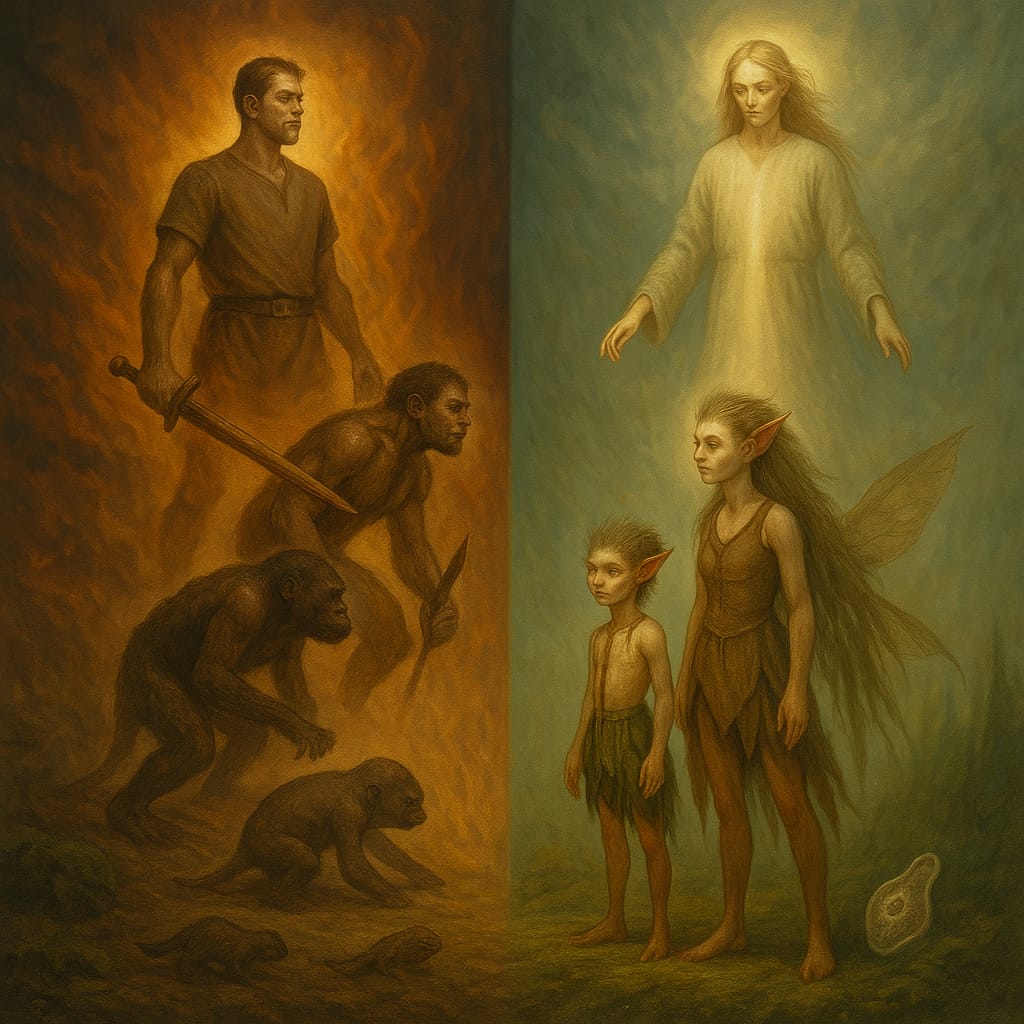
It is precisely at the level of the Dé that the Fairy People for the first time exhibit explicit sexual differentiation: whereas both the alves themselves and the first proto-faerie (altanns, snahad sí, kivni kirkal) are “gender-neutral” (that is, although among them there are “expansive” and “attractive” beings, these differences are still difficult to equate with biological sex), the Dé already have a clear division that manifests both in their appearance and in the nature of their influence.
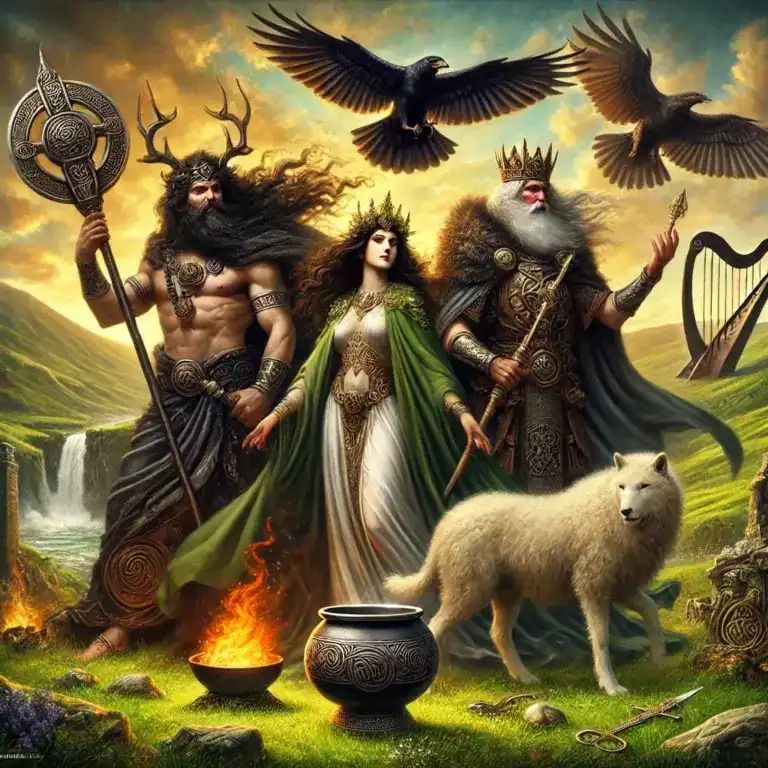
At the same time, although many of the Dé have extensive “offspring,” they, like all other faeries, rarely reproduce, and it is important to remember that these children appeared over many millions of years in the life of the Divine tribe. Moreover, the birth of these children usually occurred in response to a specific request, or an evolutionary process.
The clear formation of the “Divine tribe” took place during the Battle of Mag Itha — the first war on Earth, a clash of Vanir and Fomorian forces, into which gods, alves, and the Elder faerie were drawn as well. It was then, evidently, that they acquired their Great Magic, learning to “weave” and rebuild reality. Therefore, for example, it was precisely the magic of the Morrígan (“the Great Queen”) that was an important factor in gaining advantage in battles across ages and among peoples throughout history, both among the faerie and later humans, not less significant than the basic “forces of Confrontation” — Ares or Montu. It was the Battle of Mag Itha that marked the turning point of Earth’s history, when “right” and “force” first came into explicit conflict. And it was precisely the Dia who built the bridge between the flowing forces and the regularities of the world, and from that time their magic ceased to be a private manifestation and became a systemic factor shaping the world.
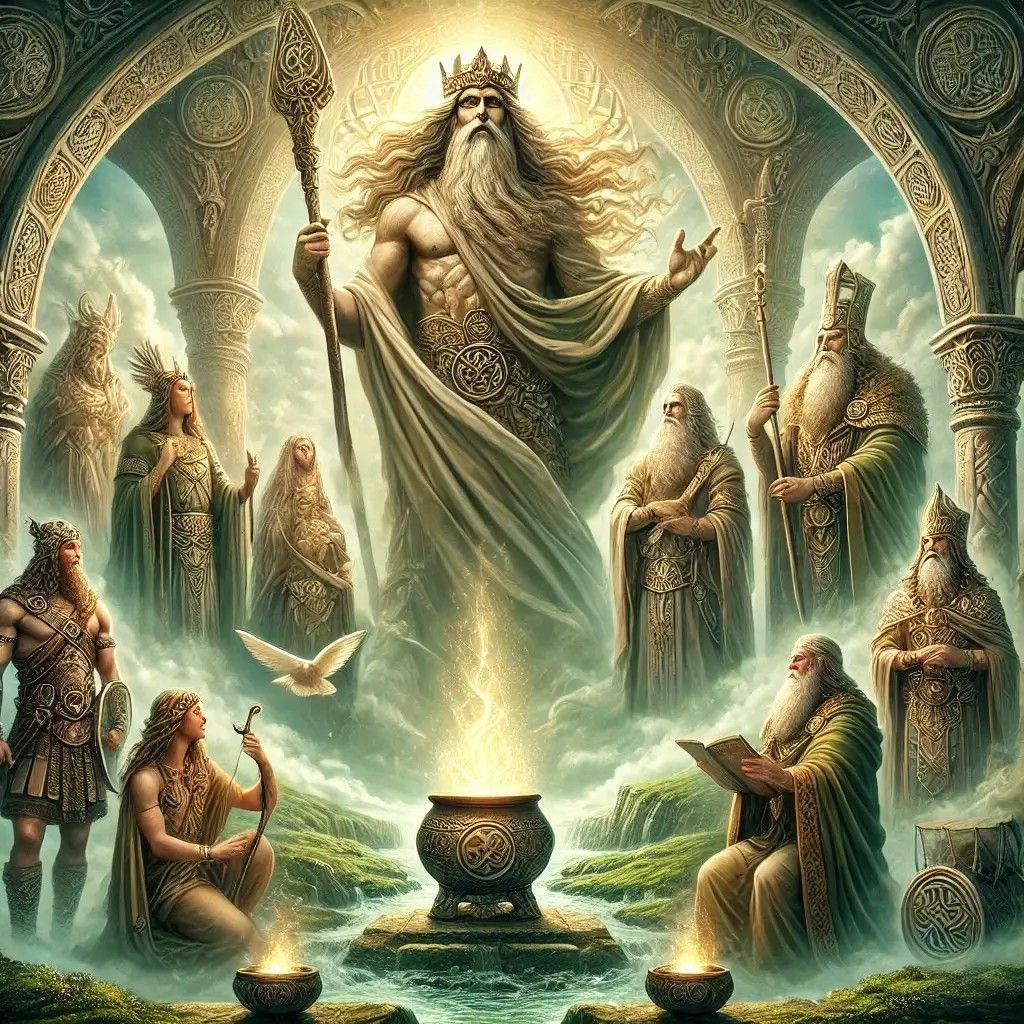
Thus the true nature of the Dé’s influence on the history of worlds becomes clear: the Elder faerie are those who ensure the alignment of law and flow, and they do so in such a way that form does not ossify and possibilities do not dissolve into chaos. Their presence introduces no new laws of nature, but adds will and responsibility as primary driving causes. Therefore any encounter with the Dia and their influences is simultaneously a blessing and a test of a being’s capacity to move in creative harmony with the world — without imposing one’s will upon it, yet also without leaving it to drift. And when they are forgotten, when their influence weakens, two distortions intensify simultaneously — both archontic ossification and Fomorian devouring. As long as the world can still feel the presence of the Dé, its individuality serves its wholeness, and its power is filled with higher meaning. And if humans still have a path ahead, it passes through apprenticeship with the Elders, through mastering that harmony of krus, that “Dao,” in which the individual and the general reflect and complement each other. This is their “divinity”: they bring the universe to a “maturity” in which Magic becomes a properly established right, and reality itself learns to be free without disintegration and stable without ossification.