Portals and Superposition
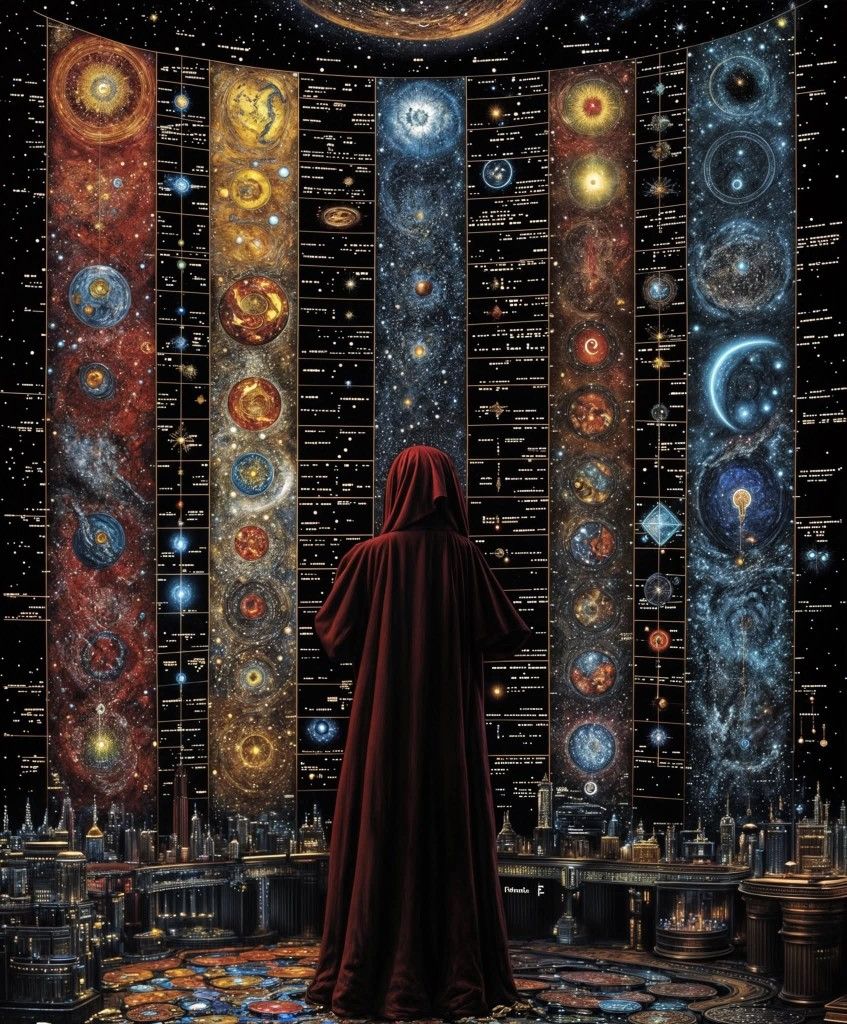
We have already discussed from the Myth’s perspective, any “reality” exists as a probability stabilized by perception, the emergence of definiteness and order in the boundless ocean of possibilities. Therefore, any manifested world is only one of countless decoherent ways in which the Universe can manifest. In the language of modern physics, manifested reality is a local coherence of the wave function, established under the influence of observation and causal inertia. In terms of hermetic description of the world, the world is a stage of the “breathing” of the Interworld, an exhalation of potency that has become a definite form.
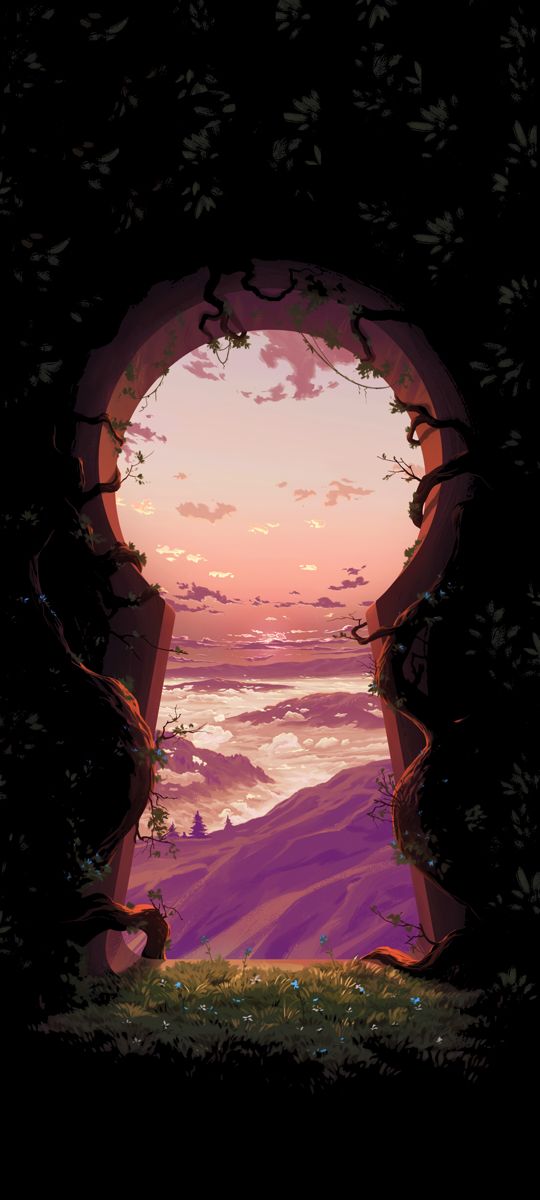
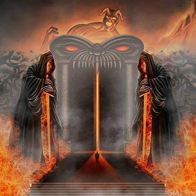
Since, in this way, worlds constantly interact with the Interworld that generates and dissolves them, they always contain special “entry/exit points” where flows of reality enter a state of superposition, and the fixed flow of probabilities (forms) comes into contact with the Interworld (potency). These “points of superposition”, in the broadest sense, are traditionally called Portals — seen as a variety of the general principle of Gates, structures that connect things without a natural path of contact. A Portal is a point where all probabilities are accessible, and therefore a concentrated presence of the Interworld within the world’s fabric. In other words, Portals are the “physical” manifestation of the principle of Gates, where coherence between worlds is restored, and consciousness with sufficient energy and clarity can alter the course of its branch, thereby transitioning between different lines or layers of reality.
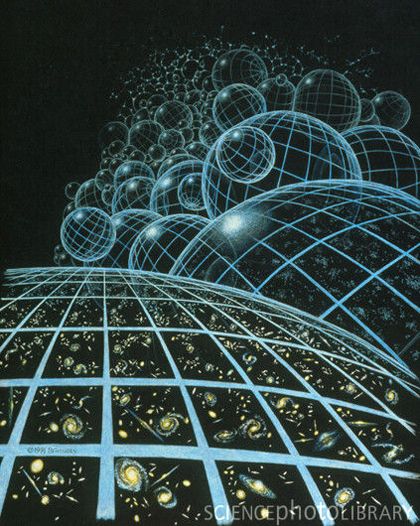
From the many-worlds interpretation of quantum mechanics, each reality is one of the branches of the Universe’s wave function Ψ. Usually these branches decohere, becoming orthogonal and non-interacting. However, under certain conditions — energetic, topological, or psychophysical — local restoration of coherence becomes possible, in which different branches intersect, interfere, and create a “transition zone”. Such a node is precisely a Portal, where the wave functions of different worlds or timelines are not fully separated. In this sense it behaves like a tunnel in configuration space, linking two local minima — two “solutions” to the Universe’s equation with different initial conditions.
Thus, from a physical point of view, a Portal can be described as a tunnel between local minima of the Universe’s configuration space, a quantum transition between states separated by a potential barrier. Inside such a tunnel, time loses its direction and energy loses its locality, which is precisely why, for an observer, passage through a Portal is perceived as an instantaneous displacement — in space, time, or in the flow of probabilities.
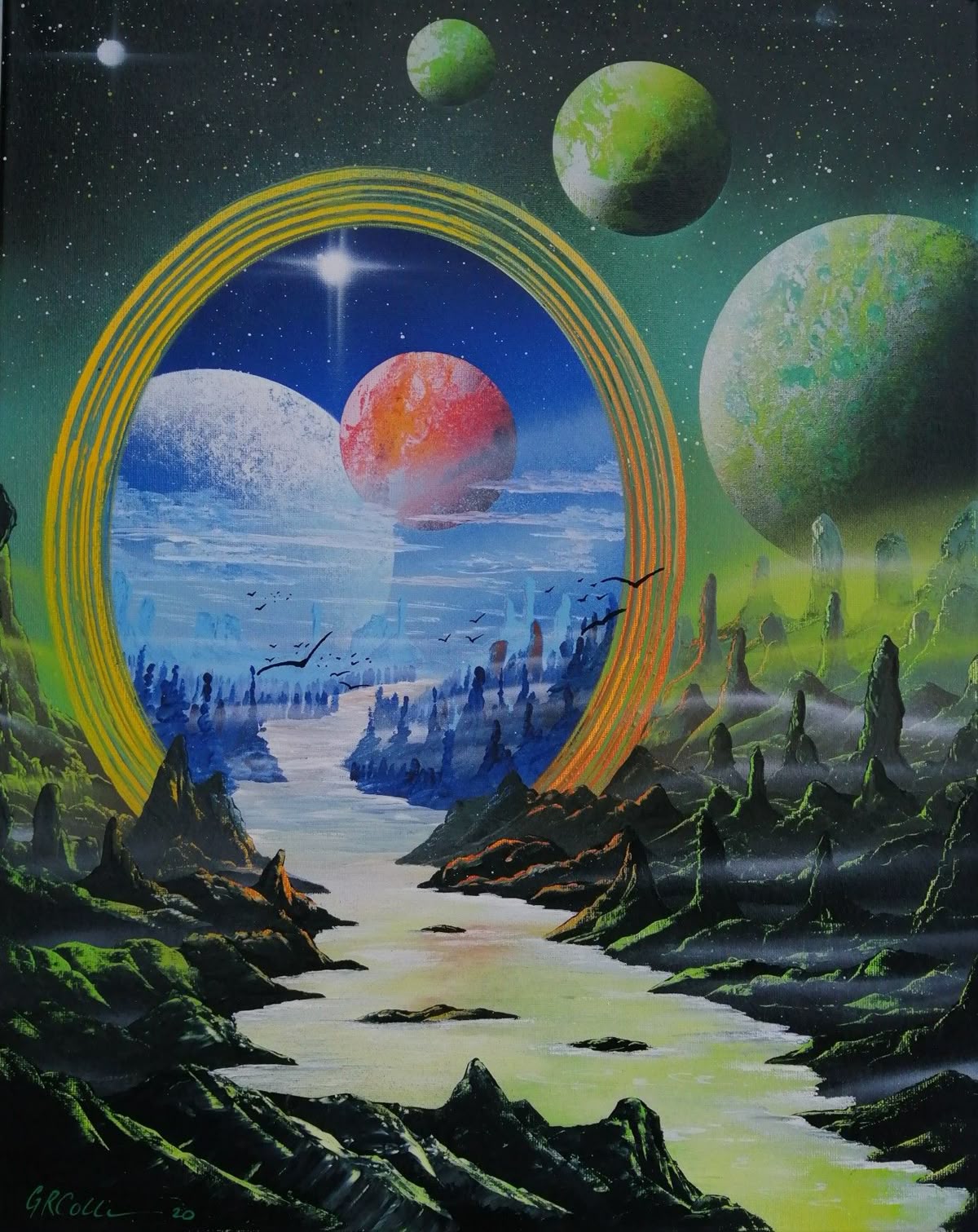
In terms of gravity, a Portal can be described as a micro-wormhole or a local warping of space-time, and in an informational sense — as a “node” of quantum correlations where spacetime loses its rigid locality.
Accordingly, passage through a Portal can be regarded as macroscopic “tunneling” of the observer’s wave function between different coherent branches.
It is clear, therefore, that each Portal requires conservation of energy; that is, a transition is possible only if the potentials of the “initial” and “final” spaces are equal. In hermetic terms, this same principle describes the necessity of compensation, according to which any change in reality requires an equivalent “sacrifice” — an expenditure of energy. Therefore, passages through Portals are always accompanied by an exchange; neglecting this can have dire consequences.
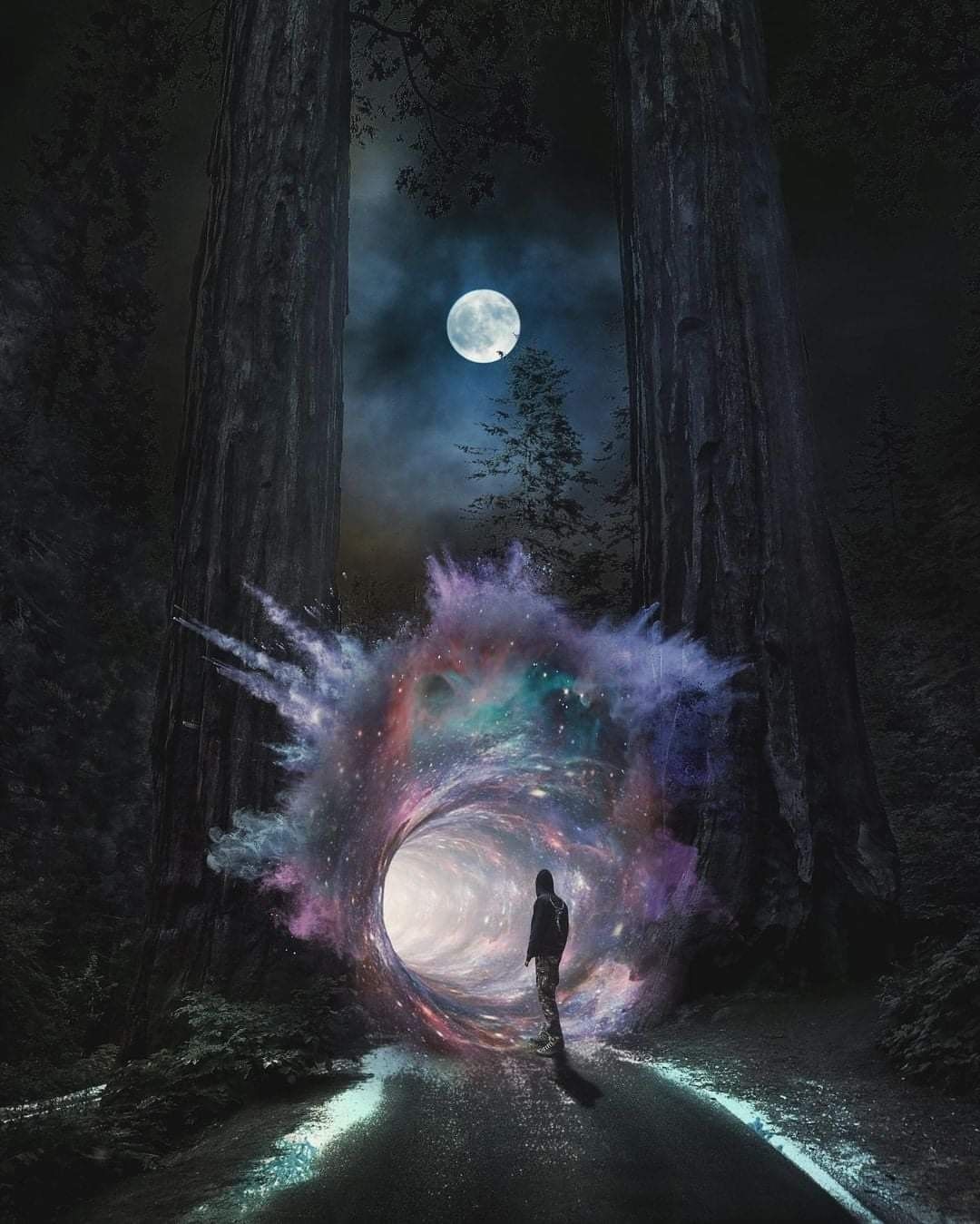
Since, in this way, Portals are a natural and necessary element of the cosmos, they arise from the fabric of the Interworld (in this sense considered as the Edge), and are supported and regulated by the Edge’s forces (above all, by the Guardian of the Threshold and by the Aeon Sophia). In addition, we have said that Portals are supported and activated by Threshold beings, above all — faeries, who need them for navigation and energy exchange. In this case, elves create the possibility of transition, while the service forces of the Interworld — epikletes and psychopomps — maintain the “semi-permeability” of Portals. It is important to understand that every posthumous transition is, in fact, the same type of “portal” act, and therefore one can say that namtarras are entities that constantly create and then immediately close Portals.
We have already discussed that all Portals can thus be divided into two groups — “natural” and “artificial”. At the same time, “natural” Gates arise where the geology, topology, and local energy favor a ‘fracture’ in the Edge. This most often happens in places with sharp breaks in the terrain — saddles and ridges — in karst cavities, at intersections of “ley lines”, or above deposits of piezoactive rock. The formation of portals is also facilitated by mirror-like surfaces of water and ice, twilight and “threshold” periods, and large natural energy releases.

Artificial Portals are intentional or involuntary “breakthroughs” of the Edge, points of coherence maintained by the conscious energy that created (and later employs) them. In this case, the “trigger” for contact between reality and the Interworld may be spells, energy releases, rhythmic movements (for example, a dance), or sacrifices.
We also noted that any — both natural and artificial — Portal requires a special “opening” object — a “key”, which can be a word, an object, or a being.
At the same time, in all cases the main condition is phase alignment, when the observer, the place, and the “key” enter a stable resonance, whereby decoherence locally weakens and the superposition becomes traversable.
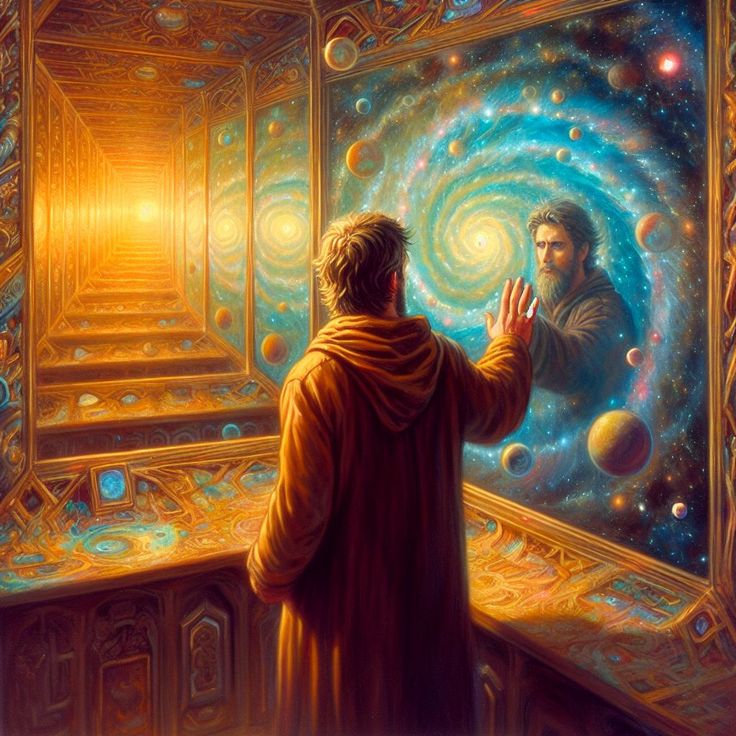
We have already discussed that, since each Portal is a manifestation of the Interworld, it is precisely a point of superposition, not a “Gate” in the strict sense of the word. In other words, a Portal only allows an “exit” from a certain reality, but at the same time does not “lead” to any specific place, world, or space. Therefore, a simple “passage through a Portal” is, in fact, a fall into a black hole — an action with wholly unpredictable consequences, where the “destination point” is determined by so many parameters of the observer and their environment that it is impossible to account for them under ordinary conditions. That is precisely why, in order for a Portal to be used, not only is a “key” needed, but also a “navigator” — an object or a being that turns superposition into a bifurcation, in which the final result is still not fully guaranteed, but which nevertheless lends itself to probabilistic assessment. Such navigators are most often faeries who, as we have said repeatedly, are nonlocal in nature and therefore are effectively ‘consubstantial’ with portal superposition. And without agreeing with a guide, or without finding the right “directing tool”, it is impossible to turn passage through a Portal into a useful — or even safe — act.
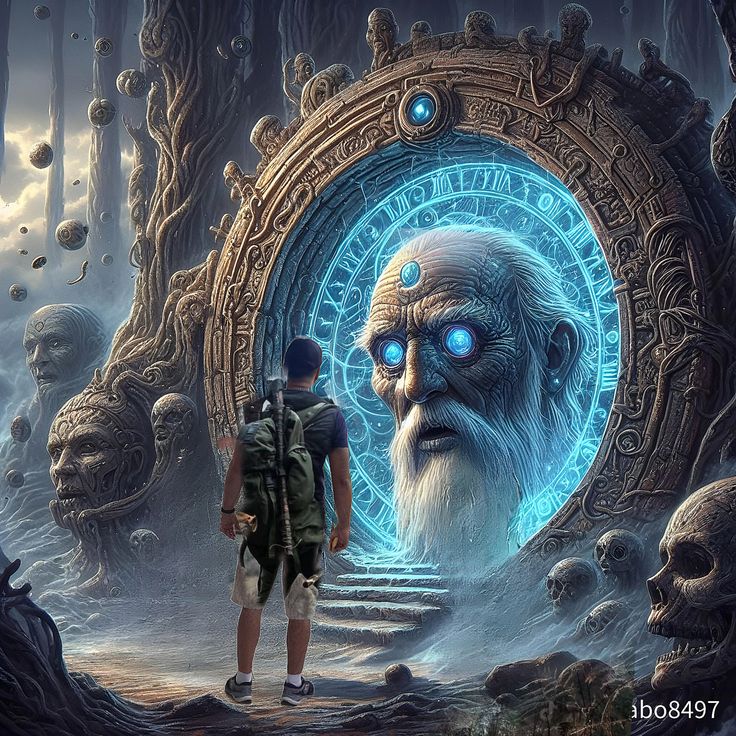
Thus, Portals are necessary elements of the cosmos that maintain the connections between worlds, the circulation of energy, and the movement of information. In addition, they are points where probability lines bifurcate, in which adjustments of timelines, shifts of consciousness, or the attainment of gnosis are possible.
Portals play an important role in maintaining the balance of the Interworld, providing a mechanism for equilibrium between determinacy and change, order and chaos.
On the practical level, Portals provide communication between levels of worlds and the Interworld, creating opportunities for connection between people, faeries, elves, archons, and higher spheres.
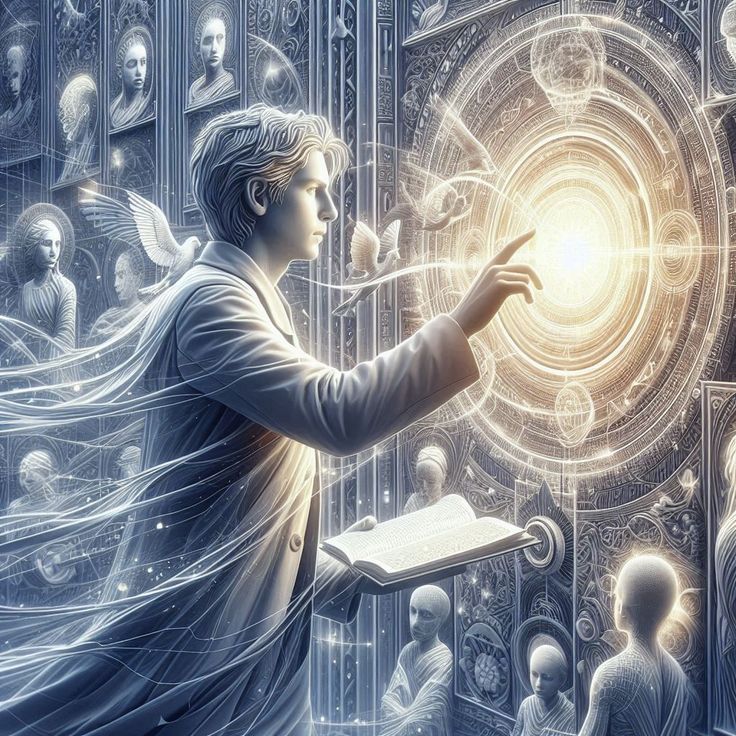
They act simultaneously as regulators of the circulation of forms and semantics and as evolutionarily important “gaps” in descriptions of reality. It is Portals that create possibilities for a “rupture” of established world descriptions and thus for the mind to go beyond the bounds of habit and conditioning.
Where beings and entities know how to create, maintain, and use Portals, freedom does not turn into chaos and does not dissolve into the determinacy of heimarmene. Thanks to them, spontaneity, transition, and transcendence become manageable, an ability to consciously translate the possible into the actual.



Must a portal be a discrete leap across a significant distance?
If by example — is any action that changes the probabilities of outcomes considered a ‘portal action’? For instance, a protective ritual that saved someone from the danger of being splashed by a car and thus being late for work. The worlds where he was late and not late are different. But they are very close.
In general, the question is whether minor fluctuations within the same stream of probabilities are portal-like.
As stated in the note, a Portal is a specific case of a more general principle — Gates. Gates are the principle of ‘jumps’ and discrete transitions. Portals are usually referred to as such Gates through which beings can transition between timelines, times, or spaces.