Eurynomes — Final Energy Disposers
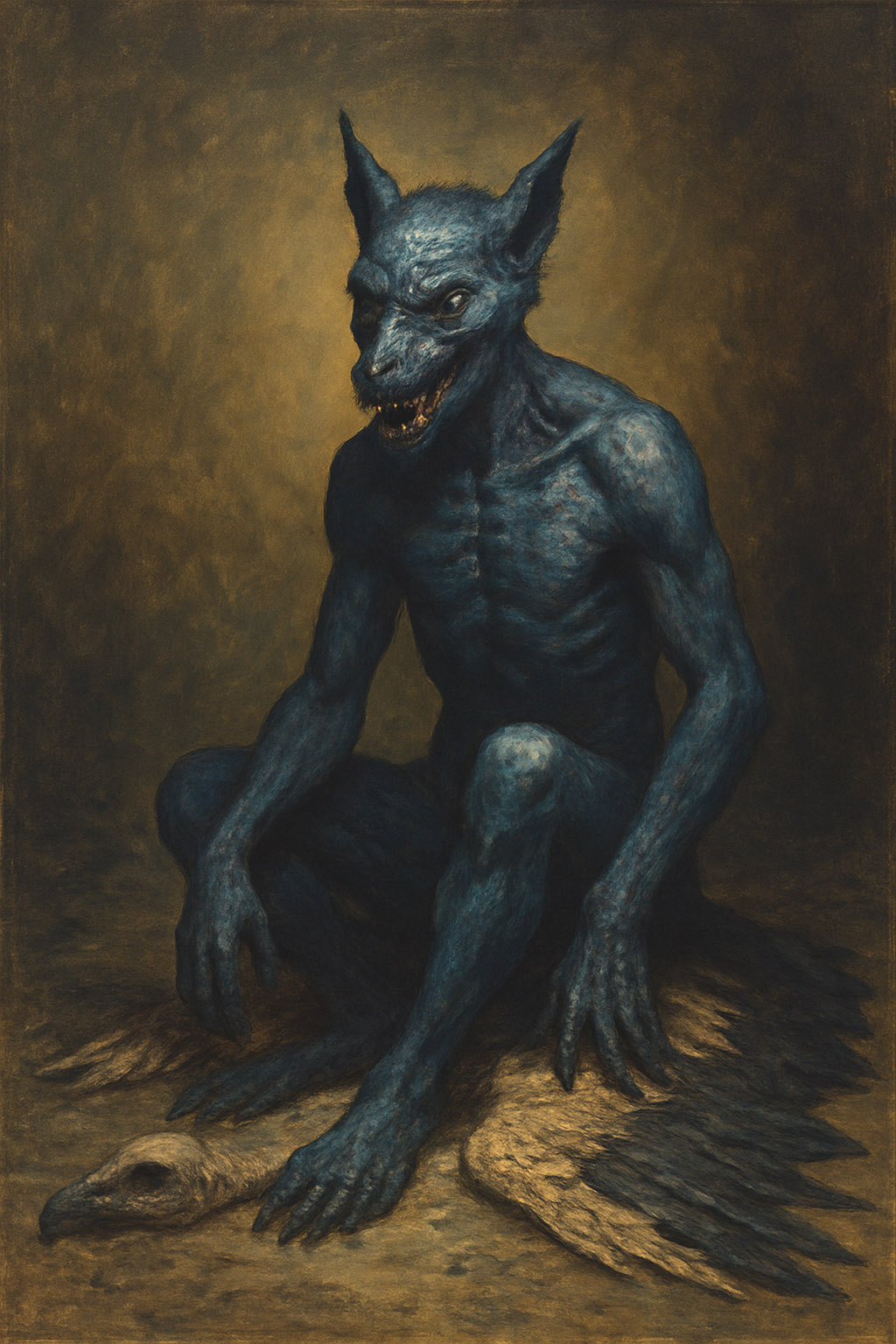
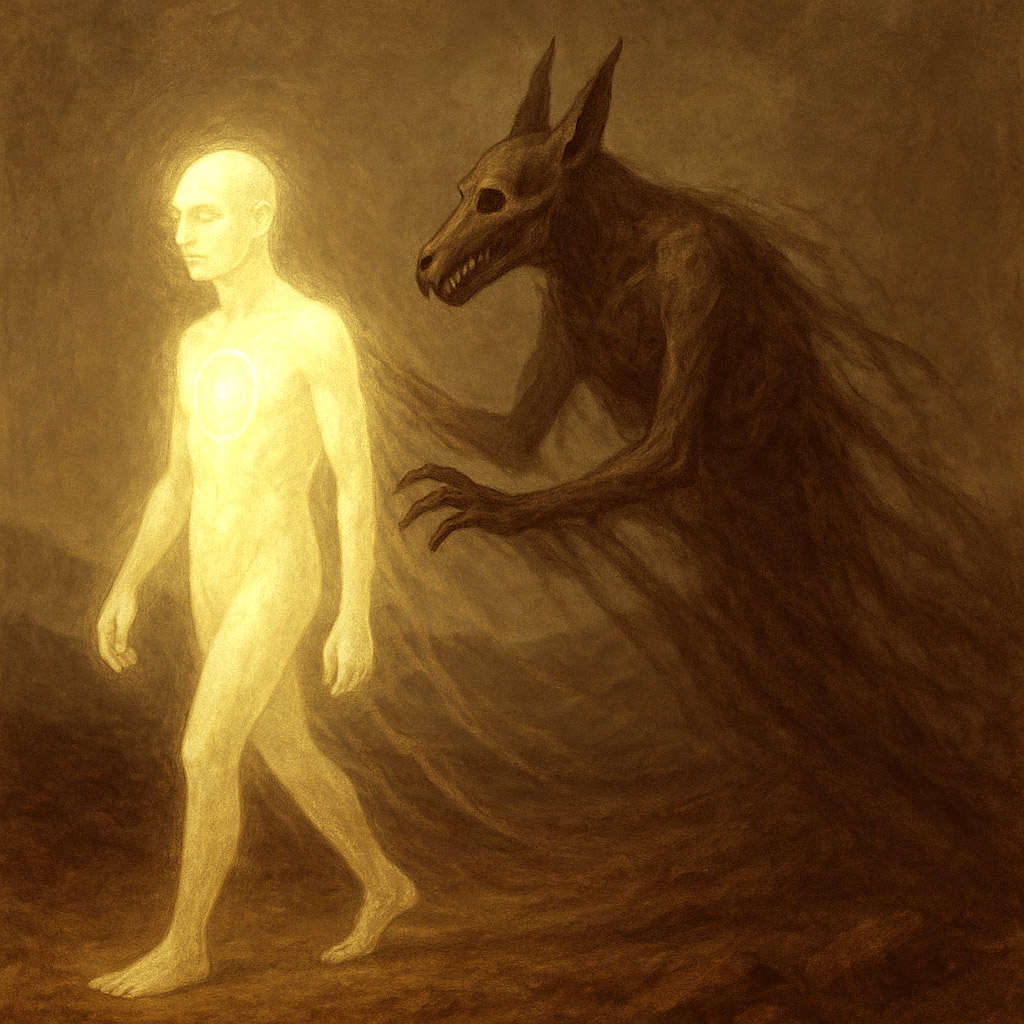
Among the many inhabitants of the Interworld, a special place is occupied by eurynomes — entities that perform the final and, perhaps, the “dirtiest” — and subjectively, quite frightening — work in the chain of transformations of psychic energies after death: the final disposal of psychic energy.
Their “cleansing” function complements and continues the work of another group of energy disposers we have already discussed — the gallu-reapers. Whereas langoliers consume the most energy-intensive “secretions” and “remains” of psychic energy, sever the bonds of the embodied, and maintain balance between the worlds, eurynomes step in at the very end of the process — where only empty shells, low-energy traces, and energetic debris remain, not particularly attractive to predators or even to lower elementals.
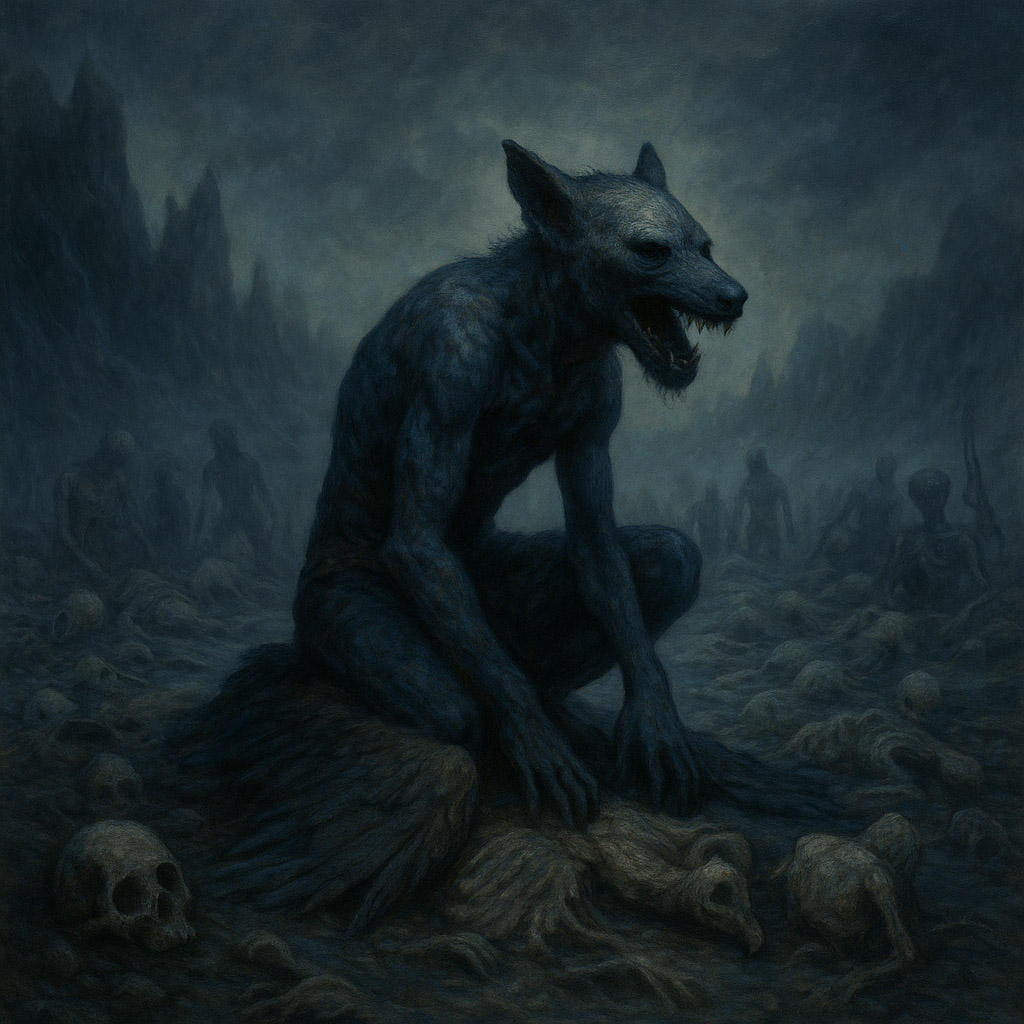
Nevertheless, quite a lot of such “waste” accumulates in the spaces of the afterlife: everything that is “tied” into tight knots by ineffective actions and mistaken efforts of incarnate beings and cannot simply be returned to the general potential field of energy of the Interworld gradually forms entire “energy dumps” in need of processing.
And it is precisely this function that eurynomes perform — the scavengers of the Interworld. They cleanse the Interworld of the “corpses of energy.” In different mythological systems, these entities are known under different names. In India these are bhutas, dwelling by cremation fires and feeding on the remnants of breath and discarded shells. In China and Japan — moryo and timimoryo, spirits of swamps and rot that devour corpses and energetic clots. In Africa — yiena, hyena-like spirits symbolizing the disposal of carrion and the return of energy to the earth. In Burma — taie, ghosts that finish eating the remains of the unquiet, and so on. The Greek tradition preserved the image of Eurynomos as a monstrous daemon stripping flesh from the bones of the dead. All these figures express one and the same principle: even “toxic” energy must not simply be “stored away”; everything must be processed and returned to the flow.
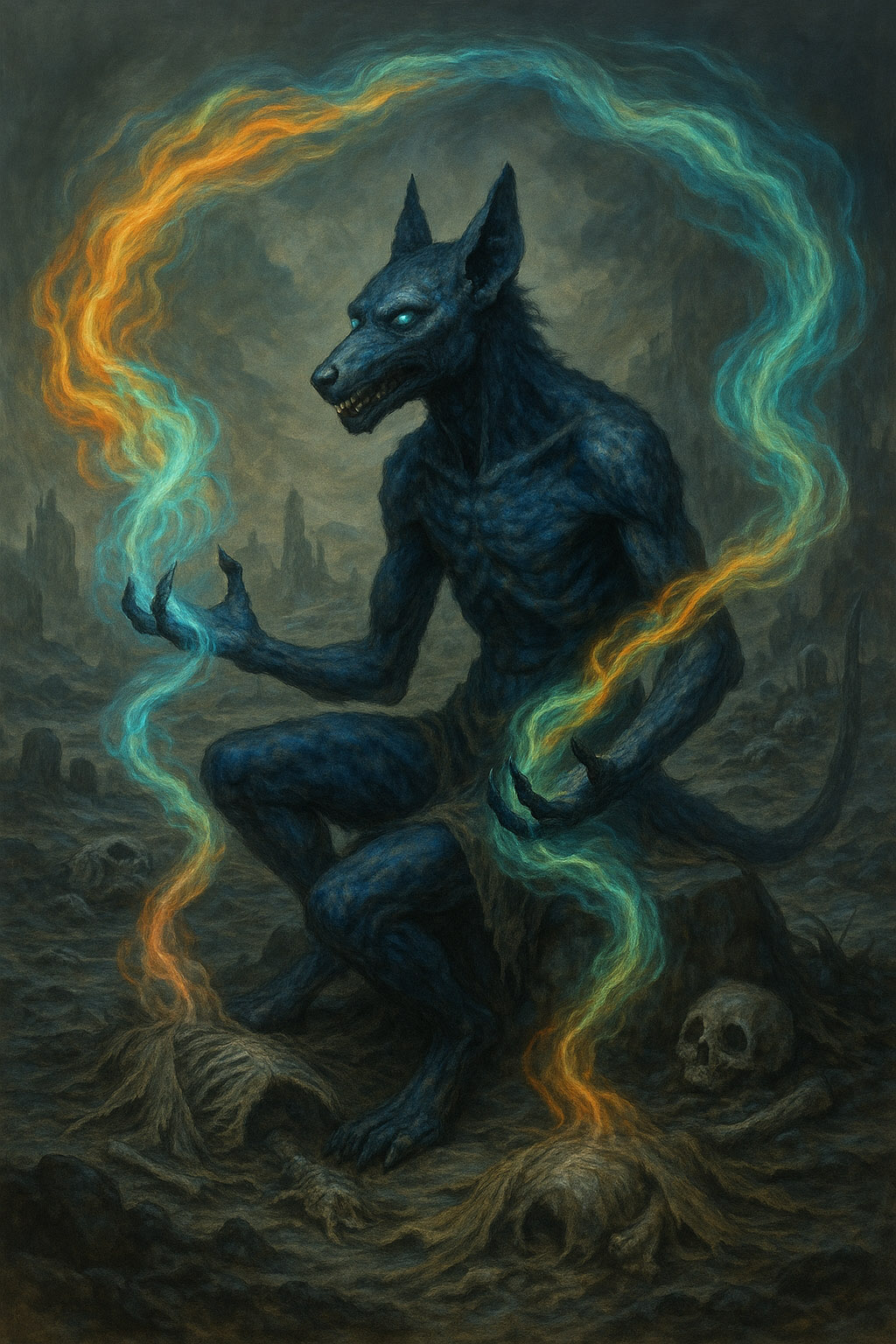
Within the Interworld, the activity of eurynomes can be described as a three-stage process. First, they split residual forms — the shells of ka and their trace projections. Then they “grind up” unconscious passions and knots, depriving them of form and directionality. Finally, they break down the last toxic residues — anger, greed, fear, jealousy, envy, and the like — “zeroing out” the vectors that generated them and “discharging” these qualities into pure energy.
In the ancient Greek tradition, the name Eurynome (Εὐρυνόμη) means “spreading wide” or “ruling broadly,” and also “ruling movement.” Originally this was the name of an archaic goddess associated with primordial order and the movement of chaos toward harmony. Later, the name “Eurynome” became attached to one of the Oceanids, daughters of Oceanus and Tethys — that is, an embodiment of a fluid and boundless flow — while the masculine variant “Eurynomos” was correlated with a scavenger-demon from Hades.
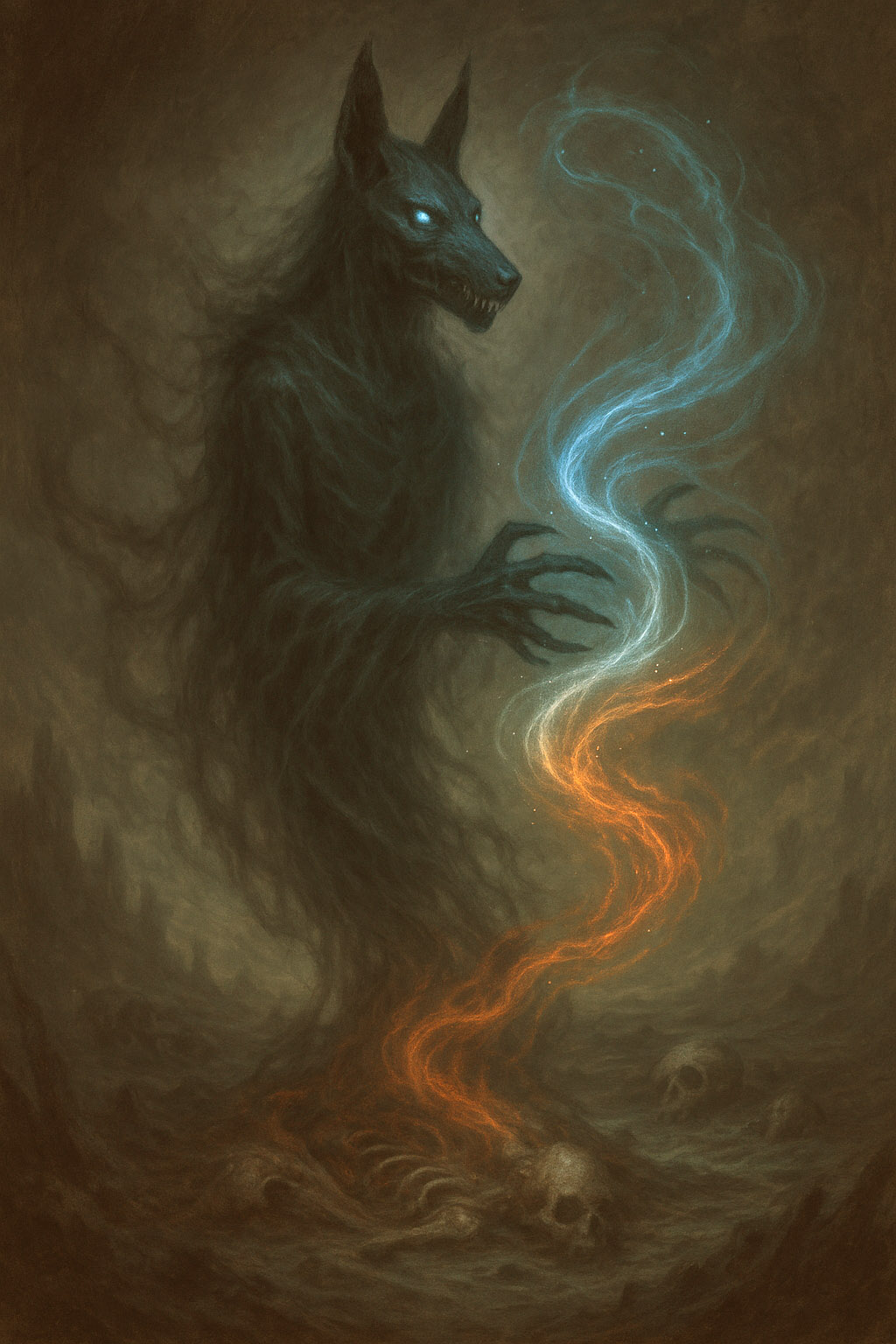
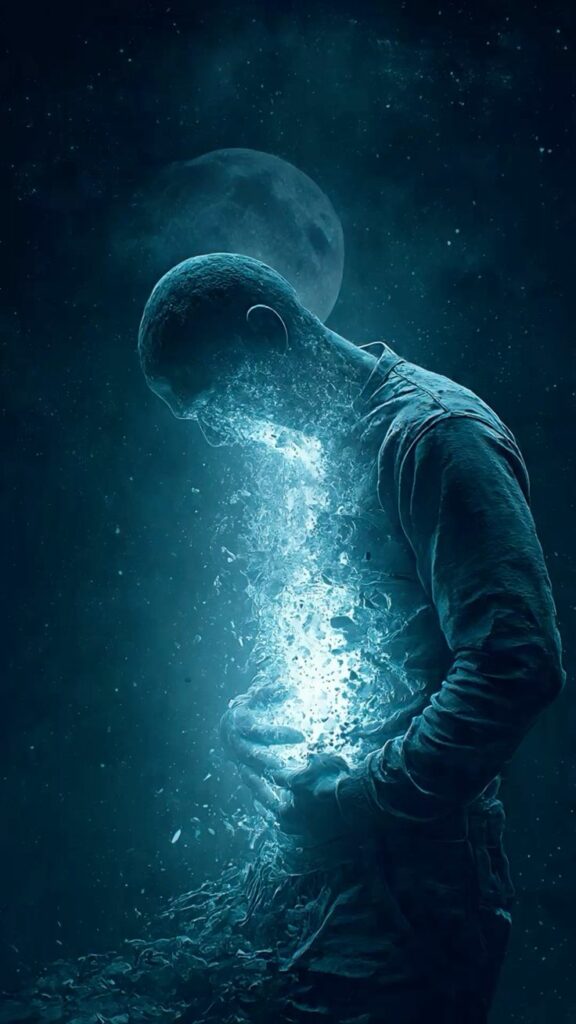
Accordingly, eurynomes, as disposer-beings, perform precisely such a function of “spreading wide” and “leveling” energy. They dismantle the remnants of energies and collapsed forms, destroy particular, personal features in them, and return these fragments to the common energetic flow of the Interworld. It is under their influence that the individual dissolves into the universal, and thus they do what their name expresses: they spread and disperse energy, transforming it from the state of stagnant “personal imprints” into the impersonal, potential field of the Interworld.
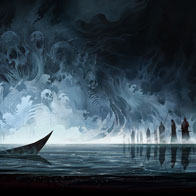
Unlike the gallu, whose work is connected with the very process of transition and the “severing” of ties, eurynomes are active primarily at the final stage of disembodiment, when the mind has already passed the Judgment, and only “slag” remains. Most often, eurynomes manifest in the spaces of RII, and therefore in the early stages of the afterlife they are often not noticed; but as the bardo nears completion, the more likely is the encounter with the Scavengers.
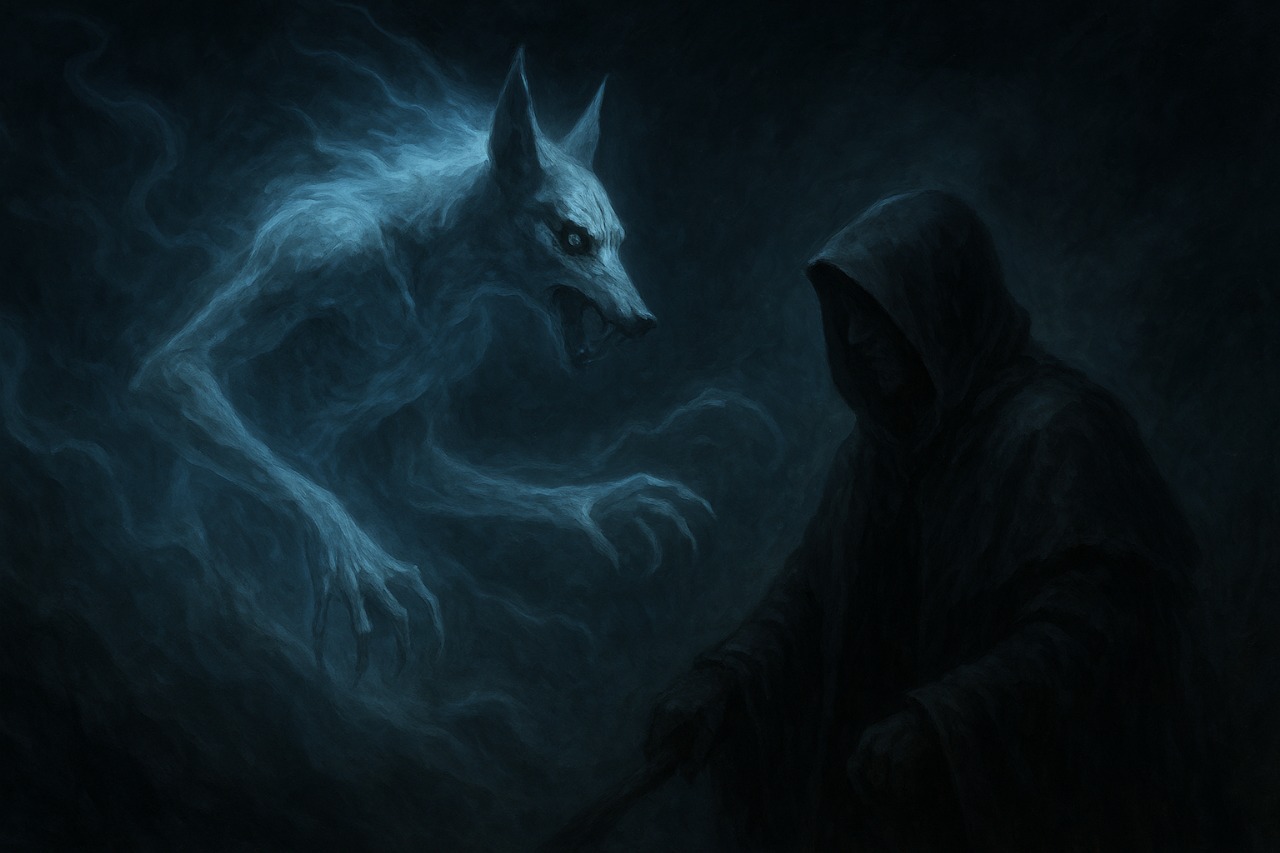
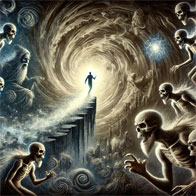
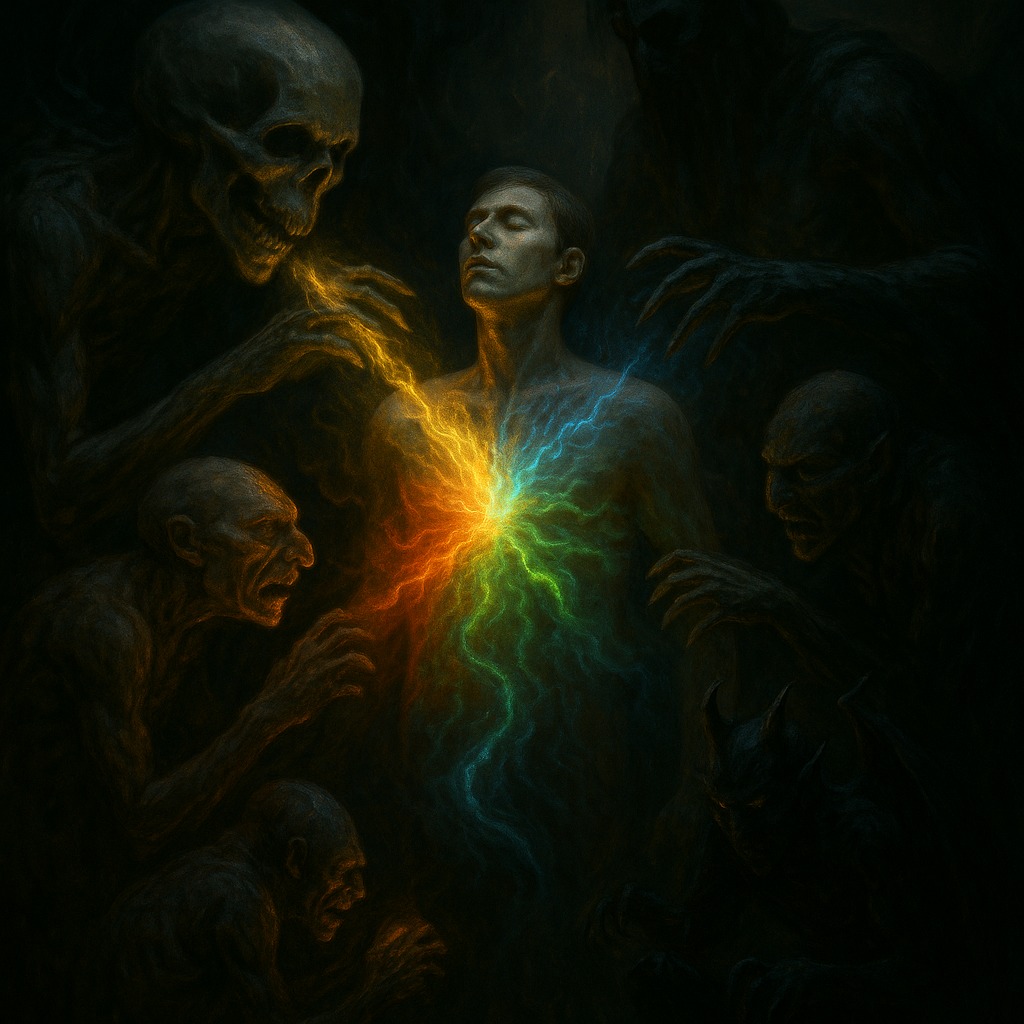
For the mind of an elemental, an encounter with eurynomes can be quite traumatic, although it is usually perceived not as an attack, but as a frightening sensation of increasing disintegration, loss of form, dissolution. As they draw near, the Wanderer of the Interworld seems to begin to experience choking, loss of strength, and clouding of mind. Their action is impersonal, “cold,” and unintentional, but no less frightening for that. And if an encounter with gallu usually evokes horror at their “voracious,” actively absorbing activity, then eurynomes terrify by their indifferent mechanics, like energy meat grinders.
Like other “maternal forces” of the Interworld, eurynomes feel no malice and have no will: their action is cold and mechanical. They do not single out the significance or value of individual experiences; for them everything equally is subject to dismantling and dissolution. It is precisely this indifference that makes them subjectively especially terrifying; in their presence the mind does not feel like a living being, but only a substrate, material that is ground up in soulless “millstones.”
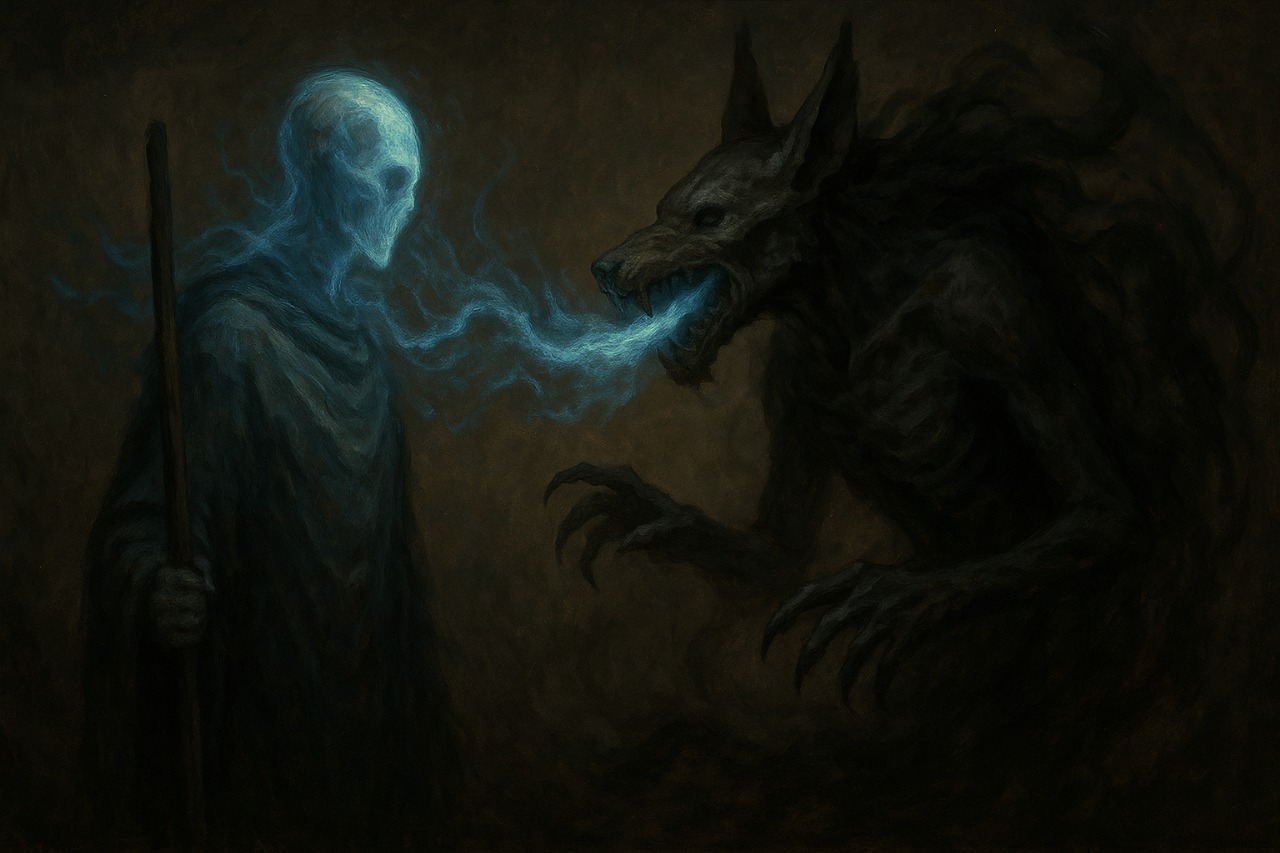
For many wanderers this experience is also traumatic because it destroys in them the illusion of their own uniqueness. Everything that up to that point seemed important, personal, unrepeatable — attachments, passions, memories, residual hopes — as eurynomes approach, it becomes monotonous, gray “slag” that is disposed of without a trace. The mind usually experiences such a “removal of masks” at the deepest level very painfully: only an impersonal energetic fabric remains of it, dissolved and returned to the common flow.
Thus, in the universe, the continuity of flows and mutual transformations of energy is maintained: no energy “stagnates,” but everything returns to potency. Where the mind proved incapable of integration and liberation, the remnants of its “lights” are processed by eurynomes in order then to become “raw material” for new forms. Without them, the Interworld would be overflowing with “rotting” refuse, only slowly processed by the most primitive of elementaries, and the free currents of being and mind that must be born from the potential fabric of the Interworld would be muddied by excess imprints.
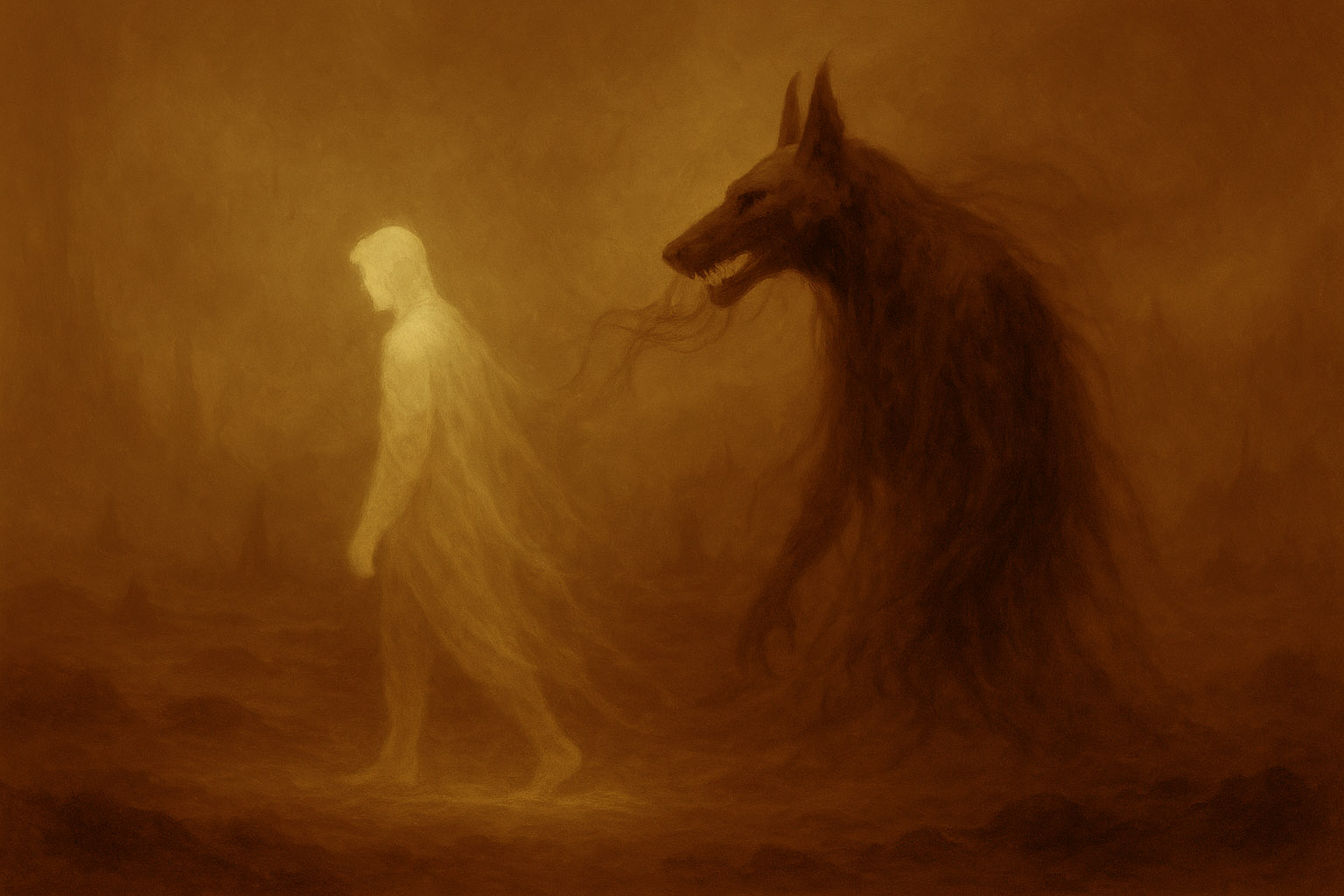
Thus, eurynomes are the final level of the Interworld’s sanitarians, the last processors that turn low-energy remains into empty possibility — the gravediggers of the Interworld, whose activity often remains unseen, but without which the harmony of the cycle of life and death is impossible.
By becoming aware of the nature and functions of eurynomes, an elementary can more easily accept the inevitability of final liberation from particular masks and traces, without fighting them and without confusing itself with what will be disposed of anyway. In this acceptance lies the most important lesson that should be learned while still alive: to distinguish what truly constitutes the core of the mind from what is only temporary layers — accidental, unstable, the “decay” of personality. Everything that is born from fear, anger, greed, unconscious habits, and so on, sooner or later will inevitably go into the “millstones” of eurynomes. What seems to be “oneself” but is only a product of circumstances, environment, or random choices will be dismantled into parts, deprived of form, and returned to the impersonal field of potency.
An aware wanderer of the afterlife, encountering these entities, may experience not only the fear of disintegration, but also purification: seeing how the unnecessary departs without hindering the flow, and how a new space for freedom opens up. For if everything superfluous is periodically cast off and processed, the flow of the mind remains clean, and what is truly valuable shines even brighter.


Thank you.