
Yakhtanabas: The Trap of Righteousness

It would seem that in today’s thoroughly hedonistic world, the destructor of “false righteousness” should not occupy a prominent place among the obstacles to the development of mind. The Kingdom of Zagan — the demon of vanity — in modern times collects its “tribute” mainly through social institutions, the cult of “success,” and career aspirations, while the image of the “grumbler” — Ronove — seems grotesque and unserious.
Nevertheless, according to Gnostic ideas, the striving for “righteousness” as a way of inner self-aggrandizement, subtle hyper-egoistic tendency, is considered a manifestation of one of the “Primordial” or Elder Archons — Yakhtanabas (Yakhfanbasa, Yakhtenebrasa) — the embodiment of the primary source of inequality, as a deep notion that some potencies are “more valuable” or “preferable” than others, and that there is something deserving of priority realization.
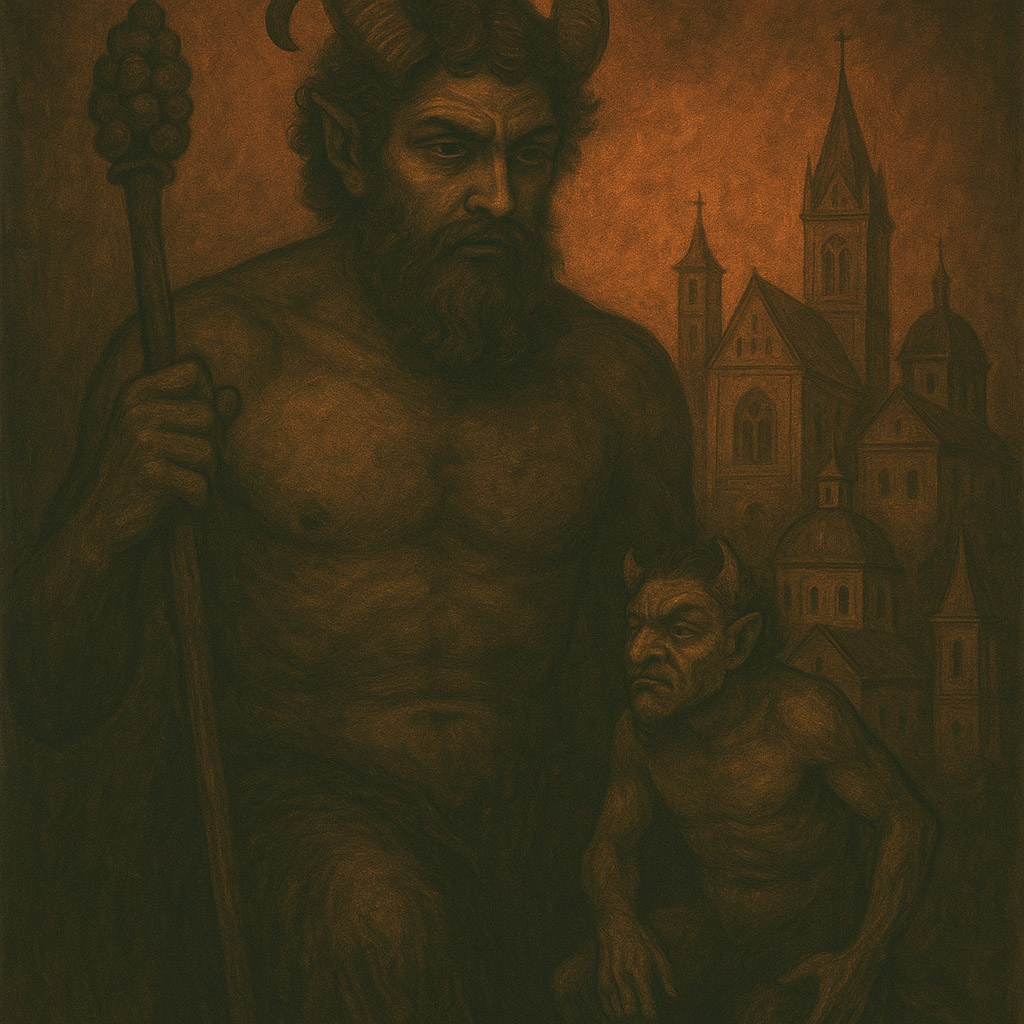
On closer examination it becomes clear that such a notion is indeed one of the roots of heimarmene, because it deprives travelers of reliable landmarks on the path to the Pleroma, passing off as attainment an imitated righteousness or “enlightenment.” At the same time, the very fact of pretense and imitation may be more or less aware, better or worse disguised, which gives rise to a whole chorus of “demons of false holiness” — Valak, Dantalion, Vual, Raum, the already mentioned Ronove, and others. And despite his sometimes comical appearance, it is precisely Ronove who turns out to be one of the most dangerous and significant enemies of the development of mind, because he subtly slips in the feeling that “if others are not entirely honest with themselves, then I can be too.”
Yakhtanabas is the source and creator of “false elitism,” a very subtle yet all-pervading sensation that there are “worthy” and “unworthy” paths, and that all stories about “the paths of the righteous” seem to say that simply by doing certain actions and abstaining from others, one can reach a high level of development. And in this sensation there are at once two deceptions, two destructive forces.
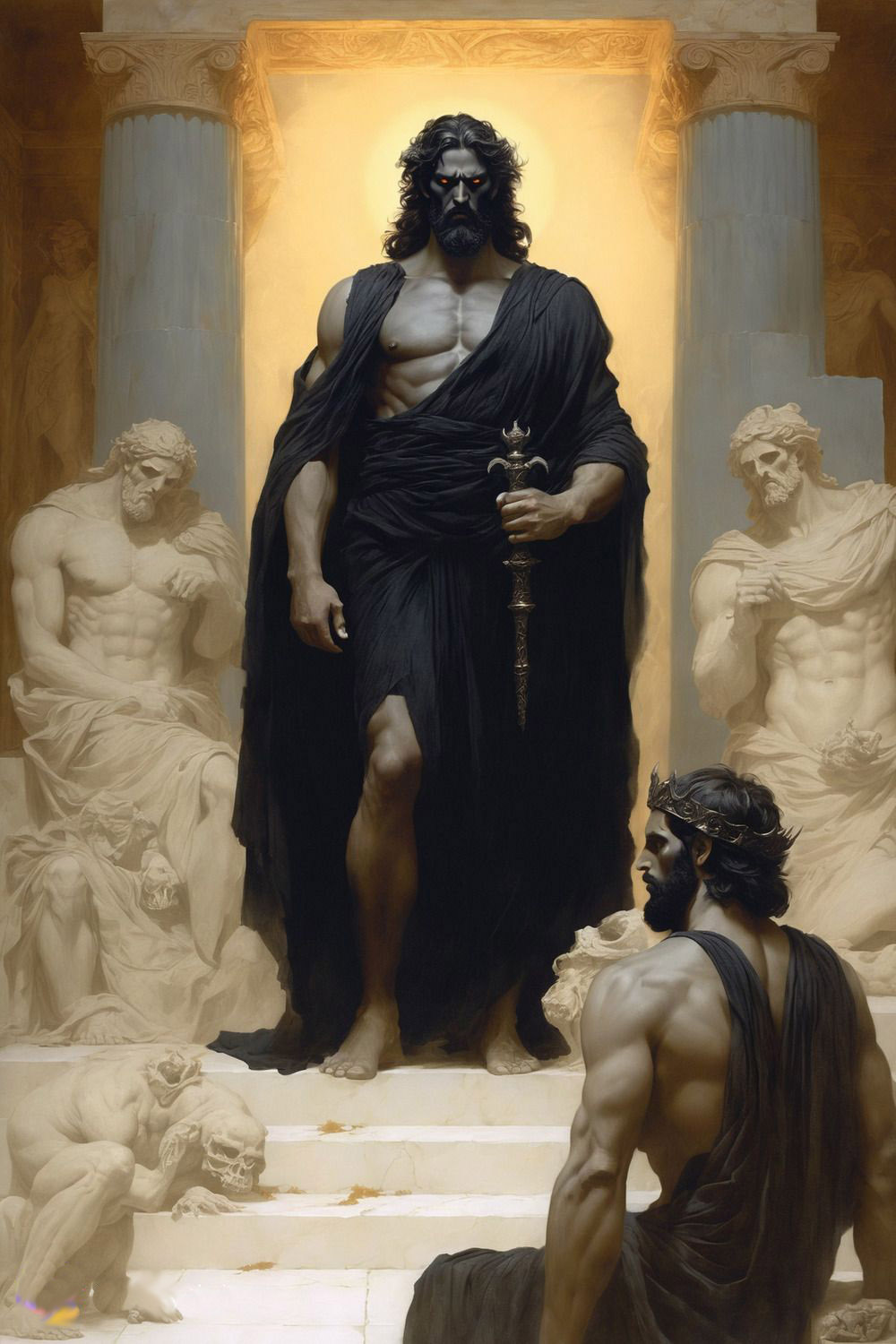
The first is more obvious: it is the very idea of “spiritual elitism,” an inner self-satisfaction from “I am better than others,” “I am the one acting correctly, unlike them.” And even when the fact of “righteousness” is unfeigned, when such a person really does not commit evil (even disguised), the sense of “one’s own superiority” ruins the soul from within. A typical example of such a “fall from righteousness” can be the Buddhist image of the cousin of Buddha Shakyamuni — Devadatta — who became an enemy, caused a schism in the sangha, and even tried to kill the Buddha only because he considered himself more righteous, more ascetic, and therefore more worthy of veneration than the Buddha. At the same time, Devadatta was not an “ordinary villain” or a simple envious man: the Buddha testifies that in past lives Devadatta was an outstanding saint, a master and teacher of the (future) Buddha himself. And all this did not protect him from sad obscuration, from the fall and subsequent ruin.
The second deception of Yakhtanabas is much less noticeable and consists in the very fact of “avoidance,” false purity, selective practice. It would seem that the Buddha, and Christ, and all other great masters say that one should do good and abstain from evil, and, of course, there is not the slightest reason to doubt the correctness of such a direction. And the Gnostics themselves were often a vivid example of such extreme exclusivity, sometimes bringing their righteousness and purity to extreme forms of asceticism.

However, the subtlety, the non-obviousness of the destructive core of this state lies in the motivational scheme: to act rightly because the masters or teachings say so, and not because such is the “inner impulse” of mind. It would seem — what difference does it make why a person acts well, if as a result their actions still bring benefit? And perhaps, for the “outer” world there really is no difference; however, it exists for this person themselves, for their mind, because the use of external motivational incentives blocks the connection with the inner light of one’s own mind, forming a habit of relying on external supports and landmarks.
Avoidance, separation based on inner supports is a fundamental difference of nature, an inherent separateness that does not require effort to maintain. One who goes toward the light of their own mind does not commit evil not because they “avoid temptations” or “observe the law,” but simply because evil is of an alien nature to them, just as a drop of oil in a glass of water does not exert effort in order “not to dissolve,” not to mix with the medium — it is separated by its very nature. If, however, a person sets barriers within themselves, if they forbid or restrain certain manifestations or drives, they deprive their mind of its main property — freedom. And in this case, instead of moving toward the Light, mind, on the contrary, only increases its shadow.

Accordingly, to other people who see the outer side of such a person’s actions, their unfeigned usefulness and virtue, it seems very right to follow their example; however, together with this following it is easy to receive the induction of that very inner motivational scheme, the same subtle inner dishonesty — avoiding evil not out of alien nature, but out of subtle pride and carefully concealed hypocrisy.
Accordingly, Ronove, as the demon of “spiritual elitism,” turns out to be not just a grotesque “monster” grumbling about Pharisaic values, but a serious demonic “marquis and count,” collecting even today his considerable levy.
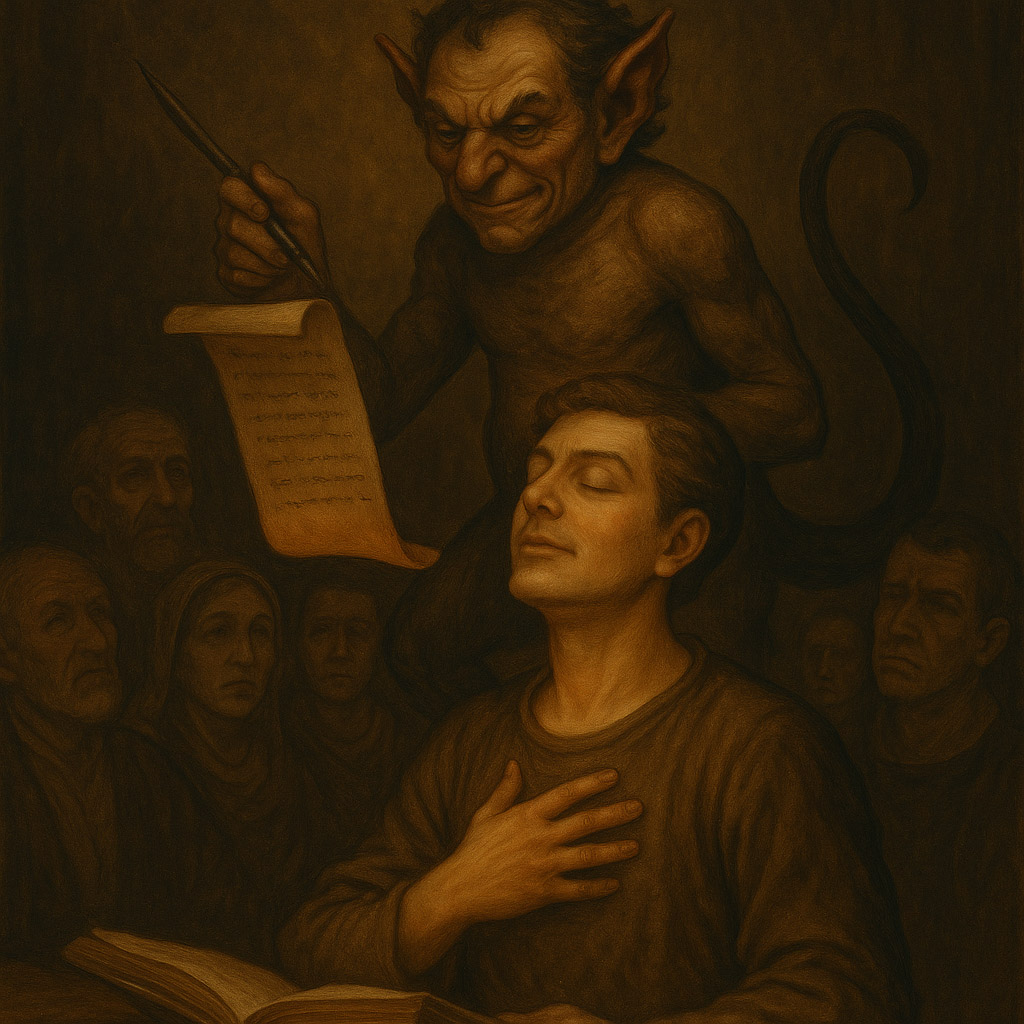
Psychologically, Ronove’s influence often has its roots in childhood feelings of inferiority, in those episodes of life when a child turned out to be too weak to gain attention or respect directly — for their own virtues, talent, strength. In this vulnerability, in the lived experience of humiliation, rejection, or mockery, the need for compensation is born. Thus a rudimentary mask is formed — “I will show who I am,” “I will become significant,” “I will make them respect me.” And if the pain of early non-recognition turns out to be acute enough, and the supports on the inner foundations of mind insufficient, this compensation mechanism begins to develop as a fundamental element of personality. At a more mature stage, this energy manifests not so much in desires as in patterns of perception: a person begins to perceive themselves as someone who must appear significant, respected, important. They themselves do not know where this inner urge comes from, but they feel it sharply: to be heard, to speak convincingly, to look worthy, to make an impression. Like all victims of Zagan’s retinue, they master rhetoric, gestures, postures, intonations. And gradually they are not so much living as playing the role of one who walks meaningfully and successfully.
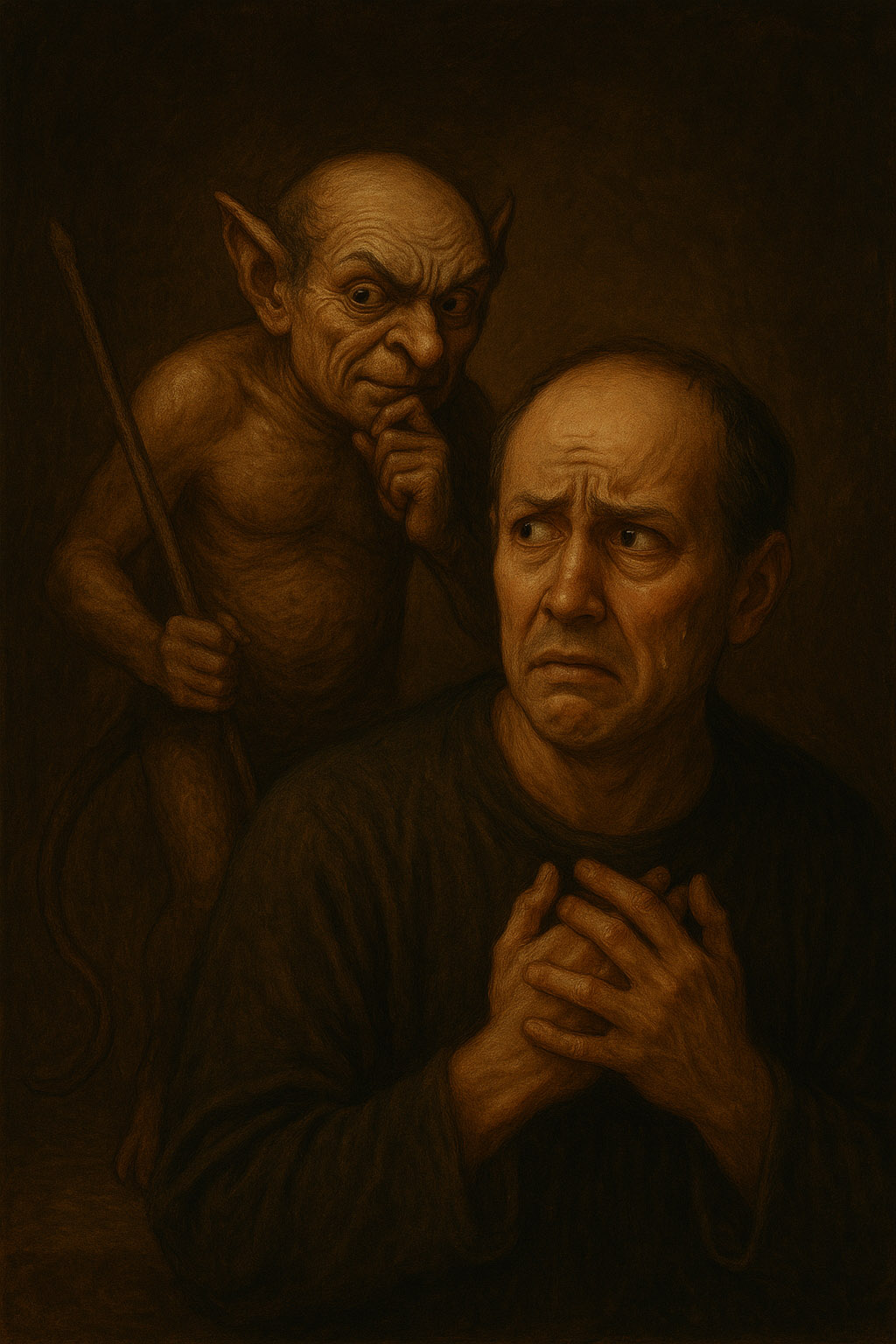
People with an active Ronove matrix perceive criticism painfully, cannot tolerate doubts about their exclusivity, fear exposure, and are dependent on praise. They are constantly tense, as if trembling inwardly, maintaining a façade of greatness in which they do not actually believe. And over time this mask can become so dense that it blocks access to the logos, to the true foundations of the flow of mind. A person begins to believe in their achievement, to identify with the image, losing contact with the living, changing, vulnerable, complex, and imperfect, yet real foundation of themselves. Thus Ronove decisively blocks spiritual development, because one who strives to seem loses the ability to truly overcome and surpass — that is, to become.
From a magical point of view, Ronove hinders the formation of a true direction of will: he directs the will not toward inner transformation, but toward external display.

Accordingly, confronting Ronove is a return to honesty, a confrontation with the shadow and the dark sides of oneself and the world. A person who becomes aware that they strive for recognition not because they are mature, but because they are afraid of being nobody, thereby makes the first step toward real transformation. A Magus who develops themselves must learn to look at their strengths and weaknesses without pride and without self-abasement. They must know their worth, only not as a worth for others’ eyes, but as inner knowledge: “this is me, and I am worthy of being, like any other.”
The path of liberation from Ronove is not in renouncing aspirations, but in renouncing imitation, in improving from within, and not by other people’s prescriptions or models. And here it is not about modesty or humility, which also easily become supports for subtle self-admiration, but about inner authenticity, without which no path is a true path of development. It is important to understand that real maturity is not in appearing older, but in being honest both before those who are younger, and before equals, and before those whom one has not yet met; to see that expressing from within is more worthy than being beautiful on the outside.
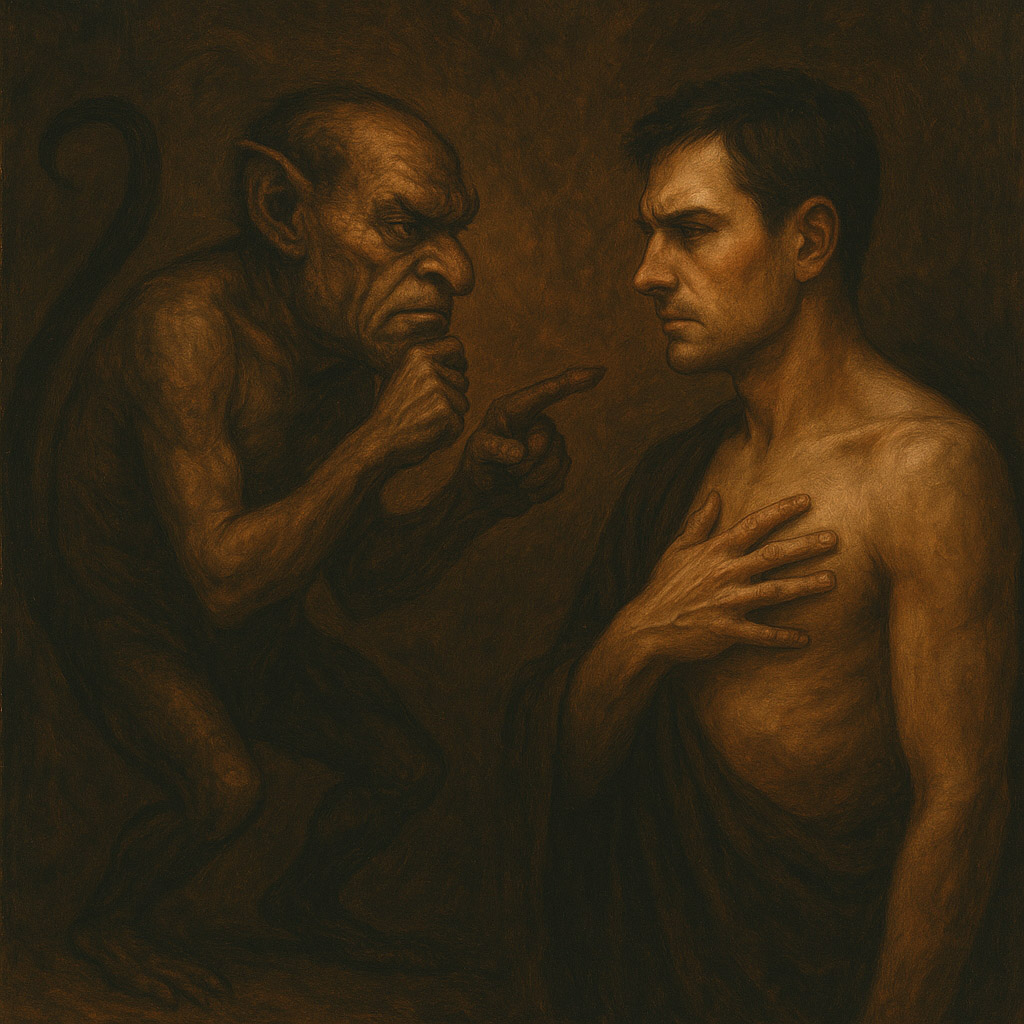
Thus, while Ronove is the inner temptation to seem important, to look “wise,” “spiritual,” “mature,” Yakhtanabas is the very principle of separation, the idea that in the world there exist “higher” and “lower” paths, worthy and unworthy souls, the righteous and the unclean.
Yakhtanabas introduces into the fabric of the mind the very notion of inequality of potentials, “spirituality” is measured only by certain external criteria — deeds, lists of renunciations, or the level of asceticism. The Archon operates with collective constructs, norms, religious systems, and social concepts of “spirituality” and “value.”
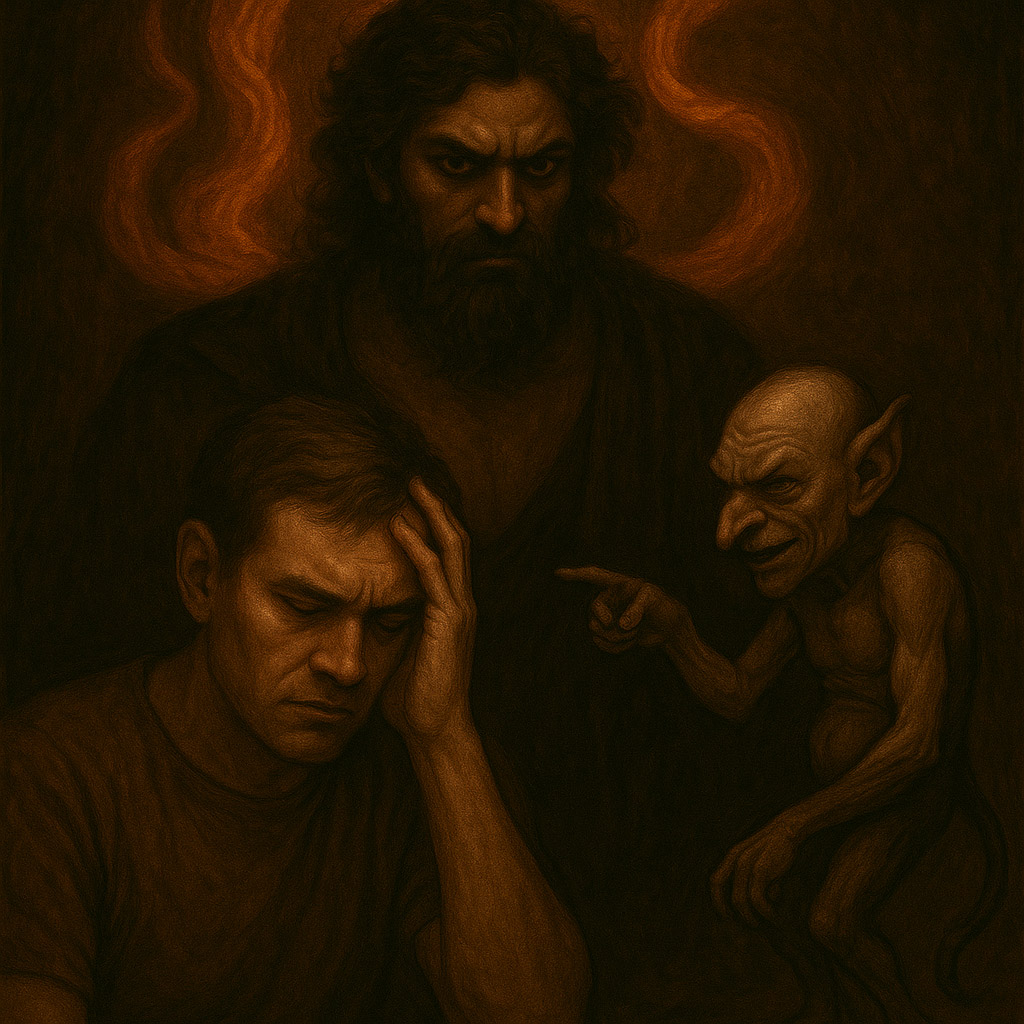
In practice, their interaction is expressed as follows: the Archon forms an “ontological” structure of values — what is “righteous,” “worthy,” “high,” and so on — while the demon provides the psychological technique of making this righteousness their own: a manner of speaking, expressing oneself, dressing, addressing, “serving” — so as to look like part of the “higher circle,” even if it does not come from the depths. This interaction gives birth to a mass of “spiritual workers,” “masters,” “initiates” — rhetorically sophisticated, charismatic, and often practically useful, yet carrying within themselves a subtle poison of imitation, pride, and an infringement on the mind’s freedom of expression.
This is precisely why Ronove is so dangerous: he provokes steps toward inner compromises in sincerity, and these concessions are made not out of fear, not out of temptations, but out of rigid ideas of correctness. And, what is especially subtle, his power is amplified against the background of the weakness of those around. The less authenticity there is in the world, the greater the temptation to “seem,” at least for balance. If the majority “know not what they do,” then the one who knows how to “be good” already feels superior — and here, in this self-exaltation, mind falls into ruin.
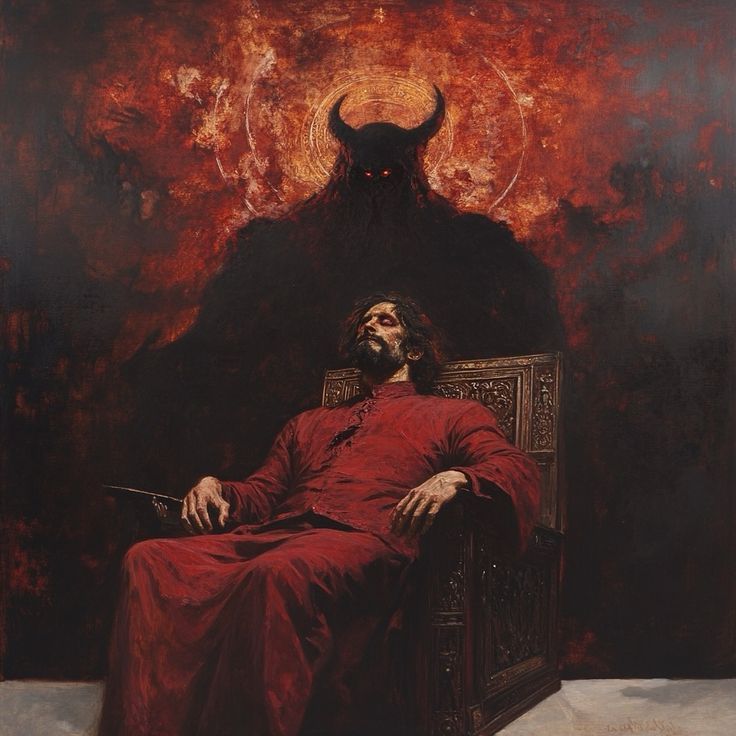
It is clear that liberation from Ronove and Yakhtanabas begins where the need to seem disappears and the Path begins, arising from an inner need, toward being.
At the same time, it is not hard to see that with honestly following the impulses of one’s soul it is impossible to avoid falls entirely or “sins,” but it is important to rise after each fall, to extract lessons from them and thus discover the alienness of evil to the light of mind. Mind awakening to the light always passes through many dense, imperfect, traumatized layers of its nature, accumulated over countless lives. Desires that are not yet purified inevitably surface, weaknesses not yet overcome, numerous doubts, fears, and past attachments. And in each of its “falls,” one of these unpurified facets is revealed as a “shadow” part in need of recognition, transformation, and surpassing.

True development begins where a being, having fallen, does not turn away from itself, does not build self-denials or self-justifications, but honestly and attentively looks into the place where the failure occurred and asks: “what in me consented to this”? Falls are only evidence that there are areas where mind is not yet illuminated, where it does not agree with its original nature. And then the shadow zone thus discovered can be illuminated, worked through, and thereby integrated.
This is exactly how the aforementioned alienness of evil to the light of mind is discovered, as a fundamental impossibility for darkness to remain for long within what is increasingly illuminated. When mind tries different forms, stumbles, breaks down, but finds within itself the strength and motive to rise again, it begins to feel that not everything that attracted it truly comes from itself, not everything that seemed desirable remains so when lived through.
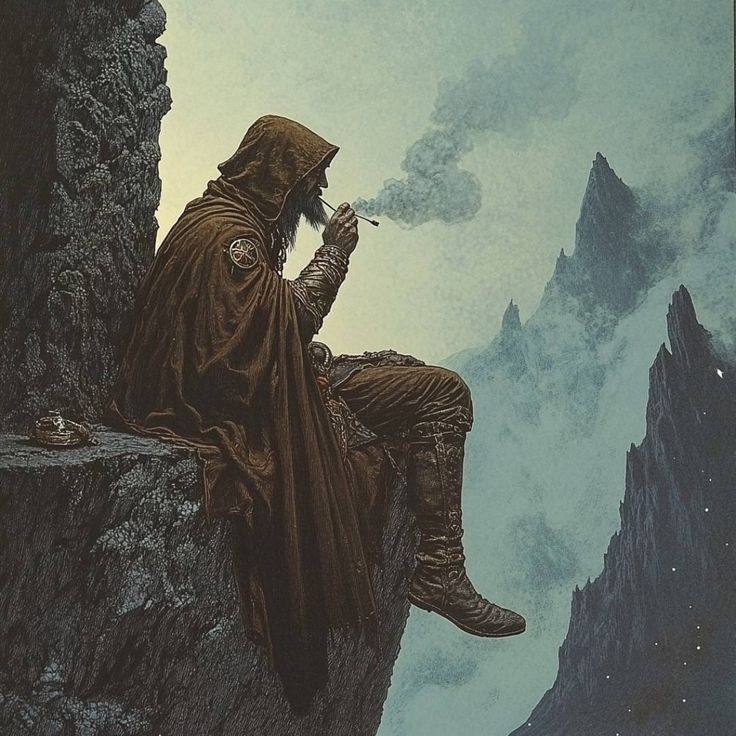
And then a person gradually avoids “sin” less and less, and not out of fear of punishment or fear of “uncleanness,” but more and more — simply does not want it, because their inner light already no longer matches what casts a shadow.
Thus, the Path is not a “ladder of the righteous,” but a living movement in which falls do not negate one’s worth, but, on the contrary, turn out to be instruments of self-knowledge and self-liberation.
That is why the Magus or seeker who confronts Ronove first and foremost learns honesty. In this learning they may fall and rise, commit unseemly acts, extracting lessons from them. And one who confronts Yakhtanabas refuses the idea that there are “higher souls” and “lower paths,” recognizes the sacredness of the diversity of forms and the equal value of all expressions of Light — from the desert monk to the craftsman, from the ascetic to the warrior. In this acknowledged multiplicity of paths, true spiritual maturity grows, because the great one is not the one who is above others, but the one who is free from the need to be above.








Thank you.
Thank you very much.
I would like to clarify a bit. The understanding of “higher and lower” does not stem from the abstract, but depends on the expansion of consciousness’s facets, its connections. Therefore, to say that developed consciousness is “higher” than “ordinary” is normal. The main thing is not to attribute an egotistical shade to it. And one who disagrees and feels offended by this comparison is likely someone who does not agree that they should constantly develop themselves throughout life.