
As soon as a person reaches a certain level of development, as soon as he is ready to accept Power, Power insistently begins to strive to enter him.



Other Magic
Пишите мне
Enmerkar's Blog содержит более тысячи авторских статей эзотерической направленности.
Введите интересующий Вас запрос — и Вы найдете нужный для Вас материал
As soon as a person reaches a certain level of development, as soon as he is ready to accept Power, Power insistently begins to strive to enter him.

For the Magus, battle is, essentially, his defense, while hunt is his offense. The totality of a Magus’s battles and hunts makes up his life—his war.

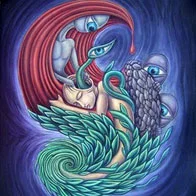
One must not be left with the impression that there is no—and cannot be—an absolute mystery in the world, for it is precisely the world’s indivisibility to intelligence that constitutes the condition for the possibility of Magic.



By absolutizing emotions to the detriment of feelings, the mind sacrifices its stability, plunging into the ecstasy of an ever-changing principle; and at the moment of the sweetest, most intense union with life it simultaneously drains the cup of death, consumed in those fiery embraces.



If excessive seriousness makes movement impossible through its rigidity, excessive flippancy renders it chaotic.

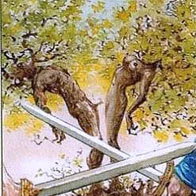
The most important biner, neutralizing which is vitally necessary for any Wayfarer, is the duality of his selfhood and sociality — the duality of “I” and “We”.

The combination of the forest’s wisdom, age, and mystery makes its principle so deeply magical, and a proper encounter with the forest, entering its secrets, and communion with its power are, for any Magus, without exaggeration, vitally necessary.

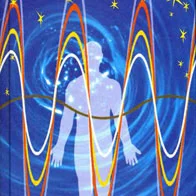
For a Magus it is very important to know their periods of maximal and minimal availability of Power and to take them into account in their tactics.
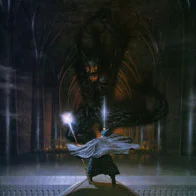
The Magus’ state is complete confidence in his mastery over himself. Can such a state truly fail to confer protectedness?

Entering the Way, the Magus must strive with all his might for systemness — a systematic account of the Way, the systemness of the mind itself, and the systemness of movement. Neglecting systemness threatens not only the Way, but the very being of the Magus.


One can reach the other side only by jumping into the chasm, descending to its bottom, and, pushing off from it, passing through the Demon’s Horns to emerge victorious.

Gratitude is not merely a formal rite accompanying any reception; it is the condition for terminating the process itself, the rupture of the connection between giver and receiver.

Being an embodiment of movement, of realization, the Western Magus is alien to stopping and repose; for him movement is always better than stopping. Therefore he prefers moving backward — to stagnation, to a dead end — when that dead end is truly insurmountable at his current stage of development.