
The ability to awaken a living imagination, to inspire it and to direct it, is a crucial faculty that affects the evolution of both the psycho- and the macrocosm.



Other Magic
Пишите мне
Enmerkar's Blog содержит более тысячи авторских статей эзотерической направленности.
Введите интересующий Вас запрос — и Вы найдете нужный для Вас материал
The ability to awaken a living imagination, to inspire it and to direct it, is a crucial faculty that affects the evolution of both the psycho- and the macrocosm.

Dark impulses must be detected and worked through thoroughly, however much that may wound one’s pride and cause disappointment in oneself.


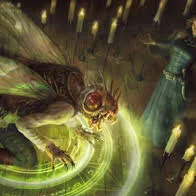
The study of the forms that powers contacting the Magus assume is no less important in the Magical Art than the study of their names, seals and sigils.


True completion — the stage of rubedo — is not merely personal liberation; it is liberation for the sake of the welfare of all living beings


Understanding the structure of vortices, the regularities of their formation and their interaction with one another is a key point for creating effective strategies of realizational action

Examining the “anatomy of vortices” reveals more points for their transformation, harmonization, and the conversion of destructive influences.

Adequacy in assessing oneself, one’s powers and capabilities, and remembering the scales of the forces with which one interacts helps to use Magical approaches as an evolutionary Way.


The transition of mind between waves of life can alter the development of entire worlds.

As with all the books of the Lemegeton, “Ars Paulina” provides a resource for developing magical logic and intuition, enabling the formulation of an effective strategy for the development of a Magus.



The foundation of devekut is love as a cosmic force of mutual attraction among all objects, including the world as a whole.
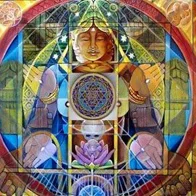
One of the most effective forms of work on matter created by humanity is alchemy.

The active engagement of the Magus is aimed at the effective, and therefore natural and continuous, realization of his desires

“Not enough desire” most often means “not enough understanding.”