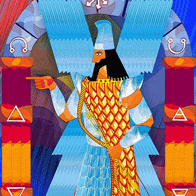
Thousands of years before the Vikings, at the far end of the earth people worshipped a god who, like the Great Aesir, was associated with storm and inspiration.
Other Magic
Пишите мне
Enmerkar's Blog содержит более тысячи авторских статей эзотерической направленности.
Введите интересующий Вас запрос — и Вы найдете нужный для Вас материал
Thousands of years before the Vikings, at the far end of the earth people worshipped a god who, like the Great Aesir, was associated with storm and inspiration.
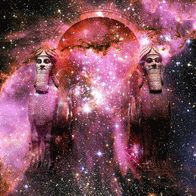
We have already spoken of artifacts that have affected (at least on the psychological level) the course of human history — the Spear of Destiny and the Holy Grail.
Yet these artifacts, though the best known, are not the only objects shrouded in mystery and legend.
Another such Item is the great Sword of Nergal.
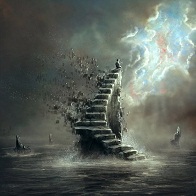
The fundamental difference between the early and later attitudes toward the world’s duality is evident: over time the polarization acquires a strongly felt emotional coloring — a positive attitude toward Light and a negative one toward Darkness. Apparently this shift reflects processes that took place in humanity’s awareness of the world-process, its origins and purposes.

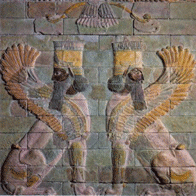
Always and everywhere, the Gnostics were anathematized, tortured, and burned. Yet the enchantment of these views proved stronger than the pyre; in the form of countless schools and movements, they have survived into our own day.
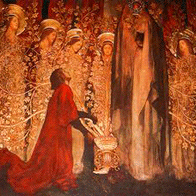
The ideal of Galahad — the pure man — charted a course in the age of monastic knighthood to new heights of spirit and insight.
It was precisely this ideal that was embraced both by the Albigensians (the Cathars) and, later, by the Templars.
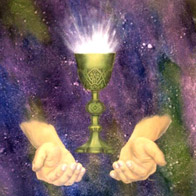
The role of cauldrons and sacred vessels was very great in ancient culture, from the Celtic cauldron of Gundestrup to the cup of the Holy Grail.

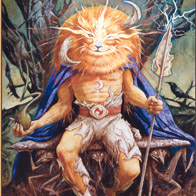
The best known of the spears in European mythology are Odin’s Spear (Gungnir), Lugh’s Spear (Assal) and Longinus’ Spear (the Spear of Destiny).
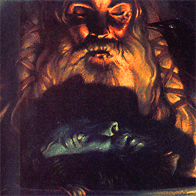
The Eddic tales of Ragnarøkr — the final battle between the gods of the second generation and the thurses — include a strange episode: the battle begins with the unconquerable Odin, the Great Aesir, riding straight into the maw of the wolf Fenrir, where he perishes.
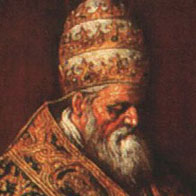
The principal work attributed to Honorius is the “Grimoire of Honorius.” The “Manuscript of Honorius” was first printed in Rome between 1628 and 1671. No manuscripts of this text have survived, and the first printed edition appeared only in the 17th century in France. According to Arthur Waite, this book, attributed to the Roman Pope, is a malicious forgery intended to discredit the Catholic Church.
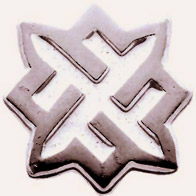
Oktoada, as the static imprint of the Quadripolar Quaternary, signifies a moment in infinite extension, the eternal present that lies beyond time
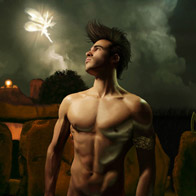
In the folklore of the British peoples, a plot appears often enough to be called “marvelous funerals” — the funerals of the Fair Folk. Yet tales and legends repeat that Fairies do not die — at least, not of old age (they can only be killed or mortally wounded).
Yet at times they grow so weary of life that they begin to dream of death, which would deliver them from the burden of being. And to die, a Fairy must obtain an immortal soul, like a human one…
One would very much not want there to be more of such “marvelous funerals”…
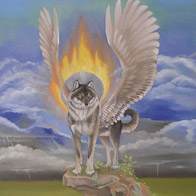
We have already discussed that, according to the Slavic cosmogonic myth, the first creative Dyad Svarog and Lada is balanced by the Supporting biner Veles–Semargl.
We have also already spoken about the Lord of the Threshold Veles.
Now our task is to touch upon the Power of Overcoming generated by Semargl.
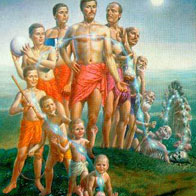
The European pagan understanding of reincarnation was deeper than modern primitive notions of the process. What was meant was precisely transmigration: the flowing of a special invisible and imperceptible substance, a life‑force, which made two lives of completely different personalities somehow connected to one another and tinged with the same tone.