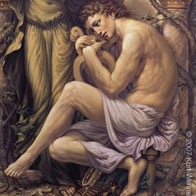
Orpheus is an image of balance between Apollo and Dionysus, between reason and inspiration. The origins of Orphism and its influence on philosophy.
Other Magic
Пишите мне
Enmerkar's Blog содержит более тысячи авторских статей эзотерической направленности.
Введите интересующий Вас запрос — и Вы найдете нужный для Вас материал
Orpheus is an image of balance between Apollo and Dionysus, between reason and inspiration. The origins of Orphism and its influence on philosophy.
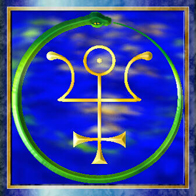
The Power that truly made the soul of the ancient Greek tremble, filling it with mystical awe, was Dionysus — a god almost forgotten in modern times, reduced to the patron of winemaking.

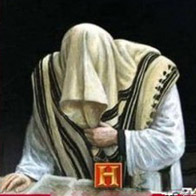
The peculiarity of Kabbalah as it exists today lies precisely in its fusion of the pantheistic constructions of Neoplatonism and the mythic motifs of Gnosticism with the Jewish faith in the Bible as a world of symbols.


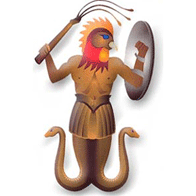
The Gnostic god Abraxas expresses the creative will of the Absolute, permeating the Cosmos, the world’s sharp striving for existence.
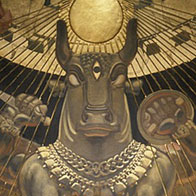
For the ancient person, the gods were a living objective reality not because he lacked any notion of Jungian psychology, but because he understood the principle of analogies that underlies manifestation.


The soul is understood as the product of the spirit’s action upon the body, “ensouled matter,” which arises as a potentiality at the very beginning of creation, and, as the potentials of the monads are realized, grows.

According to the magical myth, behind each element stands an entity that governs it — a deity or a ministering spirit — for whom that element is as much a “middle part” as the human’s “outer body”.

The immutable part of an object is commonly called that object’s “matrix”; the Gnostics called it the “logos”, the absolute model, and the ancient Sumerians called such a matrix “Me”.
Not every manipulation of the energies of the dead can be classified as necromancy. Unlike coercive, violent summonings, the tradition also knew of a voluntary renunciation of ordinary disembodiment.
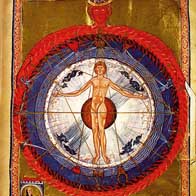
On the one hand, beings whose level of mind permits free interaction with one another may exist at four stages of development of mind, and on the other hand, each such level (traditionally called a “wave of life”) inevitably includes four sublevels.
The very debate over the authenticity of such sources draws wide attention to the revival (or reconstruction) of paganism itself, and thus expands the horizon of myths available to the human mind.
“Enochian” rituals, despite their effectiveness and apparent safety, must be evaluated by the practitioner far more carefully than even the boldest Goetic operations, for the danger of deception and traps within them is extraordinarily high.
Beside a person there exists a force perceived as external to them that performs certain protective and tutelary functions.