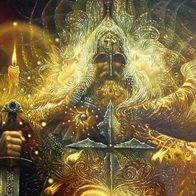
The figure of the Thunderer is a component of the Great foundation of the cosmos, necessary for the separation and the union of Sky and Earth, since separation and union are two sides of the same process, the process of cosmization of chaos.


Other Magic
Пишите мне
Enmerkar's Blog содержит более тысячи авторских статей эзотерической направленности.
Введите интересующий Вас запрос — и Вы найдете нужный для Вас материал
The figure of the Thunderer is a component of the Great foundation of the cosmos, necessary for the separation and the union of Sky and Earth, since separation and union are two sides of the same process, the process of cosmization of chaos.
Whenever we speak of a scenario for how a situation may develop, we must use probabilistic terms, since the choice at an actual branching point may differ from what was predicted


It is precisely the periodic return of matter to the primal substance that makes the development of Spirit possible.


The individual mind is surrounded by an entire spectrum of elements attuned to it: the higher minds of the Keepers, the attuned minds of its Family, and sometimes even the minds of parallel beings.

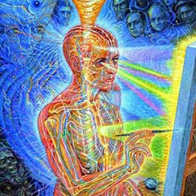
For the Magus the “Higher Soul” is not an object of cult, not an object of desire; it is one of the participants in the great game, no more privileged than the “lower” personality, which is both its creator and its creation.

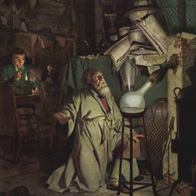
The alchemist who produces the Philosopher’s Stone also attains the Elixir of Life.
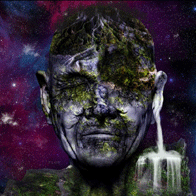
The first manifestation of activity set the Ice in motion; its second manifestation gave rise to proto-life — the Jotuns; and the third found expression in the gods — bearers of mind and creative power.

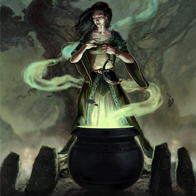
As soon as the mind moves beyond causal orientation, it may be said to enter a state of dreaming.
Active crossing of the Threshold, overcoming it as an obstacle, leads to an increase in the Magus’s power; therefore for him the Threshold is a necessary means on the Way to power.
The myths of Europe unanimously declare that on the night of November 1 a great and gloomy procession sweeps across the world.

Some mirror “visions” are projections of the viewer’s inner images, some are reflections of processes occurring in the ethers, and some are images of this world “knocked out” by the barrier of perception.
For a Magus who has severed ties with his Physiological egregore, the assistance of ancestors personally well-disposed toward him can nevertheless be useful in difficult situations.
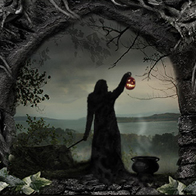
In liminal situations it is crucial for a person above all “not to lose their head” — to act as reasonably and deliberately as possible in order to avoid dangers brought on by the interpenetration of worlds.